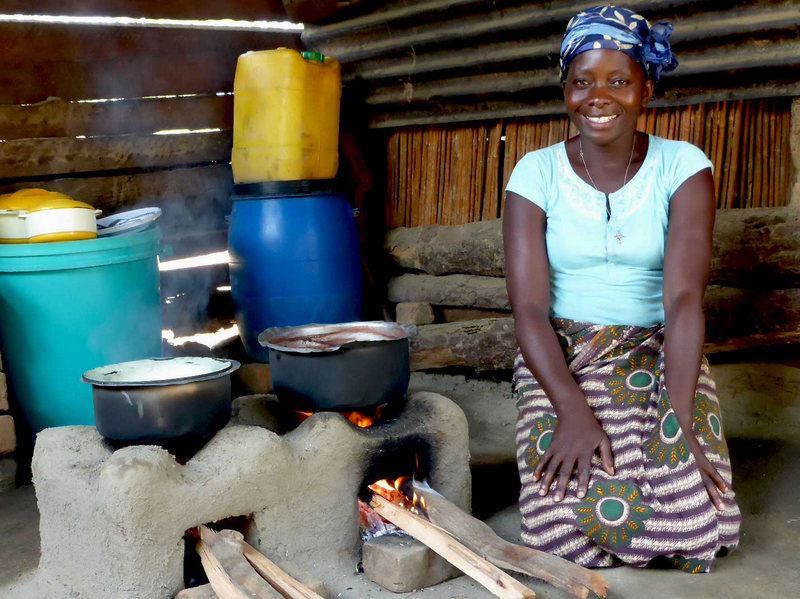
In Malawi, the most dangerous air many children breathe is often not outside. It is the smoke that thickens kitchens and living rooms when families cook with wood, charcoal, crop waste or dung, often in rooms built to keep weather out, not pollution.
A study accepted for publication in Scientific Reports by researchers at the University of Ghana’s School of Public Health tries to put a number to that everyday exposure: how strongly conditions inside the home track child survival across sub-Saharan Africa.
Using Demographic and Health Survey (DHS) data on 362,072 children under five in 32 countries, including Malawi, drawn from surveys conducted between 2010 and 2020, the team tested a politically awkward question: how many early child deaths are linked to conditions inside the home.
The answer is uncomfortable. Children living in households with higher exposure to household air pollution faced substantially higher risks of dying in infancy and before their fifth birthday, even after the researchers accounted for factors such as household wealth and maternal education.
For Malawi, where most households still rely on solid fuels, the findings read less like a warning than a diagnosis.
Household air pollution is often treated as a single-issue problem: what fuel a family uses to cook. The Ghana-led paper widens the lens, treating exposure as part of a package of household risks that shape whether a child survives early illness.
Instead of using fuel type alone, the researchers built a “Household Air Pollution Index”, a combined exposure score that draws in other conditions that tend to travel with smoky cooking. Alongside cooking fuel, the index includes sanitation, drinking-water source, and the materials used for floors, walls and roofs.
That broader framing matters in Malawi because smoke rarely acts alone. Poor ventilation concentrates pollution in the rooms where women and children spend long hours.
Unimproved sanitation and unsafe water increase the burden of diarrhoeal disease and other infections, illnesses that become harder to survive when a child’s lungs are already inflamed.
In short: the risk is not only smoke. It is the household world that often comes with it.
Across the pooled sample, clean cooking was rare: only 8% of households reported using improved cooking fuels. About two-thirds of children lived in households classified as moderately or highly exposed on the index.
Overall, 65% of children were exposed to household air pollution (36% at moderate levels and 29% at high levels). One in five children (21%) had symptoms consistent with acute respiratory infection (ARI), though rates varied widely across countries.
Southern Africa recorded the lowest regional exposure prevalence at 55%, but still had a 24% regional prevalence of ARI symptoms.
Using multilevel models designed for large survey datasets, the researchers reported adjusted relative risks, estimates of how much higher mortality risk is for children in exposed households once differences captured in the surveys are taken into account.
In their headline results, infant mortality risk was higher in more-exposed households (adjusted risk ratio 1.4; 95% confidence interval 1.28 to 1.60). Under-five mortality risk was also higher (aRR 1.3; 95% CI 1.19 to 1.46). Put plainly, an aRR of 1.4 suggests roughly a 40% higher risk than the unexposed group, given the model and the variables included.
The authors also highlight elevated risks for neonatal mortality among exposed households, underscoring that exposure can begin before birth when pregnant women cook over smoky fires.
The respiratory-infection signal was more complicated. After adjustment, the study did not find a statistically significant association between overall household exposure and ARI when exposure was treated as a single grouped measure.
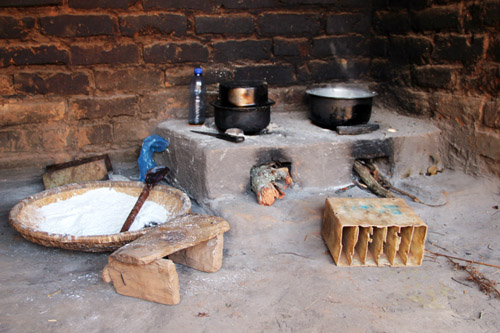
But when the researchers compared exposure tiers, they found higher odds of ARI symptoms among children in both “moderate” and “high” exposure households compared with the unexposed group (odds ratios 1.93 and 1.81, respectively).
The paper places Malawi within its pooled analysis using mortality rates from Malawi’s 2016 survey: neonatal mortality at 26.5 per 1,000 live births, infant mortality at 41.3 per 1,000, and under-five mortality at 63.1 per 1,000.
These rates reflect the survey period used in the study, not necessarily Malawi’s current outcomes, but they show what is at stake when preventable risks cluster in poor households.
Malawi’s energy picture helps explain why household exposure remains so widespread.
A widely cited 2022 “state of knowledge” report on energy access notes that 97% of households rely on solid fuels for cooking and flags household air pollution as a major health risk.
World Bank dashboard estimates put access to clean fuels and technologies for cooking at 1.5% in 2023, with a sharp urban–rural divide: 5.1% in urban areas versus 0.5% in rural areas.
If those gaps map onto the exposure patterns in the Ghana-led analysis, the health burden will be concentrated where clean cooking is least available and least affordable.
The researchers argue that urgent government action is needed to reduce reliance on solid fuels, and to improve sanitation, clean water access and housing conditions that shape vulnerability.
Their index is effectively a warning against siloed policy: the factors that trap smoke in a child’s breathing space are entangled with the factors that determine whether that child survives infection.
Practical responses in Malawi could be designed as a child-survival package, rather than stand-alone projects:
- Link clean-cooking rollout to maternal and child health programmes, so high-risk households are reached first.
- Pair stove or fuel transitions with ventilation and safer housing design, especially where cooking happens indoors or in enclosed spaces.
- Treat water, sanitation and housing upgrades as part of the same intervention, because they interact with respiratory risk.
The goal is not simply to distribute a “cleaner” stove. It is to reduce the concentration of smoke in the spaces where children spend most of their time, and to reduce the infections and vulnerabilities that turn exposure into death.
Global health agencies have long treated household air pollution as a major, preventable risk.
A World Health Organization fact sheet updated in late 2025 estimates that household air pollution contributed to 2.9 million deaths in 2021, including more than 309,000 deaths among children under five, and notes that exposure “almost doubles” the risk of childhood lower respiratory infections.
The same source warns that in poorly ventilated dwellings, indoor smoke can push fine particle levels far beyond accepted thresholds.
The International Energy Agency has framed the problem as an investment gap.
In its 2023 Africa energy outlook it estimates that cooking with “dirty” fuels causes about 815,000 premature deaths each year in Africa, including roughly 500,000 children under five, and points to multibillion-dollar commitments announced at a 2024 summit to accelerate clean-cooking access.
Malawi’s own pilots illustrate how hard transition can be.
A 2024 pilot in urban Malawi assessing pellet-fed gasifier cookstoves reported that many households continued “stove stacking”, using the cleaner stove alongside a traditional three-stone fire, a pattern driven by budgets, fuel supply and cooking preferences, but one that can blunt air-quality gains if biomass continues to burn indoors.
The study’s limits matter. The analysis is cross-sectional, meaning it can identify associations but cannot prove causation. It also relies on DHS survey proxies rather than direct pollution monitoring, raising the risk of misclassification and reporting bias.
Even so, the scale of the dataset and the consistency of the mortality signal make the central point hard to ignore: household conditions that trap smoke are strongly associated with children dying younger.
Disclosure
This article is based on findings from a study by Joseph K Darko, Duah Dwomoh, Justice Moses K Aheto and Julius N Fobil (University of Ghana School of Public Health). The study was accepted on 29 January 2026 and released as an unedited “Article in Press” in Scientific Reports. The authors report no external funding and no competing interests. Reporting is independent and for informational purposes only and does not constitute endorsement of the research or its conclusions.
