
A sweeping agreement to market carbon credits from 14 forest reserves could generate over $1.5 billion, but critics warn the legal framework remains unfinished.
Malawi has committed about 550,000 hectares of public forest, close to six per cent of the country’s land area, to a 40-year carbon-credit arrangement before Parliament has passed a dedicated law to regulate such deals.
Carbon credits are tradable certificates linked to climate action; typically, one credit represents one tonne of carbon dioxide (or its equivalent) reduced or removed. Companies and countries buy them to meet voluntary climate pledges or other targets.
The size of the concessions, the long exclusivity period, and the absence of published benefit-sharing terms have alarmed lawmakers and civil-society groups.
In late January 2026, Portuguese construction giant Mota-Engil reported to regulators in Lisbon that its agroforestry subsidiary, Mamaland, had signed an exclusive agreement with Singapore-based commodity trader Trafigura to market and sell carbon credits generated from 14 Malawian forest reserves.
In practice, this means estimating how much carbon the forests store or add over time, turning that into credits under an approved standard, and then selling those credits to buyers.
The deal, worth up to $100 million in upfront payments, gives Trafigura exclusive rights to buy and sell credits from the concessions for four decades.
Government officials have pitched the project as a way to restore degraded forests, create jobs, and unlock climate finance in one of the world’s poorest countries.
Critics argue Malawi is binding future governments, and communities living in and around the reserves, without first putting legal guardrails in place.
“Malawi is signing 40-year contracts before it has basic rules,” Werani Chilenga, a former chairperson of Parliament’s natural resources committee, has said in earlier local-media interviews about stalled carbon legislation. “We are risking our forests becoming a playground for foreign companies while our people remain spectators.”
The core uncertainty is basic: who, in law, owns the right to sell carbon stored in public forests?
Bruce Sosola, Chief Technical Officer and co-founder of Natural Capital Advisory, calls carbon rights a “million-kwacha issue” because they are “implied rather than explicitly written” into Malawi’s land and forestry statutes.
“If you look at the Forestry Act or the Land Act, you won’t find the words ‘carbon rights’ anywhere,” he said. Until now, Malawi has largely operated on an assumption that “if you own the land or the trees, you own the carbon”, a grey area the government is trying to formalise through a National Carbon Market Framework launched in August 2025.
Sosola argues that large-scale projects only become bankable when the government provides legal certainty: clear instruments defining ownership, benefit-sharing and safeguards, and letters of authorisation that spell out “who gets paid, how the community is protected, and how we ensure the same tonne of carbon isn’t being sold twice”.
Without explicit rules, he warned, disputes could erupt between the state and customary authorities, with projects tied up in court for years.
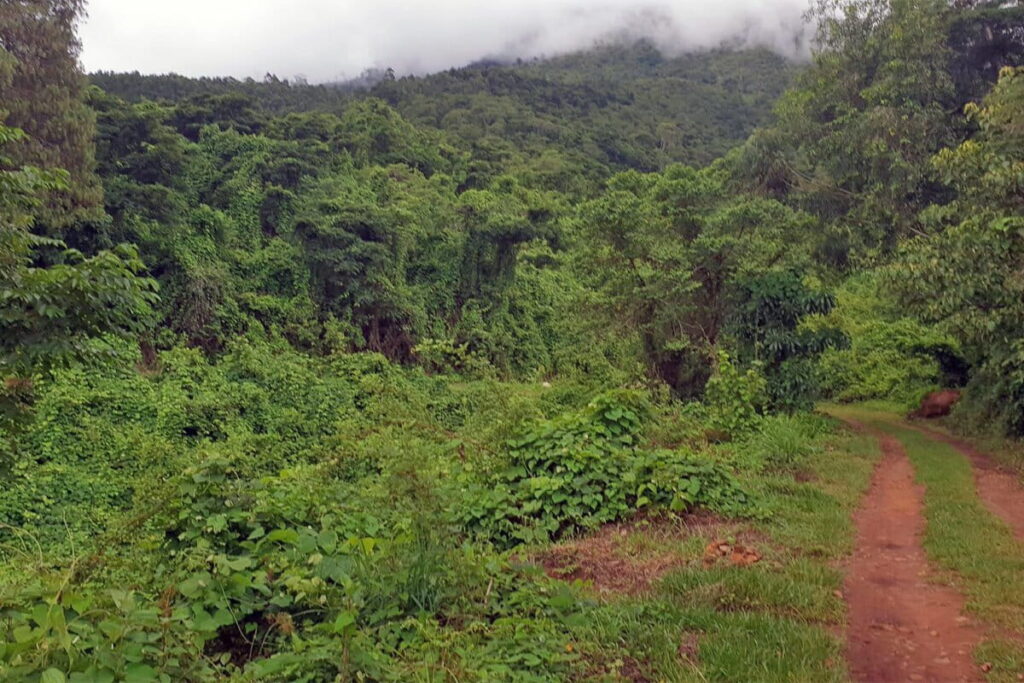
The concessions cover forest reserves, including South Viphya, Dwambazi, Dzalanyama, Michiru and Chimaliro, according to company disclosures and memoranda signed during the UN climate summit in Dubai in 2023.
Mota-Engil and its partners say the forests could generate more than 30 million tonnes of “high-integrity” carbon removal credits under Verra’s Methodology for Afforestation, Reforestation, and Revegetation (ARR), aka VM0047, and Climate, Community and Biodiversity standards.
Removal credits are meant to reflect carbon taken out of the atmosphere and stored, for example, in growing trees, rather than emissions avoided.
At a notional $50 a tonne, a price some analysts consider plausible for premium removal credits, gross revenues could exceed $1.5 billion over the life of the project.
Malawi’s previous experience is far smaller: it has earned about $150 000 (about MWK 300 million) from selling 75 000 credits under earlier REDD+ programmes.
REDD+ is a UN-backed approach that pays countries or projects for reducing emissions from deforestation and forest degradation, and for protecting or improving forest carbon stocks.
Under the agreement disclosed to Portuguese regulators, Trafigura will pay up to $100 million, half on signing, in exchange for exclusive marketing rights. Proceeds from credit sales, minus Trafigura’s commission, would flow to Mamaland.
However, its listing documentation at the Verra registry indicates the MoRe REDD Project, but the methodology cited is for ARR projects.
What remains unclear is Malawi’s cut. Public documents do not specify the government’s share, and no revenue-sharing formula has been published.
For land-based projects in protected areas like the MoRe project by Mamaland, the carbon framework states that the share of proceeds for the government is 25%, but the national government retains 17%, and 3% will go to local government, while the communities will have 5%.
Sosola cautions that a conventional forestry concession should not be treated as automatically including carbon rights.
Timber permits typically cover “forest produce”, he said, while carbon sequestration is an ecosystem service that needs to be “unbundled” and explicitly authorised.
Under Malawi’s 2025 framework, project proponents must apply to the Environmental Affairs Department for a letter of authorisation to legally claim credits.
The project also turns on international accounting rules. For overseas buyers to claim the credits, Malawi must ensure the same reductions are not counted towards its own climate targets.
“If Malawi authorises a credit for international sale, it must perform a corresponding adjustment,” Sosola said, a kind of double-entry bookkeeping for emissions.
Critics say the framework is not enough. A standalone carbon-credit law, with enforceable rules on ownership, consent and benefit-sharing, is still pending.
Mota-Engil Malawi’s Public Relations and Media Manager, Thomas Chafunya, said questions about revenue benchmarks and concession terms should be directed to the government, which would ensure transparency and accountability.
A 40-year exclusive structure could constrain future governments’ options on land use and climate policy. “When a government grants commercialisation rights for 40 years, it is essentially locking in land use for two generations,” Sosola said.
He suggests periodic reviews built into benefit-sharing clauses so Malawi is not “stuck with 2024 prices in 2060”, given that carbon prices could climb.
Both the department of Forestry and the Ministry of Natural Resources did not respond to questionnaires sent to them.
Sosola also pointed to the need for a functioning registry to track issued credits and prevent double selling, and for a national buffer reserve to insure against reversals from fires or illegal logging.
Trafigura is one of the world’s largest commodity traders, and one with a controversial history.
In 2006, a Trafigura-chartered tanker, the Probo Koala, offloaded toxic waste in Côte d’Ivoire, triggering a public-health crisis in Abidjan. The company later paid $198 million to the Ivorian government for cleanup and agreed to a £30 million settlement with residents, while denying criminal wrongdoing.
In March 2024, Trafigura pleaded guilty in the United States to conspiring to bribe officials at Brazil’s state oil company, Petrobras, admitting to paying nearly $20 million in corrupt commissions. It agreed to pay about $127 million in fines and forfeitures.
In January 2025, Switzerland’s Federal Criminal Court convicted the company and a former executive over corruption linked to bribes paid to an Angolan oil official. In a separate US enforcement action in mid-2024, regulators fined the company $55 million for market manipulation and misuse of confidential information.
Trafigura says it has overhauled its compliance systems and operates under strict anti-bribery controls.
For Malawian civil society, the company’s history reinforces the need for domestic oversight that can withstand political pressure.
The reserves are not empty landscapes.
Around Dzalanyama and South Viphya, smallholder farmers clear plots for maize and beans. Charcoal producers feed markets in Blantyre and Lilongwe. Women walk kilometres to collect firewood and wild mushrooms.
More than 96% of Malawian households rely on biomass for cooking fuel, a major driver of deforestation. “If we fence people out to ‘protect’ the carbon, we haven’t created a project; we have created a conflict,” Sosola said.
He argues projects should be designed around lawful customary use: land-tenure mapping, zoning for sustainable harvesting, and reinvesting proceeds into alternatives such as fuel-efficient cookstoves and higher-yield farming.
In a village near Dwambazi, a local leader said community meetings promised nurseries and forest-guard jobs but could not explain how long the land would remain under concession or what share of revenue would return to local people.
Mamaland says community benefit is central to its model, citing plans for a large native-species nursery and a 10 000-hectare “energetic forest” to supply sustainable fuelwood. Detailed revenue-sharing terms, however, have not been made public.
Supporters, including former vice president Michael Usi, who championed private-sector forest restoration as environment minister, frame the partnership as a path to climate finance.
Sceptics see a familiar pattern: long-term foreign rights secured while regulation lags. Across Africa, carbon projects have already sparked backlash.
A rangelands carbon initiative in Kenya was suspended after a court found flaws in public participation. In Liberia, proposals to place large areas under carbon concessions drew accusations of “carbon colonialism”.
Malawi, too, has a history of contested land and extractive projects, from uranium mining in Karonga to sugar estates in Chikwawa.
The Mamaland–Trafigura partnership links Malawi to a global market that has faced scrutiny over credit quality and overstated climate claims. Verra’s VM0047 methodology, introduced in 2023 and updated in 2025, aims to tighten standards, but debates about additionality and permanence persist.
Sosola said the difference is not academic: it determines whether Malawi sells “high-integrity” assets, or fuels a “Wild West” trade.
For a country that has earned only about $150 000 from carbon trading so far, the potential upside is seductive. But the cost of getting the rules wrong could be measured in conflict, litigation and a generation of lost leverage.
