
A programme intended to channel record international financing into electricity access has instead left 84 per cent of Malawians without access to grid electricity.
By Collins Mtika
Despite ranking among the top three recipients of international renewable energy financing among the world’s least developed countries, Malawi remains one of the least electrified nations on Earth.
Published data from a flagship United Nations report shows that only 16 per cent of Malawi’s population has access to electricity, placing the southern African country third from the bottom globally.
Only Chad, at 13 percent, and South Sudan, at 5 percent, record lower rates.
The disparity is difficult to ignore.
The finding, contained in Tracking SDG 7: The Energy Progress Report 2026, a joint publication by five multilateral institutions, raises a documented question: why is a country receiving hundreds of millions of dollars in international energy financing still struggling to expand electricity access?
The report was jointly produced by the International Energy Agency, the International Renewable Energy Agency, the United Nations Department of Economic and Social Affairs Statistics Division, the World Bank and the World Health Organization.
Released in June 2026, it places Malawi’s electrification challenge within a broader global context.
An estimated 655 million people worldwide still lack access to electricity, while progress across sub-Saharan Africa has slowed significantly.
The report’s custodian agencies state that the region must triple the pace of electrification to achieve universal access by 2030.
The figures are striking on both sides of the ledger.
Malawi received US$245 million (about K429 billion) in international public financing for renewable energy in 2024 alone, one of the largest allocations among least developed countries.
Among that group, only Angola, with US$787 million, and Ethiopia, with US$491 million, received more.
Malawi’s allocation formed part of the US$3.7 billion in international public financial flows directed to least-developed countries that year.
Those figures do not stand alone.
In 2026, the World Bank concluded the Malawi Electricity Access Project, reporting that it had connected nearly two million people to electricity, exceeding its original target of 1.6 million beneficiaries.
Launched in 2019, the project combined grid expansion with private-sector-led solar home systems.
Separately, a US$250.8 million grant (approximately K435.6 billion) was provided through the Accelerating Sustainable and Clean Energy Access Transformation in Malawi project.
World Bank Group Vice President for Infrastructure Valerie Levkov said in June 2026: “We have the solutions to accelerate progress, proven technologies, effective financing models, and strong partnerships, but constrained public budgets mean we must also mobilise much greater private sector investment.”
Even so, the reported 16 percent electricity access rate remains difficult to reconcile with the scale of investment directed toward the sector.
Brave Mhone, president of the Renewable Energy Industries Association of Malawi, offered one explanation during an interview.
He said much of the financing entering Malawi’s energy sector is absorbed by maintaining the country’s ageing electricity infrastructure rather than expanding it. An increasing share also supports off-grid energy solutions.
“We can talk of a lot of money in value, but the output will be limited because the majority is not going into a new generation or expanding the grid but maintaining what we already have,” Mhone said.
Mhone said the overall electricity access rate is higher than the SDG 7 report’s grid-access figure.
When off-grid technologies, including solar home systems, are included, he said electricity access reaches about 25.9 per cent of the population, with 14.6 per cent provided through off-grid technologies.
Separately published World Bank data corroborate the combined 25.9 percent figure. That distinction between grid connectivity and off-grid access is significant.
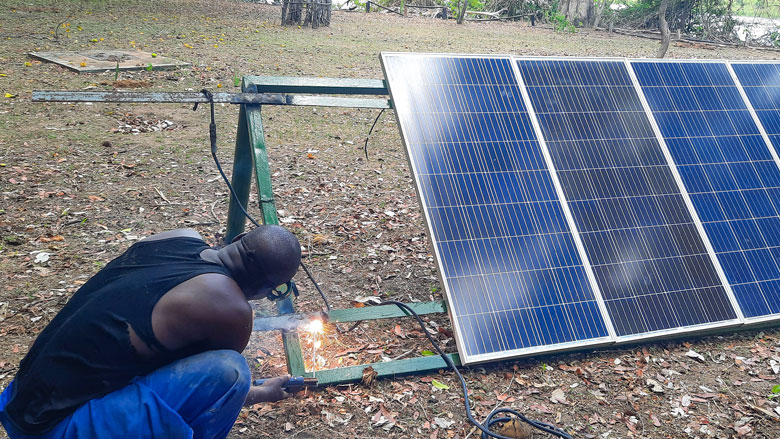
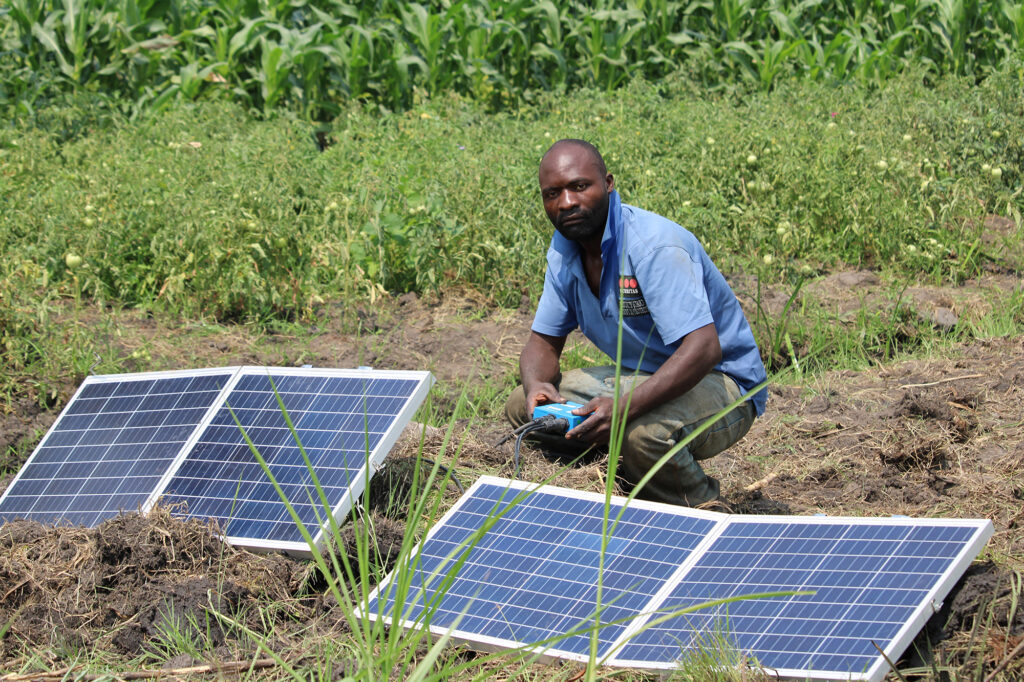
Off-grid solar can power lighting and charge mobile phones. It cannot reliably operate factories, refrigerate medicines in hospitals or power grain mills.
The gap between the two figures represents the difference between basic electricity access and the reliable energy needed for industrial and economic development.
Part of the maintenance burden is structural.
Malawi’s electricity generation remains heavily concentrated in ageing hydroelectric facilities along the Shire River.
The Electricity Generation Company (Malawi) Limited (Egenco) currently supplies 444 megawatts to the national grid, comprising 390MW from hydroelectric generation, 53MW from diesel generators and 1.3MW from solar.
In November 2025, Egenco reported that equipment failures had reduced available generation capacity to 347.35MW after two major hydroelectric units went out of service simultaneously.
Egenco officials later told Parliament’s Committee on Government Assurances and Public Reforms that the electricity system remained under pressure from equipment failures, fuel shortages and rising demand.
The country’s dependence on a single river basin means that periods of drought or major technical failures can quickly translate into nationwide power shortages.
The contrast between international financing and domestic public investment is equally stark.
In the 2025/26 financial year, the Malawian government’s energy sector budget projected a financing gap of about K447 billion.
The Ministry of Finance, Economic Planning and Development allocated K21 billion against an estimated sector requirement of K468 billion, leaving a shortfall equivalent to 95.5 per cent of identified needs.
The gap does not necessarily suggest mismanagement of public resources.
Malawi is a low-income country operating under severe fiscal constraints, and the national budget remains heavily dependent on donor support.
Nevertheless, the scale of the domestic shortfall places extraordinary pressure on international financing to carry a burden that domestic revenues cannot.
Kandi Padambo, former chief executive officer of the Electricity Supply Corporation of Malawi (ESCOM), said the financing gap threatens the country’s electrification targets.
Padambo said Malawi would need to increase electricity access by roughly 12 percent each year over the next four years to meet the government’s objectives. Current trends, he said, remain well below that pace.
The scale of the challenge is outlined in the Malawi National Energy Compact, agreed between the government and the World Bank under the Mission 300 initiative, which aims to connect 300 million people across Africa to electricity by 2030.
According to the compact, Malawi requires US$5.5 billion (approximately K9.55 trillion) to increase electricity access from 25.9 per cent to 70 per cent by 2030.
At the time of reporting, only US$530.8 million had been secured, leaving a financing gap of about US$4.95 billion.
The compact’s first pillar, covering electricity generation through Egenco and independent power producers, requires US$2.743 billion. Only US$13 million had been secured.
That arithmetic deserves serious scrutiny.
Malawi restructured its electricity sector in January 2017 after Parliament passed legislation the previous year, unbundling the vertically integrated ESCOM into two separate state-owned companies.
Egenco assumed responsibility for electricity generation, while ESCOM retained transmission and distribution.
The restructuring, supported by the United States Millennium Challenge Corporation and the World Bank, was intended to introduce competition, attract independent power producers and separate commercial functions within the sector.
More than 80 independent power producers have signed memorandums of understanding with the government. However, only 11 have executed power purchase agreements, and most projects remain at the planning stage.
The governance framework exists. The oversight institutions exist. International financing exists.
But the documentary record does not fully explain why those elements have not translated into grid expansion at a pace commensurate with the level of investment.
A partial explanation lies in the structure of Malawi’s electricity system.
About 88 percent of installed generation capacity comes from hydroelectric power, drawn almost entirely from stations on the Shire River. The country has no reserve generation margin, while electricity theft and other non-technical losses have been estimated at about 30 percent of total generation.
ESCOM has reported reducing non-technical losses from 23 percent to 17.8 percent through prepaid metering and network automation, with a target of reducing them further to 16 percent.
These are measurable improvements. They do not resolve the underlying gap between installed generation capacity and the country’s stated electrification ambitions.
The government has committed to developing the 350-megawatt Mpatamanga Gorge Hydropower Project on the Shire River through a public-private partnership. The project is expected to cost about US$1.5 billion.
The World Bank has approved a US$350 million International Development Association grant toward the project. Construction is expected to begin in 2026, with completion projected up to five years later.
Even if construction proceeds as planned, the additional generation capacity is unlikely to come online before the government’s 2030 target of achieving 70 percent electricity access under Malawi 2063, the national long-term development strategy that aims to transform Malawi into a lower middle-income country by 2030 and an upper middle-income country by 2063.
The human impact is clear.
With only 16 per cent of the population connected to the national grid, about 17.6 million of Malawi’s estimated 21 million people remain without grid electricity. Rural access stands at about 3.8 per cent of households, compared with 56.5 per cent in urban areas.
More than 85 per cent of Malawians live in rural areas. The communities most dependent on reliable electricity for agriculture, health care and education therefore remain the least likely to receive it.
Consider a functioning rural clinic powered by solar energy. It can provide lighting, charge mobile phones and operate basic diagnostic equipment.
Without grid electricity or a reliable off-grid system, however, it cannot consistently refrigerate vaccines, operate surgical equipment or support other services that require stable, scalable power.
The distinction between basic access and productive access lies at the heart of what Malawi’s financing gap means in practice.
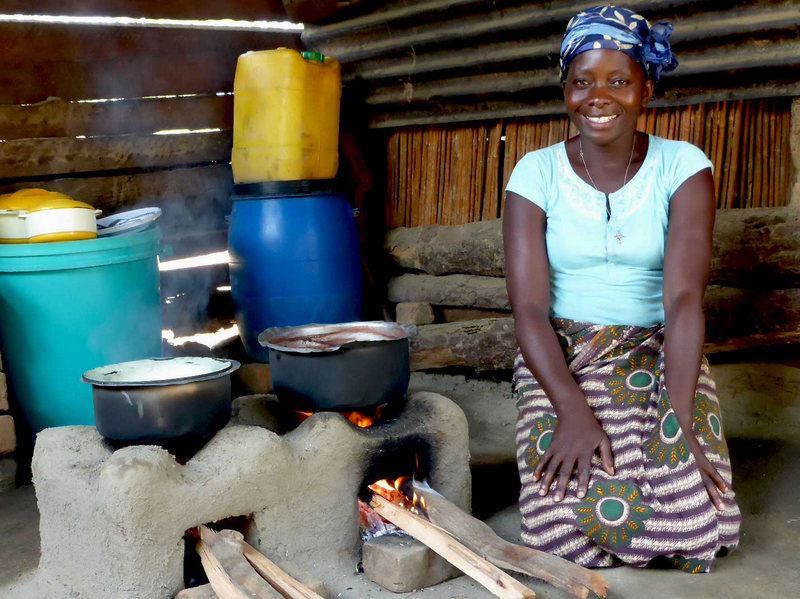
Firewood and charcoal remain the country’s principal cooking fuels, reflecting the low level of electricity access.
Under the National Energy Compact, the government aims to provide clean cooking solutions to 75 per cent of households through the distribution of improved cookstoves and cleaner fuels. Achieving that target will require financing beyond what has so far been secured.
Malawi’s electrification deficit also has regional implications.
Power purchase agreements with Zambia signed in 2018 and technical arrangements with Mozambique in 2019 have yet to deliver operational electricity imports because the necessary transmission interconnections have not been completed.
The National Energy Compact proposes constructing 1,940 kilometres of transmission lines and regional interconnectors linking Malawi with Mozambique, Zambia and Tanzania, enabling participation in both the Southern African Power Pool and the East African Power Pool.
Progress on those interconnections depends on closing a financing gap of US$4.95 billion, almost nine times the international public financing Malawi received for renewable energy in 2024.
The SDG 7 custodian agencies said in their June 2026 report that sub-Saharan Africa must triple the pace of electrification if the region is to achieve universal electricity access by 2030.
The documented record is clear about the scale of Malawi’s challenge but less clear about its underlying causes.
The country continues to attract international energy financing on a scale that places it among the leading recipients within the least developed countries. But its electricity access rate remains among the world’s lowest.
The precise reasons for that disconnect remain unresolved.
The available evidence points to several contributing factors, including high maintenance costs for ageing infrastructure, limited grid expansion, substantial domestic financing constraints and heavy dependence on a single hydroelectric system.
