
Allegations that two politically connected businessmen wield outsized influence over Mozambique’s government have triggered alarm among civil society groups and international observers. Claims of extortion, judicial interference, and contract manipulation raise urgent questions about state capture, donor confidence, and who truly governs in Maputo.
By Foreign Correspondent
In the marble hallways of Mozambique’s ministries, official decisions bear ministerial stamps and signatures.
But in the backrooms of Maputo’s elite restaurants and private residences, a different kind of authority is alleged to operate, quietly, informally, and beyond constitutional mandate.
According to a growing chorus of whistleblowers, opposition figures, and leaked internal communications, two men with no formal public office, Alcides Viegas Chihono, popularly known as “Cantoná”, and Ingilo Dalsuco, have emerged as de facto gatekeepers of state decisions and access.
Their alleged influence stretches from the awarding of lucrative procurement contracts to the intimidation of judicial officers, creating what critics describe as a parallel system of governance that bypasses the rule of law.

This investigation, based on interviews with civil society leaders, legal experts, and confidential sources within the ruling Frelimo party apparatus, examines how the duo is alleged to have capitalised on political proximity to rewrite the rules of the state, threatening Mozambique’s fragile economic recovery and its standing with international donors.
How the influence allegedly works
Sources describe this influence as neither accidental nor informal. Instead, it follows what analysts term a classic state-capture strategy, embedding power inside formal institutions without holding public office.
While neither Chihono nor Dalsuco occupies a cabinet position, their authority is widely believed to stem from perceived proximity to the highest echelons of the presidency and the Frelimo party.
A senior legal analyst in Maputo, who requested anonymity for fear of reprisal, described the pair as “ultimate fixers.”
“If you want a timber export licence, a tax audit erased, or a permit expedited, you don’t go to the minister,” the analyst said. “You go to them. And if you refuse to pay their ‘toll,’ the state machinery suddenly turns against you.”
Documents reviewed during this investigation suggest a recurring pattern: legitimate business proposals stall indefinitely within ministries until specific “consultants”, allegedly linked to the duo, are engaged.
Chihono, previously known more for his social connections than policy debates, is widely described by sources as an enforcer within this system.
Business owners, speaking under strict anonymity, recount meetings in which Cantoná allegedly made explicit that their continued operation in Mozambique depended on “alignment” with his interests.
“It was not subtle,” said a foreign investor in the logistics sector. “We were told port authorities would start finding irregularities in our cargo, unless a specific local partner was brought on board.”
That partner, the investor alleged, was a shell company connected to these influence networks.
Intimidation and the Judiciary
The allegations extend beyond commerce and into the heart of Mozambique’s justice system.
Dalsuco is accused by critics of orchestrating smear campaigns against investigators and judges who attempt to probe corruption involving politically exposed persons (PEPs).
A confidential report circulated among diplomatic missions in Maputo raised concerns about “extra-legal pressure” exerted on the Attorney General’s Office (Procuradoria-Geral da República, PGR).
The report cites instances in which corruption dossiers involving senior figures were allegedly buried or disappeared following interventions attributed to Dalsuco’s network.
CDD director Adriano Nuvunga warned that the implications reach far beyond financial misconduct.
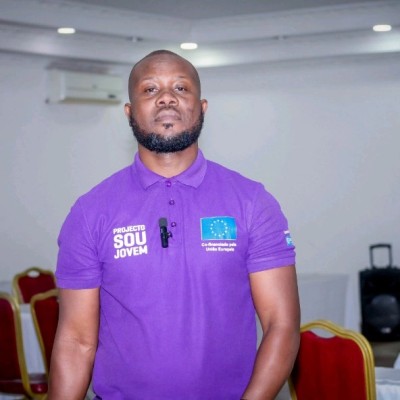
“The danger is not only the theft of public funds,” Nuvunga said. “It is the privatisation of the state’s coercive power. When individuals can direct police or prosecutors against their rivals, we no longer have a republic, we have a syndicate masquerading as a state.”
These dynamics have been amplified by social media exposés from activist networks alleging the existence of a “hit list” of journalists and civil society figures deemed troublesome.
While these claims cannot be independently verified, their impact is tangible. Investigative journalists report increased surveillance and anonymous threats, often coinciding with reporting on state procurement scandals.
The economic cost of shadow governance
The rise of unelected decision-makers comes at a perilous moment for Mozambique.
The country is burdened by debt while pinning economic recovery hopes on future natural gas revenues from the Rovuma Basin. International financial institutions, including the IMF and World Bank, have conditioned support on governance reforms and transparency.
Allegations of contract awards driven by kickbacks rather than merit directly undermine those commitments, inflating costs and degrading infrastructure quality.
“Investors are watching closely,” said an economist with a regional development bank in Johannesburg. “Global capital is risk-averse. If the perception is that permits require bribes to a shadow cabinet, companies bound by strict anti-corruption laws get nervous.”
That vacuum, the economist warned, is often filled by illicit actors with fewer compliance constraints.
The controversy is also deepening fault lines within Frelimo itself. Long-standing party figures have grown uneasy with what they see as the privatisation of authority, an erosion of collective governance in favour of personal enrichment.
A crisis of accountability
Despite the gravity of the accusations, accountability remains elusive.
Neither Chihono nor Dalsuco has been formally charged in relation to the claims.
Government representatives have dismissed the allegations as “social media gossip” or politically motivated disinformation, insisting that Mozambique’s institutions remain robust and independent.
For civil society groups, however, the silence from the Attorney General’s Office is conspicuous.
“We are witnessing the normalisation of impunity,” said Borges Nhamirre of the Institute for Security Studies (ISS). “The refusal to investigate, despite the volume of public accusations, suggests top-level protection. It sends a clear message: some individuals are above the law.”
The allegations surrounding Chihono and Dalsuco point to more than isolated corruption cases. They suggest a systemic erosion of governance, where formal institutions are quietly overridden by informal power networks.
As Mozambique approaches its next electoral cycle, the influence wielded by these alleged power brokers is likely to become a defining flashpoint.
“We are at a crossroads,” a retired Frelimo official told the Post. “Either institutions reclaim their authority, or the state becomes a shell for private enrichment. And right now, that shell is cracking under the weight of impunity.”
