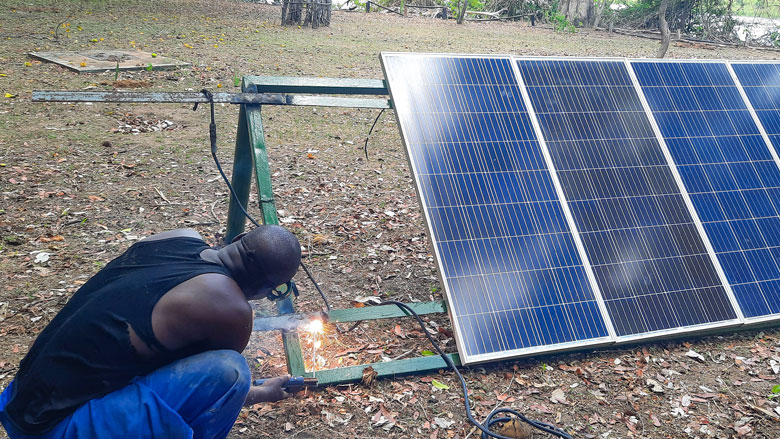
As off-grid solar transforms energy access in Malawi, a hidden crisis is unfolding. The uncontrolled recycling of lead-acid batteries is contaminating neighbourhoods, ‘damaging’ children’s brains, and exposing deep failures in environmental governance.
On clear mornings in Lilongwe’s Mtsiliza ward, the air smells of burning plastic and hot metal. At Mtsiliza Primary School, pupils line up for assembly as black smoke drifts over the perimeter wall.
Less than 100 metres from the classrooms, an unlicensed lead smelter operates around the clock.
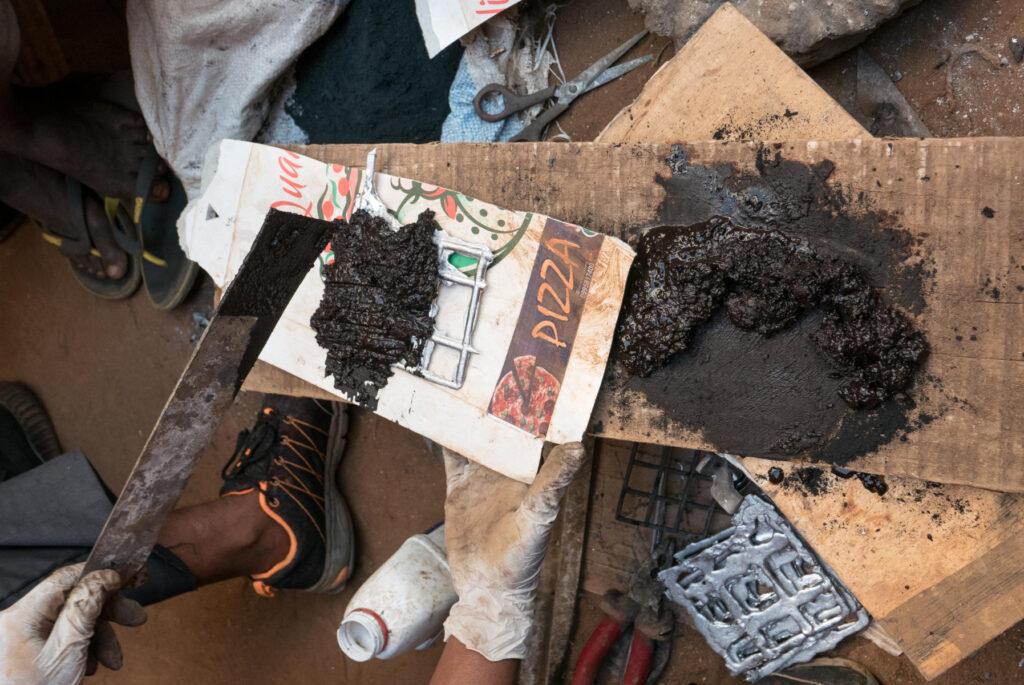
Discarded solar batteries are broken open by hand and melted in crude furnaces. Sulphuric acid seeps into the soil. Lead fumes rise into the air. Children inhale them.
“This smoke gives the children headaches,” says Mr Banda, a parent who lives nearby. “But there is nowhere else to go.”
The smelter violates Malawi’s environmental laws. It also exposes a regulatory vacuum in the country’s handling of hazardous waste from clean-energy systems.
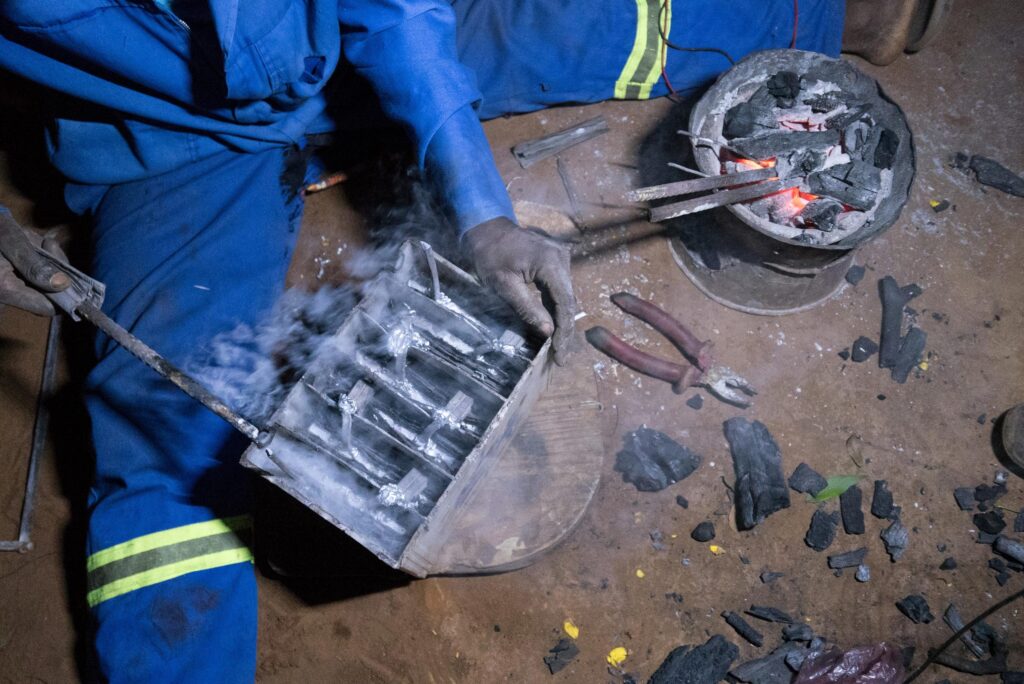
Still, it operates openly, beside a public school, in one of the capital’s most densely populated neighbourhoods.
What is happening in Mtsiliza is not an isolated incident. It is the visible edge of a much larger crisis. One created by Malawi’s rapid expansion of off-grid solar power, celebrated internationally as a development success.
A clean-energy success with a toxic underside
Over the past decade, Malawi has become a poster child for off-grid solar electrification. Backed by more than US$20 million in World Bank funding, solar home systems now power clinics, schools and households across the country.
For a nation where fewer than 15 per cent of people are connected to the national grid, the expansion has been widely praised.
But the systems that power this transition rely overwhelmingly on lead-acid batteries. Cheap, heavy, and hazardous.
Lead-acid batteries contain sulphuric acid and lead, a potent neurotoxin. In children, even low-level exposure can impair brain development, reduce IQ, and cause permanent neurological damage.
As Malawi’s solar sector scaled rapidly, so did its battery waste. Hundreds of thousands of batteries were deployed into a price-sensitive economy with no formal system to manage them when they fail.
And they fail frequently. Surveys by SolarAid show that battery failure accounts for 87.5 per cent of solar system failures in health facilities.
Each failure produces hazardous waste. Almost none of it is tracked, regulated, or safely recycled.
The African treaty designed to prevent this
More than 30 years ago, African states anticipated precisely this danger.
In 1991, governments adopted the Bamako Convention on the Ban of the Import into Africa and the Control of Transboundary Movement and Management of Hazardous Wastes within Africa.
It is the continent’s strongest legal response to toxic dumping and hazardous-waste mismanagement.
The Convention explicitly classifies lead-acid batteries as hazardous waste. It imposes strict, unlimited liability on hazardous-waste generators. It requires reporting, tracking, and consent for hazardous waste moving within or across borders.
Yet, as UNEP confirms, Malawi is not a Party to the Bamako Convention.
“Malawi is not a party to the Bamako Convention. Consequently, the Convention’s legal obligations, compliance procedures, and reporting requirements are not binding on Malawi,” says Alex Mangwiro, Regional Coordinator for Chemicals, Waste and Air Quality at UNEP and Programme Management Officer for the Bamako Convention Secretariat.
This clarification matters.
It means that one of Africa’s most comprehensive hazardous-waste treaties does not apply to a country experiencing one of the region’s fastest expansions of lead-based energy storage.
UNEP further stresses that it does not police states.
“Neither the Bamako Convention Secretariat nor UNEP evaluates or adjudicates compliance by non-party states,” Mangwiro explains. “UNEP does not function as an enforcement body or regulator over states.”
The consequence is stark. A hazardous-waste crisis can unfold in full view, without triggering any continental compliance mechanism.
Laws on paper, gaps in practice
Domestically, Malawi’s legal framework appears robust.
The Environmental Management Act of 2017 created the Malawi Environment Protection Authority (MEPA), granting it powers to regulate hazardous waste, enforce compliance, and prosecute environmental crimes.
Malawi Environment Protection Authority (MEPA) Information and Education Manager, Aubren Chirwa, said Malawi may already have domestic laws that govern hazardous waste, which they consider sufficient, reducing the immediate need to ratify the Bamako Convention.
In October 2024, Malawi adopted its first National E-waste Management Policy.
While the policy references Extended Producer Responsibility, the international standard that makes producers responsible for products at the end of life, it stops short of making EPR legally enforceable.
There are no binding obligations. No mandatory reporting. No penalties for non-compliance. UNEP is unambiguous on this point.
“Purely voluntary or non-binding Extended Producer Responsibility frameworks are not sufficient to meet international best practice for hazardous-waste management,” Mangwiro says. “Effective EPR schemes require clear legal frameworks, defined responsibilities, and adequate financing mechanisms.”
Most critically, Malawi has no licensed lead-acid battery recycling facilities, despite the scale of battery deployment nationwide.
Public records show no evidence that Malawi has established a national hazardous-waste coordinating body or a functional tracking system for battery waste.
Lead released, uncounted
The environmental consequences are already measurable.
Researchers at the University of Manchester estimate that between 3.5 and 4.7 kilograms of lead are released when a single 40-amp-hour battery is informally smelted.
At scale, this translates into tonnes of lead dispersed into residential areas.
However, Malawi has no national system to track battery volumes, failure rates, recycling pathways, or lead emissions.
UNEP confirms that, because Malawi is not a Bamako Convention Party, it submits no hazardous-waste data to the Convention Secretariat. Its absence does not technically violate the Convention.
But it leaves the Regional Clearing-House Mechanism blind to what is happening on the ground. More broadly, UNEP notes that it can only assess hazardous-waste risks where evidence is provided.
“To respond meaningfully to assertions of environmentally unsound practices, UNEP would require specific information on locations, scale, waste streams, and any links to transboundary movement,” Mangwiro says.
In Malawi, such information is not systematically collected by the state.
Strict liability, soft enforcement
Under the Bamako Convention, liability for hazardous waste is strict and unlimited. Importers and generators remain responsible for waste indefinitely.
But because Malawi is outside the Convention, that framework is not legally engaged.
In practice, solar companies operating in Malawi have largely disclaimed responsibility once systems are sold or installed. Several emphasise that they “sell technology, not waste”.
UNEP rejects that logic in principle.
“International best practice requires that battery suppliers contribute to safe take-back and recycling systems,” Mangwiro says. “This is central to Extended Producer Responsibility approaches.”
SolarAid has begun transitioning to lithium iron phosphate batteries and collects old lead-acid batteries for storage pending future recycling capacity. However, storage without a disposal pathway does not meet international standards.
Other operators have made limited or unclear commitments.
Children downwind
The human cost is borne by children.
UNEP recognises lead exposure as “a severe environmental and public health risk, particularly for children living near informal recycling or smelting of used lead-acid batteries”.
Lead exposure in children causes irreversible neurological damage. Reduced cognitive ability. Behavioural disorders. Lifelong impairment.
Where such risks are identified, UNEP recommends immediate safeguards.
“These include halting informal smelting, restricting access to contaminated sites, strengthening enforcement of hazardous-waste regulations, and improving safe battery-collection systems,” Mangwiro says.
But UNEP also makes clear that it can only act in a technical and advisory capacity, working cooperatively with governments.
Enforcement remains a national responsibility.
A crisis that did not have to happen
Across East and Southern Africa, licensed battery-recycling facilities operate profitably with emissions controls and worker protections.
South Africa implemented mandatory EPR for batteries in 2021. Kenya and Nigeria introduced battery-specific regulations in 2024. Rwanda operates active battery-recycling programmes.
Malawi chose a different path. Expansion first. Regulation later.
Standing near the school wall in Mtsiliza, watching smoke curl into the air, Mr Banda is blunt. “We are trading our children’s minds for cheap energy.”
The furnaces burn. Lead circulates. Children breathe it. The failure is not technological. It is regulatory, political, and institutional.
Until hazardous-waste governance is embedded into Africa’s clean-energy transitions, solar power will continue to cast a toxic shadow. One borne not by investors or suppliers, but by children living downwind of informal smelters.
