As El Niño scorches southern Africa and global aid budgets tighten, Malawi’s cautious but accelerating embrace of biotechnology is becoming a regional stress test for food security, economic stability, and geopolitical influence.
On a dry patch of land near the capital, farmer Grace Banda kneels beside maize that should be waist-high by January. Instead, the stalks barely reach her knees.
The rains, usually expected in November, arrived three weeks late this season and stopped abruptly in early January. Her conventional seeds, planted with borrowed money, are failing.
Just two kilometres away, trial plots run by the Department of Agricultural Research Services tell a different story.
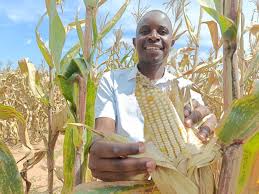
Genetically modified (GM) maize, developed for drought tolerance by the International Maize and Wheat Improvement Center in collaboration with Malawian scientists, stands taller and greener under the same punishing skies.
In Kasungu, Chimwemwe Phiri walks through similarly struggling maize fields, but an adjacent plot with biotech seed is thriving. “The old seeds wait for rain that does not come,” she says, crumbling dry soil. “This new seed waits longer.”
Malawi’s long, fractious debate over genetically modified organisms (GMOs) has shifted into a matter of survival. Agriculture contributes nearly a third of GDP and employs most Malawians.
When maize fails, households suffer first, then foreign reserves drain, inflation rises, and external bailouts become more likely.
Drought-tolerant maize, the country’s staple crop feeding nearly 60% of the population, is now at the centre of this shift.
Following the commercial rollout of Bt cotton in 2019 and insect-resistant cowpea in 2022, this new GM maize is awaiting final regulatory clearance after concluding field trials last year.
The stakes go beyond Malawi.
Southern Africa has endured three major droughts in the past decade, slashing cross-border grain supplies and pushing up food prices.
If Malawi can stabilise yields using biotechnology, neighbouring nations facing similar climate shocks may follow its lead.
“We cannot continue using the same seeds our grandparents used when the weather has fundamentally changed,” says Dr Mangani Katundu, director of crop research at the Ministry of Agriculture. “Every season now is unpredictable.”
Science meets systems
The technology is promising, but science is just one hurdle. Getting advanced seed into remote villages is a battle of logistics and affordability.
Certified drought-tolerant hybrids can cost several times more than saved, open-pollinated seed, a steep ask for families living on less than $2 a day.
“Without the subsidy, the technology stays on the shelf. The state must de-risk the purchase,” says agricultural economist and former MP Felix Jumbe.
The government’s Affordable Inputs Programme, though criticised for cost overruns and corruption, remains the main pathway for moving biotech seed from shelves to soil.
Under water stress conditions in government trials, GM maize yielded 2.9 tonnes per hectare, a 60% increase over the national average of 1.8 tonnes.
In a country where agriculture employs 80% of the workforce and contributes about 30% of GDP, even modest yield gains translate into greater food security, lower import bills, and reduced pressure on the national budget.
But progress is slow.
Malawi’s biosafety laws, enacted in 2007, require multiple stages of confined and open-field trials before commercial approval. Drought-tolerant maize entered trials in 2019; five years later, farmers still wait.
Officials cite the need for environmental safety and due diligence. Critics point to bureaucratic inertia and under-resourced regulatory bodies.
Public scepticism and sovereignty fears
Public trust remains another barrier. Civil society groups, including the Malawi Farmers Union, worry about seed affordability, dependence on corporate-owned genetic material, and the risk of marginalising traditional varieties.
Past efforts to promote hybrids left many farmers reliant on annual seed purchases, abandoning the age-old practice of saving seed, central to risk management in smallholder farming.
“Biotechnology is not a silver bullet,” says Isaac Maliro, an agricultural economist at Lilongwe University of Agriculture and Natural Resources. “If farmers can’t afford the seed, or if it requires expensive inputs, then climate resilience is still out of reach.”
There are broader concerns too: reliance on proprietary seed strains can threaten biodiversity and local seed systems, often referred to as “living libraries” adapted to microclimates across Malawi.
Losing these systems could reduce future adaptability in a warming world.
Geopolitics in the furrows
Malawi’s biotech pivot also intersects with shifting geopolitics. As Western donors tighten budgets, China is stepping up investment in agricultural tech-transfer centres across Africa, positioning food security as a form of soft power.
While U.S. and European companies dominate the commercial seed market, Chinese state-linked firms are increasingly involved in trials for key crops such as rice and cotton.
The same droughts stunting maize are also hitting burley tobacco, one of Malawi’s few major export crops. When food production falters, land and labour shift away from cash crops, disrupting export earnings and trade negotiations.
If maize draws the politics, cotton shows the economics. Since adopting Bt cotton, farmers like Joseph Nkhoma in Salima report spraying pesticides only twice a season instead of twelve, significantly lowering input costs and health risks, even when global prices fluctuate.
These gains have emboldened regulators to accelerate reviews of GM maize and cowpea.
The Clock is ticking
In December 2024, the government of then-president Lazarus Chakwera declared a national disaster after erratic rains jeopardised the 2024/25 harvest.
Authorities now estimate that 5.7 million Malawians, nearly 30% of the population, could require food assistance by April 2026 if yields remain depressed.
But for farmers like Grace Banda and Chimwemwe Phiri, these policy debates feel distant.
Both have heard rumours of “new seeds”, but neither knows when they’ll be available, what they’ll cost, or whether they require expensive fertilisers. What they do know is that every failed season brings their families closer to hunger and deeper into debt.
“If there is something that can help the crops survive when the rain is late, I want to know about it,” Grace says. “We need help now, not next year.”
Biotech is not Enough but it is a start
Genetics are not magic. Drought-tolerant seed still needs some water to grow.
With less than 5% of Malawi’s arable land under irrigation, the country remains highly exposed to climate extremes linked to the Indian Ocean Dipole and El Niño.
Real resilience will require combining biotechnology with expanded irrigation, dams, canals, and affordable solar-powered pumps.
Back in Kasungu, Chimwemwe Phiri’s biotech maize is setting cobs. They’re not large, but they’re enough to get her family through the season. Next door, her neighbour’s traditional maize is being cut for fodder.
Food aid will likely be needed.
That growing divide, between those with access to agricultural technology and those without, is the new fault line shaping Malawi’s rural economy, and perhaps the wider SADC region.
As climate shocks become the norm, the lab in Lilongwe now matters as much as the central bank. Agricultural technology is no longer a niche issue, it is national security.
