How does a nation, long versed in the language of acute illness, learn to speak about killers that do not announce their arrival?
By Collins Mtika
As the global health community remains focused on infectious diseases, a quiet but devastating wave of Non-Communicable Diseases (NCDs) is overwhelming Malawi.
This is not merely a health crisis; it is a profound communication failure, forcing a nation accustomed to fighting acute illnesses to find a new language for chronic conditions that kill without warning.
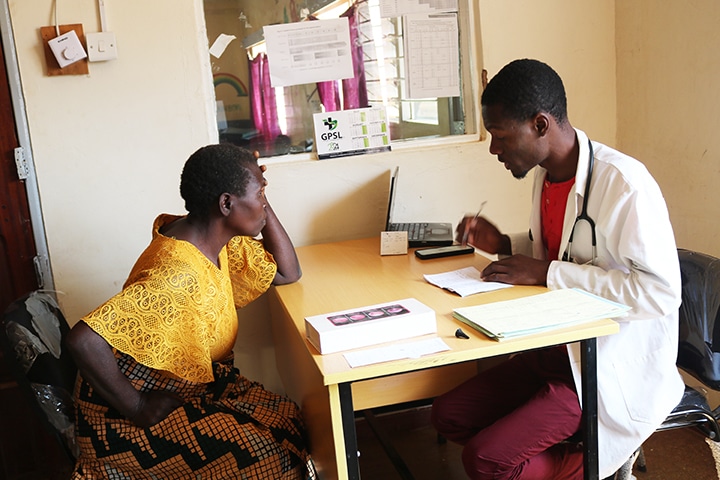
In the crowded outpatient department of Zomba Central Hospital, the queues paint a stark picture of Malawi’s shifting health landscape. One line consists of patients seeking care for familiar threats like Malaria and HIV.
The other, which grows steadily longer, is for an enemy far more insidious: hypertension and diabetes. These patients, waiting for Blood Pressure and Blood Sugar checks, are on the front lines of a silent epidemic.
Malawi, a country celebrated for its hard-won battles against HIV/AIDS, Tuberculosis, and Malaria, now confronts a disorienting new reality.
The rise of Hypertension and type 2 Diabetes is not only straining an already fragile healthcare system but is also challenging the very way Malawians understand health and illness.
The public health strategies once effective against infectious diseases are proving tragically insufficient for these lifestyle-driven conditions.
The central challenge is no longer just about medicine, but about crafting a message that resonates.
A Nation’s health in seismic shift
For decades, public health messaging in Malawi was defined by its clarity and urgency: “Sleep Under a Mosquito Net.” “Get Tested for HIV.” “Take Your ARVs.” These were life-or-death instructions for immediate threats.
But the ground is shifting with alarming speed.
According to the World Health Organization (WHO), NCDs are now estimated to cause 40% of all deaths in Malawi. A 2019 national survey revealed that one in three adults (33%) has high blood pressure, yet a staggering 90% are unaware of their condition.
The prevalence of Diabetes is also on the rise, with the International Diabetes Federation estimating that 352,300 adults in Malawi will have diabetes in 2025, a number projected to increase to 540,100 by 2050.
“We are witnessing a fundamental epidemiological transition,” states Dr. Beatrice Lydia Matanje Mwagomba, a leading Malawian Public Health Physician with extensive experience in creating the nation’s NCD programs.
“Our primary healthcare system was built to handle acute, infectious episodes. A Patient comes in sick, we provide treatment, they get better. NCDs defy this model. They are silent, they require lifelong management, and most critically, they require a complete re-education of the public.”
This re-education is where the battle is currently being lost.
The urgency of NCDs is invisible. There is no fever, no rash, and no sudden, terrifying symptoms until a catastrophic event occurs, a Stroke, a Heart Attack, Kidney failure, or Blindness.
Shattering the deadly myth of ‘The Disease of the Wealthy’
A significant obstacle to effective communication is the deep-seated cultural misconception that Hypertension and Diabetes are matenda a chuma—diseases of the wealthy.
In a nation where a majority of the population lives below the international poverty line, this perception is dangerously misleading.
Recent studies reveal that Malawians often attribute Hypertension to stress or “thinking too much,” while diet is more commonly linked to Diabetes. These beliefs can obscure the real, complex risk factors at play.
“You try to explain to a villager that their diet is putting them at risk, and they look at you with confusion,” explains a long-serving Community Health Worker. “For generations, being overweight was a sign of health, of having enough to eat. Now we must tell them it is a risk factor. It contradicts everything they know.”
The language used to describe these conditions also presents a barrier. While hypertension is often translated as kuthamanga kwa magazi (blood running too fast), the term lacks the immediate dread associated with malungo (fever/malaria).
Dr. Mwagomba, who has led the development of national NCD policies, notes the contrast with HIV campaigns that used clear, binary language of “positive” or “negative” and offered a tangible solution in antiretroviral therapy.
The message for NCDs, involving a gradient of risk and a lifelong commitment to behavioral change, is a much harder concept to communicate effectively.
When a healthy Plate is an unaffordable luxury
The universal advice for preventing Diabetes and Hypertension – eat a balanced diet, reduce Salt and Sugar, and stay active – can sound like a cruel joke in the Malawian context.
The staple food, Nsima, a thick maize flour porridge, is often all that is affordable.
Rapid urbanisation and severe economic pressures have shifted dietary patterns for the worse. Processed foods, high in Salt, Sugar, and unhealthy fats, are frequently cheaper and more accessible than fresh produce.
A recent analysis by Save the Children starkly illustrates this reality: between April 2021 and February 2024, the price of Maize surged by 503%. During this period, the cost of a nutritious diet for a family of five increased by 210%, making it unaffordable for the vast majority.
For the poorest households, the gap between their income and the cost of a healthy diet is now over 200%.
This economic reality creates a profound disconnect. Public health posters may advocate for brown rice and grilled fish, but the lived reality for millions is refined maize flour and fried, salty snacks.
The message of personal responsibility clashes with the harsh limitations of poverty.
Forging a new Language of health: Pockets of innovation
Despite these immense challenges, innovative strategies are emerging to create a new playbook for NCD communication.
In the rural district of Neno, the non-profit organization Partners In Health (PIH), known locally as Abwenzi Pa Za Umoyo, has pioneered a successful model for integrated NCD care.
This approach, which the Malawian government is scaling up through its PEN-Plus strategy, moves care from overburdened Central Hospitals to local Health Centres.
The PEN-Plus strategy equips mid-level Healthcare providers at the district level to manage severe NCDs like type 1 Diabetes and Rheumatic Heart disease, conditions that previously required travel to Central Hospitals.
Community Health Workers are trained not just to screen for infectious diseases but also to check Blood Pressure and Blood Sugar, often during door-to-door visits.
“Now people don’t wait until they are very sick to go to the hospital,” says Catherine Benito, a Community Health Worker in Neno. “We can identify the disease faster…and refer people to where they can access treatment.”
This proactive screening is critical. McKnight Maliro, a Health Surveillance Assistant in Thyolo District, recently identified a man with dangerously high blood pressure during a home visit.
“I was just going about my days, unaware of the ticking time bomb inside me,” the Patient, Demister Banda, recalled.
This model transforms the message from one of abstract risk to one of manageable, communal action. Patients are linked into support groups, fostering a sense of shared responsibility that was vital in the HIV response.
A new national conversation
Malawi stands at a critical juncture. The silent killers of diabetes and hypertension are no longer on the horizon; they are in the nation’s homes and villages.
In July 2024, Dr. Jonathan Chiwanda, the head of the NCD and Mental Health unit at the Ministry of Health, announced a new four-year national strategy to scale up NCD prevention and management, backed by partners like the World Diabetes Foundation and PIH.
“This national scale-up is a true testimony of the steady growth of NCD care and it is well aligned with the vision of achieving universal health coverage,” Dr. Chiwanda stated.
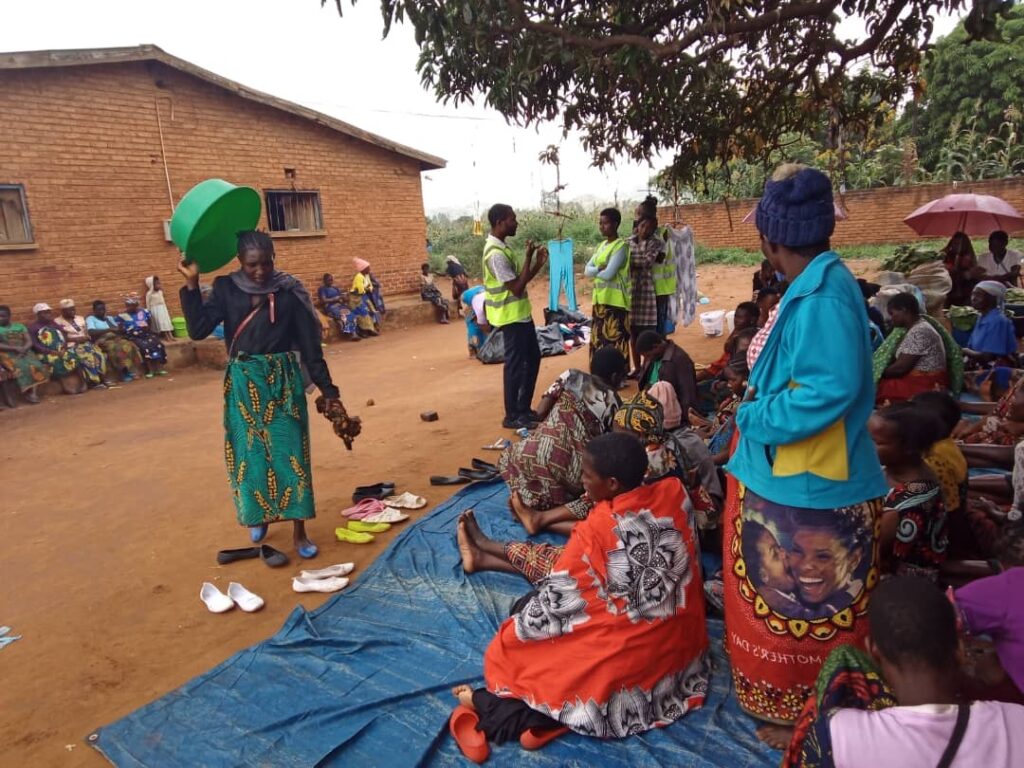
The strategy includes innovative communication efforts, such as establishing 30 new Radio Listening Clubs to reach remote populations and using theatre to disseminate health messages.
These initiatives aim to move beyond the myth that NCDs are diseases of the rich, acknowledging them as diseases of circumstance, exacerbated by poverty and global dietary shifts.
Defeating this epidemic will require more than clinics and medication. It demands a new national conversation about health—one that is medically accurate, culturally resonant, and economically realistic.
The challenge for Malawi is immense: to craft a voice for an enemy that whispers.
It must learn to speak a new language of prevention and long-term care, not with the panicked shout required for a pandemic, but with the steady, persistent, and empowering voice needed to sustain a population through a lifelong health journey.
The future health of the “Warm Heart of Africa” depends on it.
