
By Collins Mtika
A decade after the infamous “Cashgate” scandal, Malawi is hemorrhaging hundreds of millions of dollars annually through a sophisticated and quiet war waged by illicit financial flows, threatening the nation’s stability and future development.
More than ten years after Malawi was rocked by “Cashgate,” a massive corruption scandal that saw an estimated $250 million looted from public coffers, the country faces a more complex and elusive threat.
Illicit financial flows (IFFs), the illegal movement of money across borders, are draining as much as 5% of Malawi’s GDP annually, a staggering figure estimated at $650 million.
This financial bleeding has severe consequences in a nation where over half the population lives in poverty.
The lost funds could have built classrooms for the 2.1 million children still learning under trees or supplied hospitals that frequently run out of essential medicines.
Instead, this wealth vanishes into a shadowy world of shell companies, mobile wallets, and smuggled gold.
A new Face of Corruption
The methods of financial crime in Malawi have evolved significantly since Cashgate.
While public sector corruption persists, criminals are now adept at exploiting digital platforms, informal economies, and weak regulatory systems.
A 2020 report from Malawi’s Financial Intelligence Authority (FIA) documented cases where senior officials created fictitious companies in the names of relatives to siphon public funds through mobile banking, bypassing traditional oversight.
This has fueled a deepening crisis of public trust. “Truth be told, corruption is worsening,” admitted Mary Phombeya, Director of Corruption Prevention at the Anti-Corruption Bureau (ACB), in a candid public statement in mid-2024.
Her concern is reflected in a recent Afrobarometer survey, which found that 85% of Malawians rated their government’s handling of the economy as “fairly badly” or “very badly”.
The situation was further complicated by the departure of respected ACB Director General Martha Chizuma in May 2024 amid political pressure, intensifying fears that the nation’s anti-graft efforts are stalling.
The silent Gold Rush and Digital Loopholes
Beyond government corruption, two sectors have become major conduits for financial losses: illegal gold mining and mobile money fraud.
Malawi is undergoing a “silent gold rush,” with a surge in unregulated and untaxed artisanal and small-scale mining (ASM) in districts like Mangochi and Balaka.
These operations are vulnerable to criminal networks that use gold smuggling to launder money.
A 2023 Al Jazeera investigation, Gold Mafia, identified Malawi as a key hub for shell companies used in these laundering schemes. One tycoon, Simon Rudland, was accused of using gold smuggling to clean funds and evade sanctions.
According to Grain Malunga, coordinator of the Chamber of Mines and Minerals, “Illegal mining is thriving because of escalating poverty.”
Desperate informal miners are often exploited by middlemen who smuggle the gold into Tanzania and Zambia, far from the reach of Malawian tax authorities.
Malawi’s new Mines and Minerals law (2023), aimed at curbing illicit financial flows and streamlining operations, has been gazetted, but enforcement remains weak, despite the introduction of an artisanal mining policy.
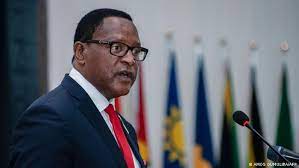
President Lazarus Chakwera acknowledged the scale of the problem, stating in a September 2020 address that Malawi loses an estimated $85 million in gold exports to the Middle East annually.
Simultaneously, mobile money platforms have become a double-edged sword. While vital for the financial inclusion of nearly 11 million users, they are also exploited for fraud and money laundering.
Criminals use identity theft and fake accounts to drain approximately MWK 120 million ($117,000) from users every month.
In a shocking revelation, telecom company TNM disclosed that over 91% of this fraud was traced back to Zomba Maximum Security Prison, where inmates and corrupt staff operated a large-scale scam.
The FIA also warns that criminals are increasingly using mobile wallets to deposit illicit funds and instantly transfer them abroad, leaving almost no trace.
A faltering Fightback
The consequences of unchecked IFFs are dire. The massive financial drain forces the government into heavy borrowing, deepening the national debt and crippling essential public services.
Following Cashgate, international donors froze $150 million in budget support, and though some aid has returned, many funders now bypass government systems entirely.
In response, Malawi has made some legal progress. The Financial Crimes Act of 2017 introduced non-conviction-based forfeiture, allowing authorities to seize assets linked to financial crimes without a criminal conviction.
This law was used in 2020 to confiscate over MWK 120 million from an account tied to a Reserve Bank official. Additionally, a new Mines and Minerals law was enacted in 2019 to better regulate the sector.
A 2024 review by the Eastern and Southern Africa Anti-Money Laundering Group (ESAAMLG) noted that Malawi had improved in several areas of technical compliance.
However, these efforts are undermined by persistent structural challenges. Financial crime cases move at a glacial pace through the courts; former ACB head Martha Chizuma noted that grand corruption trials can last over a decade.
Civil society groups like the Human Rights Defenders Coalition (HRDC) report facing increased harassment, raising fears of a shrinking civic space for anti-corruption advocates.
A Battle for the Nation’s Soul
Reversing this tide requires more than just new laws; it demands unwavering political will and an effective justice system.
While an inter-agency workshop in November 2024 aimed to strengthen coordination between the FIA, the Malawi Revenue Authority, and the police, skepticism remains.
Willy Kambwandira, Director of the Centre for Social Accountability and Transparency, warned that the leadership vacuum at the ACB could be a “tactical move to control the bureau’s activities”.
For ordinary Malawians, this is not a political game, it is a matter of survival. It is the difference between medicine and no medicine, a classroom and a tree.
Until Malawi can halt the devastating hemorrhage of its wealth, the national vision of becoming an “inclusively wealthy and self-reliant nation” will remain heartbreakingly out of reach.
