
From lab breakthroughs to lush cotton fields, biotechnology is changing lives in Malawi. But to feed the future, the country must bridge the gap between science and soil.
By Collins Mtika
In the heart of southern Africa, a quiet revolution is taking root.
In Malawi, a country where over 80% of the population relies on agriculture, climate change, pests, and crop disease have long cast a shadow over food security and rural livelihoods.
Now, Malawi is turning to agricultural biotechnology. Not as a miracle solution, but as a critical tool in its quest to build a more resilient and sustainable future.
And early success stories are emerging, stories that show what is possible when science reaches the soil.
The Dawn of a new Era: Bt Cotton transforms Lives
The most visible breakthrough in Malawi’s biotech journey has been Bt cotton, a genetically modified crop approved for commercial use in 2020.
“Bt” refers to Bacillus thuringiensis, a naturally occurring soil bacterium that produces a protein toxic to the African bollworm, a pest that has historically devastated cotton yields.
In Salima District, near the shores of Lake Malawi, the results have been remarkable.
Amani Kafa, a 31-year-old father of three, has seen his cotton harvest more than double—from 50 bales on his two-acre farm to between 100 and 150 bales per season after switching to Bt cotton.
With the increased income, he’s built a new house, bought a car, and secured a more stable future for his family.
Veteran cotton farmer Ackim Livinala has experienced similar gains. His yields have doubled, from four to eight bales per acre.
From just three acres, he recently harvested 34 bales, compared to only seven bales from four acres before adopting the new variety.
Beyond productivity, Bt cotton also reduces reliance on pesticides. Farmers who once sprayed their fields weekly now do so only twice a month, saving money and reducing their exposure to harmful chemicals.
The result is a triple win: higher income, improved health, and a healthier environment.
The next Frontier: Tackling Hunger with GM Maize
While Bt cotton has transformed a commercial crop, Malawi is now setting its sights on its most urgent challenge: food security.
Maize, the national staple, is under siege, from persistent droughts to invasive pests like the fall armyworm, which can decimate entire harvests if left unchecked.
To address this, researchers at the Lilongwe University of Agriculture and Natural Resources (LUANAR) have begun field trials of genetically modified (GM) maize.
This variety, developed with funding from Bayer Malawi, is engineered to resist fall armyworm attacks and tolerate herbicides, making it more resilient under shifting climatic conditions.
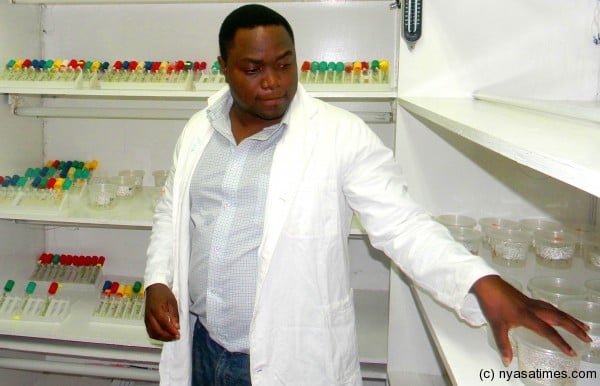
Dr. Kingdom Kwapata, a biotechnology research scientist at LUANAR, points to the visible difference: in the trial fields, GM maize plants remain healthy and intact, while conventional varieties suffer extensive pest damage.
“For some of Malawi’s most persistent agricultural problems, biotechnology is the only viable solution,” says Professor Abel Sefasi, a senior lecturer in molecular biology and biotechnology at LUANAR.
He emphasises, however, that GM crops are not a silver bullet. They must be part of a broader climate-smart agriculture strategy that includes soil management, crop diversification, and farmer education.
The Policy Landscape: Laying the groundwork for Biotech
Malawi’s foray into agricultural biotechnology has been supported by a relatively progressive, though slow-moving, policy framework.
The Biosafety Act of 2002, followed by biosafety regulations in 2007 and a National Biotechnology and Biosafety Policy in 2008, created the legal foundation for GM crop research and trials.
These policies have enabled work not only on cotton and maize but also on cowpea and banana.
In 2012, then-President Joyce Banda publicly endorsed biotechnology as a tool for boosting agricultural productivity.
Today, innovation remains a key pillar of the country’s Malawi 2063 Vision, which prioritizes agricultural commercialization and resilience.
The Seed Trade Association of Malawi (STAM) has also voiced support, seeing biotechnology as essential to overcoming climate-induced crop losses, pest outbreaks, and declining yields.
Hurdles on the Horizon: Misinformation, Cost, and Capacity
Despite its promise, Malawi’s biotech rollout faces significant challenges.
Public perception is among the most pressing. Misinformation and scepticism about GMOs, often stemming from a lack of public education, have slowed adoption across Africa, and Malawi is no exception.
Organizations like the International Service for the Acquisition of Agri-biotech Applications (ISAAA) have highlighted a persistent “knowledge gap” between scientists and the communities they aim to serve.
At the same time, Malawi’s research infrastructure remains under-resourced. Most local laboratories lack the advanced equipment needed to develop indigenous GM varieties.
As a result, much of the current work relies on partnerships with multinational companies or foreign institutions.
The cost of GM seeds is another concern. Smallholder farmers, who make up the majority of the agricultural workforce, often lack access to credit or subsidies.
Without affordability measures, biotech risks widening inequality instead of reducing it.
And while Malawi has biosafety laws on the books, regulatory oversight must be strengthened to ensure ethical standards, environmental protections, and long-term sustainability.
A future rooted in Science and in Farmers
Malawi stands at a turning point. The early success of Bt cotton shows what is possible when innovation is delivered effectively.
The promise of GM maize brings hope for greater food security in a country long plagued by hunger. But technology alone will not solve the problem.
To succeed, Malawi must continue to invest in research, strengthen its regulatory systems, and build public trust through education and transparent communication.
Just as important is tackling the “last mile” challenge, ensuring that farmers not only have access to biotech tools but also the support, knowledge, and infrastructure to use them effectively. That means:
- Rebuilding extension services to reach more communities
- Supporting farmer cooperatives to improve access to seeds and markets
- Integrating indigenous knowledge systems into scientific research
International partners like the World Bank and FAO are already supporting Malawi’s agricultural transformation. But long-term success will require sustained national commitment from policymakers, scientists, and farming communities alike.
The stories of Amani Kafa and Ackim Livinala are more than anecdotes.
They are powerful examples of what happens when science meets soil and when innovation is rooted in the needs and realities of those who feed the nation.
“This article was produced by the Centre for Investigative Journalism Malawi (CIJM). Prior written authorisation from CIJM is required for any reproduction or republication.”
