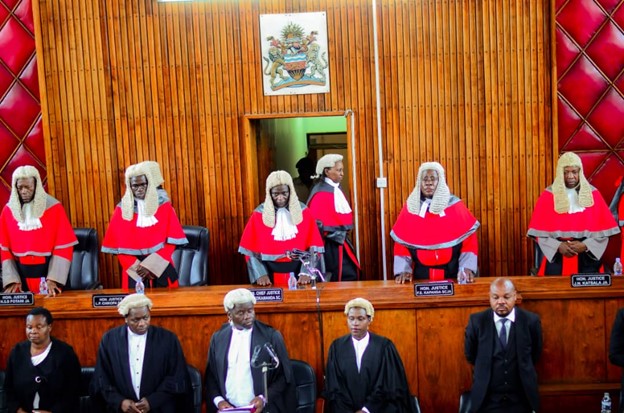
Malawi’s judicial confidence conceals a structural crisis where poverty, understaffing and incomplete reform deny most Malawians real access to justice
Across sub-Saharan Africa, public trust in formal judicial institutions has eroded steadily over the past decade. The Afrobarometer Round 10 survey, conducted across 38 African countries in 2024–2025 and based on more than 50 000 interviews, found that only half of Africans believe ordinary citizens can obtain justice through their courts. Against that continental backdrop, Malawi appears to be a conspicuous outlier.
In June 2026, the Malawi Judiciary announced that the country had ranked third on the continent in public confidence in access to justice, with 67% of Malawians expressing confidence that ordinary citizens can obtain justice through the courts.
The same survey placed Malawi above the African average of 44% on court trust, with 63% of respondents expressing confidence in judicial institutions. Officials cited the finding as validation of years of institutional reform.
That ranking deserves serious scrutiny.
Beneath the headline figures lies a judicial system under acute structural pressure: a Legal Aid Bureau (LAB), the body mandated to represent indigent citizens in court, carrying nearly 27 000 active cases with only 48 lawyers; prisons operating at more than double their designed capacity; and a landmark judicial reform package whose full operationalisation remains legally incomplete.
The gap between perceived and actual access to justice in Malawi is not a minor footnote to a success story. It is the story itself. The Afrobarometer data publicised by the Malawi Judiciary contains an internal tension that official communications do not resolve.
While 63% of Malawians express trust in the courts, a figure well above the continental average, the same Round 10 survey found that 71% of Malawians consider it unlikely they could afford a court case.
Half of respondents believe timely case resolution is unlikely and nearly half, 47%, think judgments will be unfair. The Judiciary’s communications selectively foreground the trust and confidence figures without addressing the affordability and timeliness data that the same survey produced. This is not a minor omission.
What the Afrobarometer data reveals is a system that citizens believe in abstractly but cannot practically use. People trust the courts in much the same way one might trust a hospital one cannot afford to visit: the confidence is real, but the access is not.
The most concrete measure of this structural failure is the condition of the LAB. Established under the Legal Aid Act 2011 and operational since March 2015, the bureau is mandated to provide legal services to indigent and vulnerable citizens.
As of early 2025, its director, Chimwemwe Chithope-Mwale, acknowledged the scale of the problem publicly. Nyasa Times reported him stating: “This translates to an average of one practitioner managing 560 cases, which is unmanageable.”
By mid-2025, that caseload had grown further. The Nation reported in July 2025 that the bureau’s backlog had reached approximately 28 000 active cases across 22 offices nationwide, comprising roughly 18 700 civil matters and 10 100 criminal cases.
Human Rights Defenders Coalition chairperson Gift Trapence, commenting on the figures, described the situation as “a crisis of access to justice for poor Malawians”, warning that court hearings could be delayed “for months or even years” for clients without private counsel.
The bureau’s ambition to expand its legal staff to 80 lawyers remains contingent on funding that has historically not materialised, despite the government reportedly increasing its allocation by 300% to support recruitment during the 2024 financial year, a figure that requires independent verification against parliamentary budget records.
The downstream consequences of this access failure are visible in Malawi’s prisons. By June 2024, the official prison population stood at 16 536 against a designed capacity of approximately 7 000, an occupancy rate of 236%.
A subsequent study commissioned by Irish Rule of Law International and conducted across 27 prisons between December 2024 and May 2025 recorded a population of 16 237 against a stated capacity of 8 694, identifying 702 prisoners as severely undernourished.
The same study found that many remand prisoners remain in detention for extended periods because they cannot afford bail or legal support — a direct consequence of the LAB’s chronic under-resourcing.
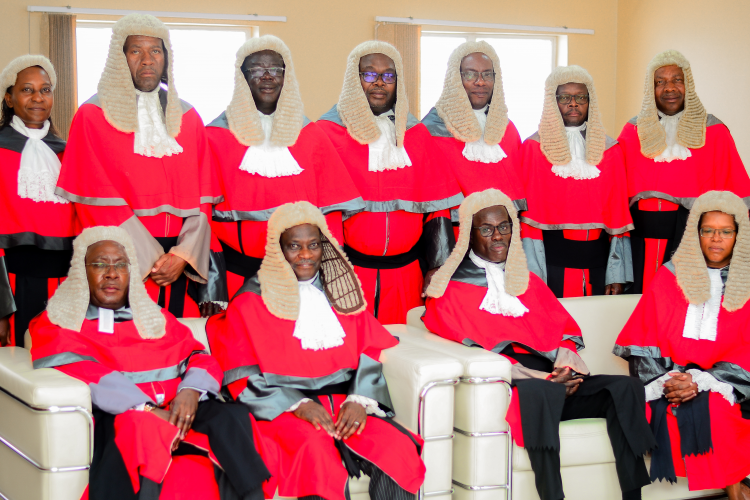
The Southern Africa Litigation Centre noted in March 2025 that Malawi’s prison occupancy at 236% remains among the most acute in the SADC region, where five of 16 member states exceed 250% occupancy.
In April 2025, Parliament passed a new Prisons Bill introducing parole mechanisms and capacity limits.
However, analysts warn that such reforms have limited effect while courts continue generating default imprisonment for unpaid fines imposed on defendants without legal representation.
The Afrobarometer survey was conducted during a period of intense institutional activity in Malawi’s justice sector.
On 20 December 2024, Parliament passed three landmark laws: the Constitutional (Amendment) Act, 2025; the Judicial Service Administration Act, 2025; and the Courts (Amendment) Act, 2025, designed to strengthen judicial independence, expand the oversight functions of the Judicial Service Commission (JSC), and establish a Judiciary Fund to insulate the institution from executive budget pressure.
However, on 24 January 2025, then-president Lazarus Chakwera assented to only two of the three Acts, conspicuously excluding the Courts (Amendment) Act, 2025.
The Malawi Law Society (MLS) described the outcome as generating “renewed uncertainty” about political commitment to judicial independence.
The partial assent sent mixed signals, particularly after Parliament had completed its legislative role with the required two-thirds majority. The reform architecture remained incomplete for a further reason.
By January 2026, the judiciary had clocked a full year without a functioning JSC, the statutory body responsible for oversight, supervision and disciplinary powers over judicial officers.
The Nation reported in January 2026 that no meaningful steps had been taken to implement the reforms since the Acts came into force on 1 February 2025.
The JSC’s absence has effectively disabled the oversight mechanism that the reform legislation was designed to strengthen.
Whether the new administration that took office after the September 2025 general elections will assent to the Courts (Amendment) Act and reconstitute the JSC is, as of June 2026, unresolved.
The MLS has written directly to presidential candidates and the incoming Minister of Justice, Charles Mhango, seeking express commitments but none of the party manifestos published ahead of the September poll contained explicit timelines for implementation.
Against this backdrop, the Malawi Judiciary has pursued a genuine programme of digitalisation.
On 24 April 2024, the Judiciary, in partnership with the UN Development Programme (UNDP) and Airtel Malawi, launched an e-court platform covering an initial 20 pilot sites, linking courts to prisons and police stations through video-conferencing infrastructure.
By November 2025, UNDP reported that the initiative had saved Malawians an estimated MWK375 million in travel-related expenses over 15 months, while also enabling remote testimony by survivors of sexual and gender-based violence.
The limitations of this programme are material.
Rural digital infrastructure remains underdeveloped. Internet connectivity in district magistrates’ courts is tapped from district commissioner offices through the Government Wide Area Network, with documented capacity gaps.
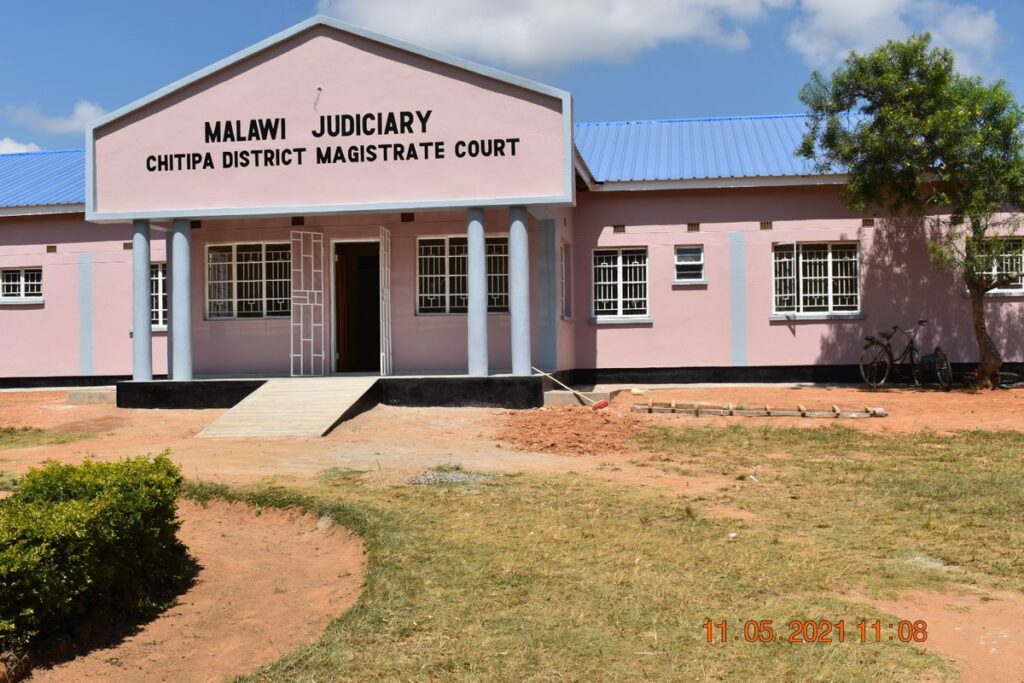
The communities most likely to require legal assistance — rural, informal-sector and largely female-headed households — remain the furthest from both physical and digital justice infrastructure.
As the Round 10 Afrobarometer data shows, approximately a quarter of Malawians prefer to resolve legal disputes through traditional leaders rather than formal courts. That preference reflects not cultural tradition alone but a rational assessment of formal justice as financially and geographically inaccessible.
Malawi’s judicial performance does not exist in isolation. The World Justice Project’s Rule of Law Index 2024 placed Malawi 70th out of 142 countries globally and eighth out of 34 countries in sub-Saharan Africa, with its overall rule-of-law score declining marginally from the previous year.
For international lenders and donors, judicial quality is an increasingly explicit dimension of programme design.
The IMF’s engagement with Malawi has focused on governance conditionalities since the 2013 Cashgate scandal, in which an estimated $32 million was stolen from government accounts over six months. The period exposed systemic weaknesses across multiple state institutions, including accountability mechanisms the judiciary is mandated to enforce.
Incomplete reform implementation, including the absence of a functioning JSC, is a factor that multilateral assessors will consider in ongoing governance risk evaluations.
For SADC and Comesa member states, Malawi’s experience with court-supervised electoral dispute resolution has functioned as a regional reference point.
The 2020 Constitutional Court ruling nullifying the presidential election results remains the most dramatic recent instance of judicial independence in Southern African democratic history.
That precedent is now being tested again.
The September 2025 elections have already generated legal petitions. The courts’ handling of those petitions will either reinforce or erode the institutional capital accumulated through that earlier ruling.
Decision-makers face three interlocking choices.
First, whether the Judiciary Fund established by the Judicial Service Administration Act can be capitalised at a level that genuinely insulates the institution from the broader fiscal pressures that have chronically underfunded both the judiciary and the LAB. This remains a challenge in a national fiscal environment where the 2024-25 budget totalled K5.98 trillion and carried a deficit equivalent to 7.6% of GDP.
Second, whether the Courts (Amendment) Act will be assented to by the post-election administration, completing the reform architecture Parliament approved in December 2024.
Third, whether the e-justice programme can extend credibly beyond urban magistrates’ courts to reach the rural populations who constitute Malawi’s majority and who continue to resolve most legal disputes not through formal courts but through traditional leaders.
The second and third choices are structurally linked: without a functioning JSC and without a completed reform architecture, the institutional governance of a digitally expanded court system remains uncertain.
“We recognise that there is still work to be done, particularly in ensuring that justice remains accessible and affordable to all,” Chief Registrar Innocent Nebi said in June 2026, acknowledging the limits of a positive continental ranking.
The gap between third place on the continent and a 71% affordability deficit is not a communications problem. It is a public finance and institutional capacity problem and the Afrobarometer data, read in full, makes that distinction clearly.
