
As Malawi bets on hydropower and mining to revive a faltering economy, the key question is whether a renewed World Bank partnership can deliver broad-based development or simply entrench old patterns of elite capture.
In Malawi’s electricity-starved cities, Lilongwe, Blantyre and Mzuzu, recent assurances made to the World Bank by the country’s new energy minister feel almost fantastical when set against the reality of daily blackouts.
Last Friday, Dr Jean Mathanga, the newly appointed minister of natural resources, energy and mining, told the global lender that her government was “committed to ensuring both sectors work for the benefit of the people”.
It is a familiar refrain. What remains unresolved is whether this partnership will produce outcomes meaningfully different from Malawi’s long history of resource wealth flowing to a narrow elite, while ordinary citizens remain literally, and economically, in the dark.
The statistics are stark. Only 6.1% of Malawi’s rural population has access to electricity, among the lowest rates globally.
Urban access figures hide deep inequalities. In informal settlements such as Area 23 in Lilongwe, piped water arrives once a month, if at all. Power cuts are so routine that residents no longer count the hours without electricity.
Electricity supply is deteriorating fast. In November alone, the Electricity Supply Corporation of Malawi (ESCOM) reported a 77-megawatt shortfall during evening peak demand, nearly a quarter of national requirements, forcing intensified load-shedding across the country.
The economic fallout is severe. Manufacturing slows or stops. Hospitals rely on diesel generators they struggle to fuel. Small and micro-enterprises, which employ millions, simply shut their doors.
This energy crisis sits alongside a striking paradox. Malawi has mineral deposits that could generate up to $30 billion in export revenues between 2026 and 2040, according to government and World Bank estimates. Annual earnings could reach $3 billion by 2034.
Still the country remains deeply poor. Economic growth slowed to 1.8% in 2024 and is forecast at just 2% in 2025, below population growth, meaning per capita incomes continue to decline.
The World Bank’s own diagnosis is blunt: corruption, weak governance and poor policy design in the extractive sector have prevented Malawi from turning mineral wealth into shared prosperity.
The Bank’s expanded partnership with Malawi, formalised at last week’s meeting, rests on an ambitious assumption: stabilise electricity supply first, and mining investment will follow.
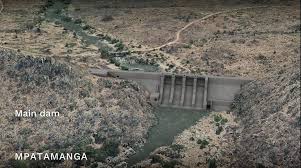
At the centre of this strategy is the $350 million World Bank grant for the Mpatamanga Hydropower Storage Project, approved in May 2025 and now moving towards implementation.
Once operational, the 358.5-megawatt plant is expected to double Malawi’s hydropower capacity and supply electricity to more than one million households.
Marketed as “transformational”, Mpatamanga will test whether donor-backed megaprojects can drive development or become symbols of mismanagement.
The project is structured as a public-private partnership costing over $1.5 billion.
The Malawian government will hold a 30% stake; international investors, including Electricité de France and British International Investment, will hold 50%; and the World Bank’s International Finance Corporation will hold 15%.
It will operate under a Build-Own-Operate-Transfer model designed to limit political interference. After 30 years, ownership will revert to the state, aiming to combine private-sector discipline with public accountability.
However, Mathanga’s briefing to the Bank also revealed a more immediate challenge.
Under the Mozambique–Malawi Interconnector Project (MOMA), only 50 megawatts of imported electricity are secured for February 2026, despite plans to increase imports to 150 megawatts.
The constraint is foreign exchange. Malawi cannot afford the roughly $5 million per month required for higher imports, highlighting how chronic hard-currency shortages threaten even well-designed infrastructure plans.
The World Bank’s role is most politically sensitive in mining governance. Historically, Malawi’s extractive sector has operated with minimal transparency, benefiting political elites and foreign firms while contributing little to public revenue.
The government now admits it is “not doing enough”, according to Mathanga, a claim supported by evidence.
A 2025 review by the Natural Resource Justice Network of Malawi of the country’s Extractive Industries Transparency Initiative (EITI) reports found illicit financial flows, corruption risks, weak oversight, and the systematic exclusion of artisanal miners.
One figure is especially alarming. In the 2020–21 EITI reconciliation, $3.9 billion, 39% of reported government revenues, remained unreconciled because companies failed to submit required documentation.
This lack of transparency has real human costs. Around 40,000 artisanal and small-scale miners, mostly among the rural poor, operate outside formal regulation.
They earn subsistence incomes while facing serious environmental and health risks.
Meanwhile, large-scale mining agreements remain opaque, with limited disclosure of contract terms or beneficial ownership. Against this backdrop, the World Bank’s promise of “technical support” for governance reform sounds uncomfortably familiar.
African governments have received similar assistance for decades, often with little impact where political will is weak.
Energy and mining are deeply interconnected. Without reliable electricity, mining cannot operate at scale. If managed well, mining revenues could finance energy expansion.
This feedback loop underpins Malawi’s Agriculture, Tourism and Mining (ATM) strategy and aligns with the World Bank’s Mission 300 initiative, which aims to connect 300 million Africans to electricity by 2030.
Through Mission 300 and the ASCENT programme, the Bank has committed $250.8 million in grants to help Malawi raise electricity access from 25% to 70% by the end of the decade.
The ambition is bold and impossible without sustained governance reform.
There are grounds for cautious optimism. Mpatamanga has survived multiple political cycles to reach construction.
The Mozambique–Malawi Interconnector is nearing completion, and the Salima Solar project, though modest at 10 megawatts, is scheduled for commissioning in December 2025.
But Malawi’s macroeconomic fragility leaves little margin for error. A fiscal deficit of 10.1%, rising domestic debt, and severe external vulnerabilities mean corruption or mismanagement would not just delay progress; it could trigger instability.
Paradoxically, this pressure may enforce discipline where oversight alone has failed.
The partnership’s success also depends on mining’s future. If projects such as Lotus Resources’ Kayelekera uranium mine, Kasiya’s titanium and graphite development, or Lindian’s rare earth venture proceed as planned, Malawi could see a genuine resource boom.
If prices fall, investment stalls, or political instability scares off capital, World Bank-backed power projects risk becoming isolated pockets of progress in a wider landscape of poverty.
Notably absent from Mathanga’s engagement with the Bank is a clear plan to integrate artisanal miners into sectoral growth. As industrial mining expands, informal operators are often pushed out by regulatory barriers they cannot meet.
If the World Bank’s technical support is to matter, it must prioritise formalising artisanal mining through accessible licensing, skills development, and structured market access.
Without this, the energy–mining nexus risks reproducing the very inequalities it claims to address.
The Mpatamanga grant and Mission 300 commitments represent a significant escalation in international support for Malawi’s energy sector.
Whether they deliver real transformation or reinforce Malawi’s long-standing paradox of resource wealth amid mass poverty will depend on institutional discipline, political continuity, and deliberate inclusion of rural and informal communities.
Mathanga’s rhetoric is more candid than that of many of her predecessors.
Whether it marks a genuine break from the past will be judged not by policy statements, but by lights that stay on in Lilongwe homes, in mining communities in Mzimba, and across a country still deciding whether its resources will drive inclusive growth or deepen the resource curse.
Ultimately, the World Bank’s partnership will be measured not by promises, but by outcomes.
