This article exposes how Malawi’s promises of human rights collapse under the weight of failing health services, entrenched corruption, and deep gender inequality, leaving women and girls literally walking for survival.
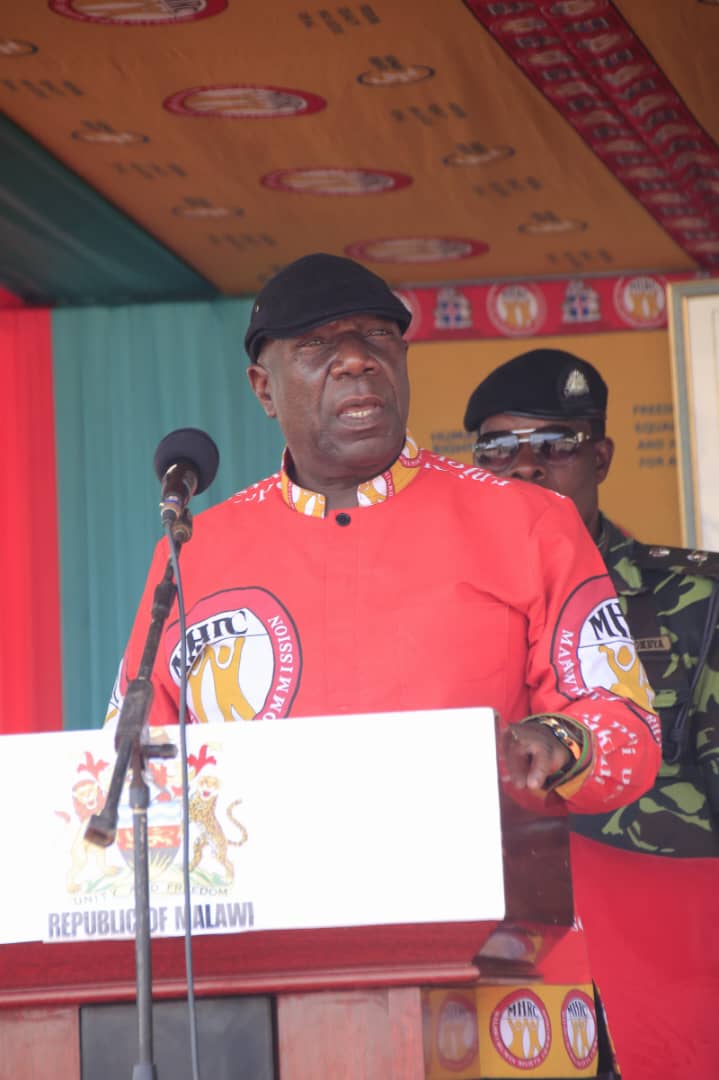
On December 10, 2025, 77 years after the Universal Declaration of Human Rights, Malawi’s Second Vice President, Enock Kamzingeni Chihana, spoke in the lakeside district of Nkhata Bay.
His message was short, polished, and familiar: “Human Rights: Our Everyday Essentials.”
But in communities like Mulanje, Mangochi, and Machinga, where women walk for hours to reach a health post, where girls marry before they understand what marriage means, and where corruption syphons away public funds meant to keep people alive, rights are not “everyday essentials”.
They are distant promises.
What Chihana did not say is the uncomfortable truth that shapes the reality of millions of Malawians: the gap between constitutional guarantees and daily life has become a matter of life and death.
The long walk to care
In most rural health facilities in Malawi, the first thing visitors notice is what is missing. No staff. No medicines. No electricity. Sometimes not even running water.
Malawi’s maternal mortality rate is 381 deaths per 100 000 live births, one of the highest in the world. But this number hides where the real danger lies.
Eighty-seven percent of births happen in rural communities, yet the health system is built everywhere except where women live.
In Mulanje, one of the poorest districts, pregnant women wake before dawn to begin the walk, two or sometimes three hours on rutted dirt roads, to antenatal clinics. When labour complications occur, the delay in reaching a hospital becomes fatal.
The crisis worsened in late 2024 when the Trump administration abruptly cut a major portion of development funding. Malawi closed 20 health posts almost overnight.
A nursing officer named Makata, who used to visit a Mulanje health post two or three times a week, now goes only “whenever transport is available”.
The result? Officials call it “increasing out-of-facility deliveries.” Communities call it what it is: women giving birth in fields, on footpaths, and on motorbikes because there is nowhere else to go.
Local leader Massitive Matekenya put it simply: “Women are giving birth on their way to the district hospital. The distance is killing them.”
Promises on paper, shortages on the ground
Malawi has ratified the International Covenant on Economic, Social and Cultural Rights and often pledges, sometimes passionately, to strengthen local health systems.
Yet in 2024, only 20 new health centres were under construction for a population of 20 million.
Corruption then weakens the system from within. Health-sector procurement audits show medicines bought at inflated prices, tenders given to political allies, and stock disappearing before it reaches clinics.
In Malawi, corruption is not an abstract governance problem. It directly causes maternal deaths.
A country where childhood ends early
The failures of the health system are closely tied to deep gender inequality.
A third of Malawian women have experienced physical violence, and a fifth have experienced sexual violence. One in five girls is sexually abused before turning 18.
Forty-six per cent of girls marry before adulthood. The Constitution’s 2017 ban on marriage under 18, celebrated at the time, remains mostly symbolic.
Between January and December 2018, authorities recorded 4 228 child marriages involving children as young as 12 to 14. Few led to arrests.
Traditional leaders, who hold great influence over customary law, sometimes approve these unions. In rural areas, their authority often outweighs that of the state.
Child-marriage hotspots mirror Malawi’s poorest southern districts, Mulanje, Mangochi, Machinga, and Zomba, where poverty and custom reinforce each other.
Girls pulled out of school quickly fall into cycles of early pregnancy, maternal risk, low education, and lifelong economic dependence. The cycle then repeats with their daughters.
The corruption that eats the future
Malawi’s legal system for accountability looks strong on paper: an Anti-Corruption Bureau, a National Anti-Corruption Strategy, and a Director of Public Prosecutions with wide powers.
But these institutions lack budgets and political support to confront powerful networks.
The scars of the 2013 “Cashgate” scandal, in which over US$32 million was stolen through ghost companies and fraudulent payments, are still visible. Arrests and trials followed, but procurement systems remain vulnerable.
By 2023, Malawi’s Corruption Perceptions Index score was 34/100, ranking 107th out of 180 countries. The number has barely changed in a decade.
The cost is measured not only in stolen money but also in malnutrition, preventable deaths, broken clinics, unstaffed schools, and drought-hit communities left without climate-adaptation support.
A programme meant to give affordable seeds and fertiliser to poor farmers, the Affordable Inputs Programme, was full of procurement irregularities. Many families never received what they were promised.
Corruption also fuels illegal logging and overfishing, stripping rural households of the natural resources they depend on. Human rights lawyer Justin Dzonzi says it clearly: “We deal with corruption where it ends, never where it starts.”
Rights in theory, rights postponed in practice
Malawi has a constitution admired across the region, a Gender Equality Act, a Marriage, Divorce and Family Relations Act, and a progressive new Disability Act.
Malawi ratified both the International Covenant on Civil and Political Rights (ICCPR) and the International Covenant on Economic, Social and Cultural Rights (ICESCR), both in 1993, and has an A-status Human Rights Commission.
But laws alone do not protect people.
- The Human Rights Commission is chronically underfunded.
- The Legal Aid Bureau cannot reach most poor Malawians.
- Judicial budgets have shrunk so much that trials simply stall.
Where the state cannot reach, customary justice takes over, often reinforcing discrimination and lacking proper safeguards.
Persons with disabilities face some of the hardest barriers. Schools lack accessible infrastructure; workplaces lack accommodations; rural public buildings remain unreachable. The law aligns with international best practice, but implementation does not.
These struggles reflect a wider pattern across the Global South: the problem is less about money and more about political priorities.
Blueprints for a future that never arrives
Malawi’s SDG Index score is around 57/100. Progress in health, education, and poverty reduction has stalled.
The country’s development blueprint, Malawi 2063, promises a move to lower-middle-income status. It identifies key priorities: ending corruption, improving health, expanding justice, addressing gender inequality, strengthening child protection, and ensuring disability inclusion.
The problem is not ambition. It is execution and the political will to fund what matters. Civil society groups often put it simply: Malawi is not short of frameworks. It is short of implementation, resources, coordination, and accountability.
Standing at the crossroads
In Nkhata Bay, the Vice President’s Human Rights Day speech admitted systemic failures. The government promised timely funding for the Human Rights Commission and a stronger Legal Aid Bureau.
These are welcome steps. They are also far from enough.
Real progress would require fixed national budget percentages for health and education, independent procurement systems, empowered district councils, training for traditional leaders, and community-monitoring tools that allow citizens to track public spending.
Malawi stands at a decisive moment. Climate shocks worsen; global aid grows unstable; inequality widens as growth slows.
For Malawians, human rights are not philosophical ideas. They are clean water, safe childbirth, a school with a teacher, a functioning courtroom, and a community where girls can grow up without fear.
The distance between Nkhata Bay’s polished speeches and the reality of women walking for hours to reach a clinic is the measure of Malawi’s unfinished work.
Closing that distance will determine not only the country’s success in meeting the Sustainable Development Goals but also its credibility as a democracy and its promise to protect the dignity of its people.
