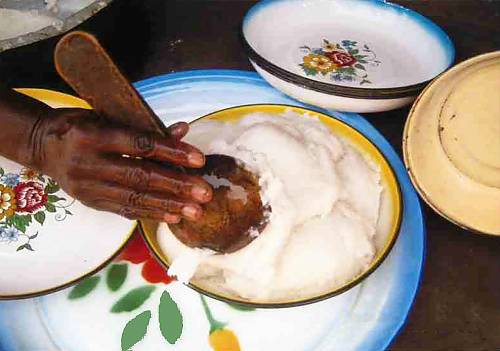
In the city, Malawi’s beloved dish of Nsima fuels a silent crisis of diabetes and hypertension. In the village, it powers a day of hard labour. As the country undergoes a rapid transformation, a tale of two lifestyles reveals a nation struggling to communicate a new message of health before it is too late.
By Collins Mtika
At 7 a.m. in Lilongwe’s bustling Area 47, 42-year-old bank clerk David Changwa begins his day. After a breakfast of white bread and sweet tea, he squeezes into a traffic-choked minibus for his commute to an eight-hour day behind a desk.
Lunch is a heaping plate of Nsima, the cherished maize-flour staple, served with a piece of fried chicken and a spoonful of cabbage from a nearby canteen.
By evening, exhaustion sets in, not from physical labour, but from the static pressures of the day.
Four hundred kilometres north, in the rolling hills of Mzimba District, David’s cousin Elias has been awake since sunrise. His breakfast, also Nsima, fuels a morning of weeding the family’s maize field. His lunch, the same dish, powers an afternoon spent herding goats.
For Elias, 45, every calorie is burned under the sun. He is lean and sinewy and has never had his blood pressure checked.
These two cousins, bound by blood and a national dish, live in two different health realities. One urban, one rural. One seated, one sweating. One is slowly growing sick. The other may already be, but does not know it.
This is Malawi’s modern health crisis: two lifestyles, one plate, diverging dangerously. And a message of health increasingly lost in translation.
When strength becomes Sickness
For generations, the message was simple: Nsima ndi mphamvu—”Nsima is strength.” And it was. This high-carbohydrate meal was the engine of an agrarian society built on hard, physical labour.
But that engine is idling. As Malawi urbanises, Nsima, once fuel for fieldwork, is now becoming unspent energy stored as fat.
“We’re witnessing a classic nutritional transition on an accelerated timeline,” says Dr. Chimwemwe Banda, a Public Health Nutritionist at Kamuzu University of Health Sciences.
“The problem isn’t Nsima itself, but the context. In the city, it’s now paired with processed foods, high-sugar drinks, and a dramatic drop in physical activity. The ‘strength’ it provides is no longer expended.”
The data is sobering. Nationwide, nearly one in three Malawian adults has hypertension. Diabetes affects an estimated 5.7% of the adult population. Experts believe the real numbers are much higher, as the vast majority of cases go undiagnosed.
A major study found that 58% of Malawians with hypertension are unaware they have it. For diabetes, the International Diabetes Federation estimates that a similar percentage (58%) of cases in Malawi are undiagnosed and untreated.
In urban centres like Lilongwe and Blantyre, where physical inactivity is more than double that of rural areas, the symptoms are subtle but everywhere. Pharmacies sell out of Blood Pressure Monitors.
Funerals for relatives who “just collapsed” are heartbreakingly routine. The sickness hides in plain sight, masked by cultural beliefs and a public health system still geared toward fighting malaria, HIV, and tuberculosis.
Lost in Translation: when the Message misses
The effort to curb this epidemic of Non-Communicable Diseases (NCDs) is, at its core, a communication challenge. And right now, the message is not landing.
Health campaigns, often adapted from Western models, struggle to connect with local realities. A Poster that says “Eat More Fruits and Vegetables” might be seen by a Mother who can barely afford Cooking Oil, let alone Apples or Lettuce.
“You can’t tell a man who sees a rounded belly as a sign of prosperity that he needs to lose weight,” says Martha Ngwira, a Health Communications Strategist in Mzuzu. “And you can’t tell a rural family to use less oil when a dish glistening with it signals that they’re not struggling.”
The contrast is stark. For Elias, every drop of Oil is precious energy. For David, that same oil is hardening his arteries. A one-size-fits-all message fails them both.
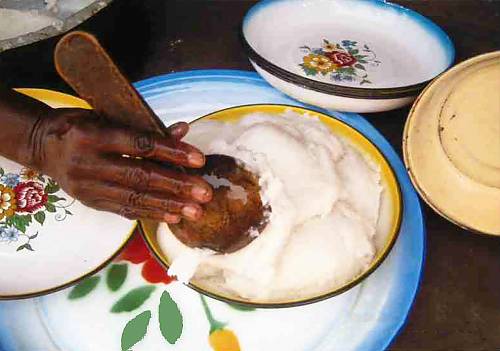
Ngwira calls for a new approach: “The message shouldn’t be ‘Don’t eat Nsima.’ That’s culturally deaf. It should be, ‘If you’re not working in the fields, maybe take a smaller portion.’ It’s not about rejection—it’s about rebalancing.”
Some local initiatives are getting it right. The Development Communication Trust is establishing Radio Listening Clubs in remote areas to broadcast dramas and health messages about NCDs.
Pastors and Imams weave health tips into sermons, and community health workers are being trained to talk about portion sizes alongside distributing mosquito nets.
By grounding medical advice in cultural logic, these efforts make health messages not only understandable but trustworthy.
A Nation’s Health, A Nation’s Wealth
Unchecked, this crisis will not just take lives; it will take livelihoods. Every stroke and every case of untreated diabetes means a household robbed of income and a nation robbed of its workforce.
A study in rural Malawi found that over 21% of households with a member seeking NCD care faced catastrophic health spending, pushing them into poverty.
“We’re facing a future where our clinics could be overwhelmed by lifestyle diseases while we’re still battling Malaria and HIV,” warns a Senior Ministry of Health official. “This isn’t just a health crisis, it’s an economic one. It threatens to undo two decades of progress.”
What is needed is a total shift in mindset. Recognizing this, the government has integrated NCDs into its Health Sector Strategic Plan III (2023–2030).
In May 2024, the Ministry of Health launched a national scale-up strategy to expand NCD prevention and management at the primary care level across the country.
This includes empowering community health workers to perform door-to-door screenings for blood pressure and diabetes, as is already happening in districts like Thyolo with support from UNICEF and USAID.
A pilot program in Neno District that expanded the role of CHWs to include NCDs successfully reduced the rate of patients defaulting from chronic care by about 20%.
Malawi must find a new language of well-being—one that honours tradition without being trapped by it, and redefines strength for a changing world.
Only then can the national dish remain what it was always meant to be: a source of life, not a silent threat to it.
