As a billion-dollar mining project heads toward Nasdaq in the USA, Malawi still lacks a sovereign wealth law to protect future revenues.
By Collins Mtika
Malawi is moving quickly to monetise one of its most strategically valuable mineral deposits. What it has not yet done is build the legal framework to safeguard the proceeds.
As Canadian-listed Mkango Resources advances plans to list its rare-earth operations on the Nasdaq Stock Market, Malawi remains without legislation establishing a sovereign wealth fund, despite repeated government promises to create one.
The contrast is stark. On one side stands the Songwe Hill Rare Earths Project, expected to generate an estimated US$1.55 billion in post-tax cash flow over an 18-year mine life.
On the other stands a proposed sovereign wealth fund that, as of May 2026, exists only in draft policy discussions.
That disconnect lies at the centre of an emerging governance challenge for one of Africa’s poorest nations as it enters the global critical-minerals economy.
In February, Lancaster Exploration Ltd., Mkango’s Malawian subsidiary, expected to be renamed Mkango Rare Earths Ltd., confidentially submitted a draft registration statement to the U.S. Securities and Exchange Commission as part of a planned business combination with Crown PropTech Acquisitions, a Cayman Islands special-purpose acquisition company.
The filing became public in May. The transaction would pave the way for a Nasdaq listing covering Mkango’s operations in both Malawi and Poland.
The numbers involved are substantial. The pro forma valuation attached to Mkango’s stake in the combined entity was set at roughly US$400 million before transaction costs.
The project has also secured backing from the U.S. International Development Finance Corporation, which committed US$4.6 million in development funding in 2025 ahead of a potential US$100 million construction loan.
The European Union has separately designated Songwe Hill a strategic project under its Critical Raw Materials Act, underscoring the geopolitical significance of rare-earth supply chains increasingly dominated by China.
For Malawi, the implications extend well beyond mining.
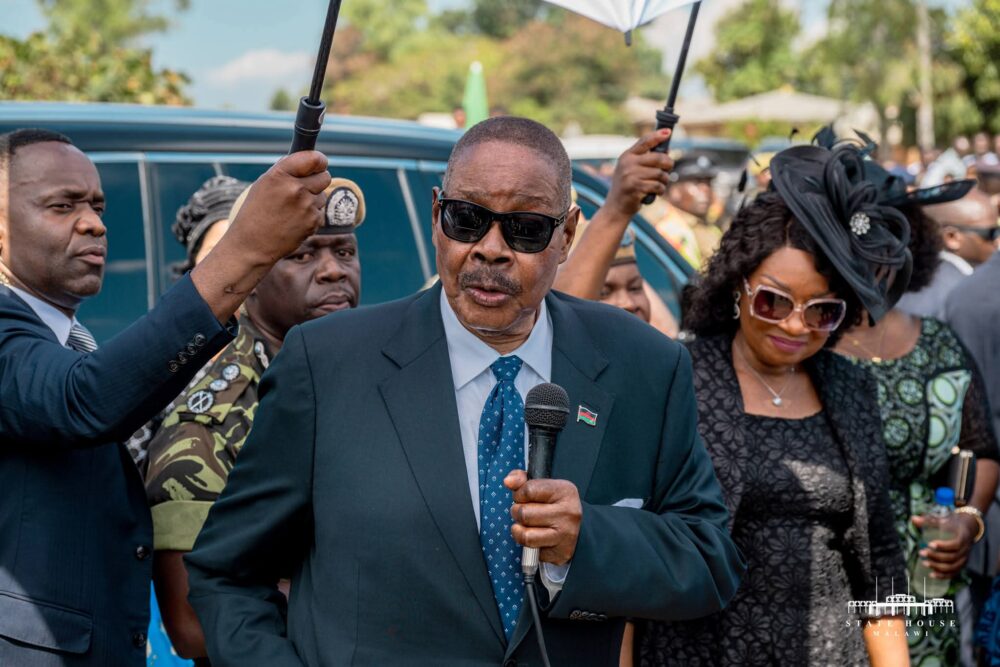
President Peter Mutharika acknowledged the stakes during his 2026/27 State of the Nation Address, announcing plans for a sovereign wealth fund as part of broader mining-sector reforms.
He also declared a suspension of new mining licences and a ban on raw mineral exports pending legal review. Those announcements signalled political intent. They did not create enforceable protections.
Government officials have since validated a feasibility study proposing a sovereign wealth structure built around three pillars: an earmarked fund, a stabilisation mechanism and a strategic investment vehicle.
But key elements remain unresolved. No legislation has been tabled in Parliament. No board of governors has been appointed. And the legal framework governing withdrawals, oversight and investment rules has yet to be drafted.
The absence of such safeguards worries policy analysts who see echoes of resource-rich states that failed to convert mineral wealth into long-term national prosperity.
Paul Mvula, a mining-policy expert, has publicly warned that without strong legal protections and parliamentary oversight, the fund risks becoming vulnerable to political interference and fiscal misuse.
The urgency is heightened by terms already locked into Malawi’s 2024 Mining Development Agreement with Lancaster Exploration.
Signed in Lilongwe in July 2024, the agreement grants the project a 10-year fiscal stability clause, effectively limiting Malawi’s ability to alter royalty or tax arrangements during that period.
The deal includes a 5% royalty on gross revenue, a 30% corporate tax rate and a 10% non-diluting government equity stake.
Such clauses are common in international mining agreements, offering investors predictability in exchange for long-term capital commitments. But they also narrow governments’ room to redesign fiscal regimes after projects become operational.
The Songwe Hill project’s updated definitive feasibility study, released in March 2026, estimates a post-tax net present value of approximately US$339 million using a 10% discount rate, with an internal rate of return of 24% and a payback period of 3.4 years after production begins.
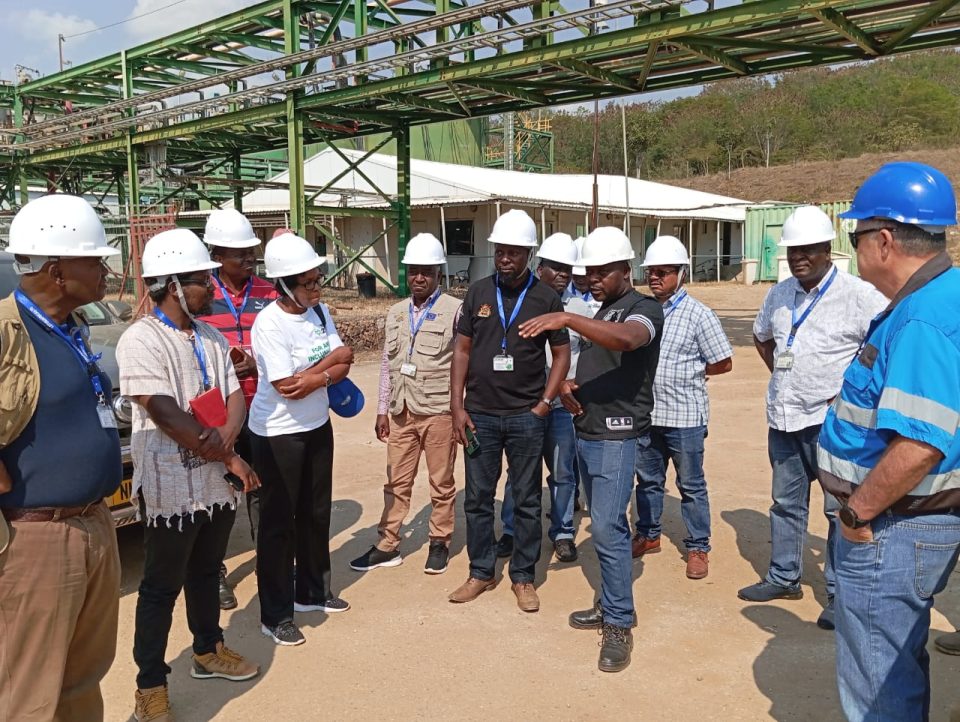
Under more optimistic rare-earth price assumptions, the project’s net present value rises to nearly US$489 million.
At present, however, Malawi has no legal mechanism requiring mining revenues to be ring-fenced for future savings or strategic investment. Royalties, taxes and dividend income flow directly into the Consolidated Fund, where they are absorbed into general government expenditure.
That may become increasingly consequential as the mining sector expands.
According to the World Bank, Malawi’s mining industry could generate as much as US$30 billion in exports between 2026 and 2040, with annual mineral exports potentially stabilising near US$3 billion by 2034. In a best-case scenario, cumulative revenues could rise to US$43 billion.
Such projections would represent a profound shift in the structure of Malawi’s economy—and one that economists say requires robust fiscal institutions before large-scale revenues arrive.
The risks are not merely theoretical.
Economists have long warned about “Dutch disease”, a condition in which resource booms distort exchange rates, fuel inflation and weaken traditional sectors such as agriculture.
Analysts at GlobalSWF (Sovereign Wealth Fund) estimated in 2025 that even a conservative sovereign wealth fund structure could allow Malawi to accumulate roughly US$440 million in reserves by 2036, providing a buffer against commodity volatility and fiscal shocks.
No such buffer currently exists. The governance challenge is also local.
Songwe Hill is located in Phalombe District, where questions remain over how mining revenues will translate into tangible benefits for surrounding communities.
A 2025 academic study on mining governance found that nearly three-quarters of surveyed residents were unaware of mining regulations, while a majority believed decision-making lacked transparency.
The project is expected to create more than 1,200 jobs during construction and roughly 500 permanent operational jobs. But beyond broad allocations through the national budget, no formal mechanism defines how local communities would share in royalties or long-term mineral wealth.
Meanwhile, Malawi’s exposure to international scrutiny is about to intensify.
Once Mkango Rare Earths becomes publicly traded in the United States, disclosures filed with the SEC will detail the Malawian government’s equity position, the fiscal terms governing Songwe Hill and any material regulatory changes affecting the project.
In effect, international investors and U.S. regulators may soon examine the governance of Malawi’s flagship mining venture more closely than Malawi’s own domestic oversight institutions currently do.
That concern has already attracted donor attention. The U.S. Embassy in Lilongwe, through its Fiscal Transparency Innovation Fund, identified mining-revenue transparency and beneficial-ownership disclosure as reform priorities, offering nearly US$782,000 in support for strengthening parliamentary oversight and Extractive Industries Transparency Initiative compliance.
Malawi has also committed under the Open Government Partnership to disclose mining development agreements and licences publicly, while the Malawi Extractive Industries Transparency Initiative launched online disclosure portals in 2024.
Transparency, however, is not the same as protection.
The central facts are now largely uncontested. Malawi has entered a binding long-term mining agreement tied to a globally strategic rare-earth deposit.
The project is backed by international financiers and is moving toward a U.S. stock-market listing. The government has publicly endorsed the idea of a sovereign wealth fund.
