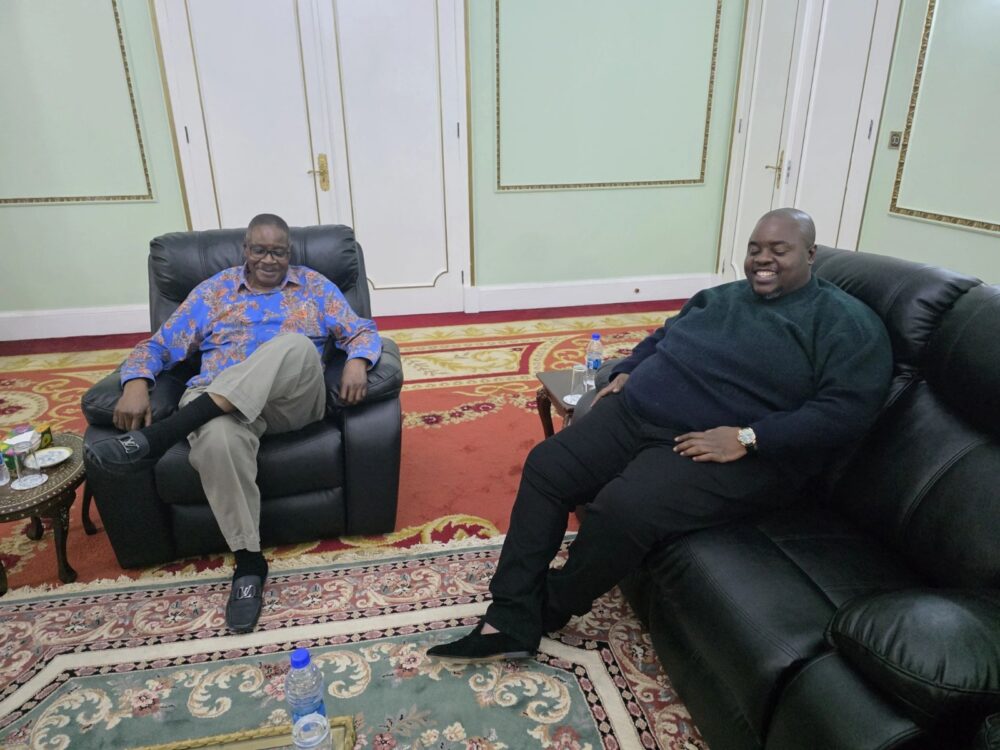
A Zimbabwean businessman, under South African scrutiny over a $100 million election scandal and with ties to Malawi’s last two presidents, is reportedly seeking a government fuel contract, sparking urgent oversight concerns.
By Collins Mtika
When Wicknell Chivayo posted on Facebook in early March 2026, the message was effusive.
He described a “courtesy visit” to President Arthur Peter Mutharika and the First Lady at State House in Lilongwe; wished the nation well in Chichewa, “Zikomo kwambiri, Bambo President”; and declared Malawi was entering “its golden era of stability and economic renewal” under Mutharika’s “experienced stewardship”.
There was one problem.
At the time of the post, Mutharika was in Johannesburg on what officials described as his second private trip abroad since his inauguration following the September 16, 2025, general election.
The visit Chivayo described either took place earlier, without public disclosure, or the account contained material inaccuracies.
No official clarification was issued by State House, and no public response appears in the cited record regarding the timing discrepancy.
The ambiguity was not a trivial inconsistency.
It reflected a broader pattern: a politically connected Zimbabwean businessman, dogged by a history of stalled public contracts, a corruption dossier in his home country, and an active South African probe, moving with unusual speed and access through Malawi’s new power structure while targeting one of the country’s most corruption-prone sectors.
Chivayo’s Malawian engagements form a revealing timeline.
In July 2025, while Lazarus Chakwera was still president, he posted photographs from Kamuzu Palace after meeting the incumbent, offering warm tributes and publicly predicting an election victory.
Sources familiar with the meeting told Maravi Express that advisers urged Chakwera to conduct a thorough background check.
Chakwera lost the September 16 election. Within weeks of Mutharika’s October 4 inauguration, Chivayo resurfaced, this time photographed alongside the new president.
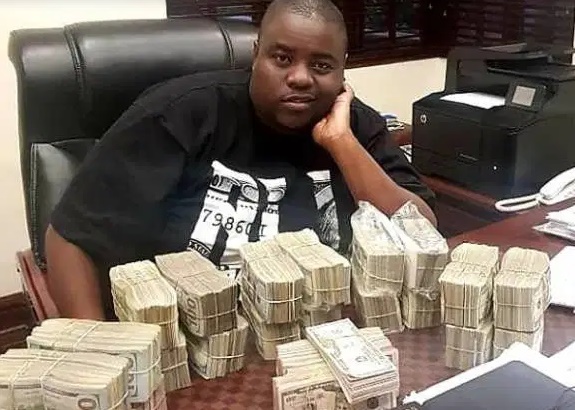
According to investigators and observers who spoke to The Investigator, the transition between rival administrations was both seamless and deliberate.
The access soon expanded. Tadikira Mapfudza, reported to be the president’s stepson, was later seen boarding Chivayo’s private jet, the WMC-777-branded aircraft, on what sources described as a regional trip.
Chivayo has maintained that his engagements are commercial in nature: “My engagements with both the former and current presidents of Malawi have been purely investment-orientated,” he told Nyasa Times, adding that his firms remain at the feasibility stage with no formal agreements in place.
Between July and October 2025, Chivayo is reported to have met four African heads of state, including Mutharika; Chakwera; Mozambique’s Daniel Chapo; and Tanzania’s Samia Suluhu Hassan, a level of presidential access that sets him apart from conventional investors.
The clearest measure of risk in Chivayo’s Malawian ambitions lies not in photographs but in a 262-hectare site in Gwanda, southwestern Zimbabwe.
In 2015, his company, Intratrek Zimbabwe (Pvt) Ltd, secured a US$172.8 million contract from the Zimbabwe Power Company to build a 100-megawatt solar plant.
More than a decade later, a March 2024 parliamentary visit found overgrown grounds, termite-infested structures, missing roof tiles, and just one solar panel used for security lighting.
The Zimbabwe Power Company’s board chair at the time, Stanley Kazhanje, was convicted and sentenced to three years in prison for accepting a bribe linked to the project.
Chivayo, however, was acquitted in 2023 at the close of the state’s case due to insufficient evidence.
The Gwanda project is not his only legal exposure. A dossier reportedly presented to the ZANU-PF Politburo in October 2025 implicated Chivayo and four other businessmen in the alleged looting of more than US$3.2 billion from state coffers.
While Zimbabwe’s Anti-Corruption Commission later said it found no contractual evidence tying him to one element of the case, South Africa’s Directorate for Priority Crime Investigation confirmed in January 2026 that an inquiry into Chivayo-linked financial flows remained active.
South Africa’s Financial Intelligence Centre found that more than R1 billion moved from Zimbabwe’s Ministry of Finance to a South African printing firm, Ren-Form, with “more than R800 million” subsequently transferred to accounts linked to Chivayo.
He has denied wrongdoing in all matters. Two close associates were convicted in Zimbabwe in November 2025 in a separate US$7 million fraud case.
Chivayo’s earlier history includes a 2004 fraud conviction, for which he served approximately two years at Chikurubi Maximum Security Prison before rebuilding his business career.
The sector Chivayo is targeting in Malawi is not incidental. Fuel procurement has been one of the most persistently compromised areas of public finance across successive administrations.
In 2021, the Anti-Corruption Bureau halted a fuel contract award by NOCMA, citing “several complaints alleging irregularities and suspected corruption”.
In 2023, local media reported that NOCMA inflated contract values by more than 100 percent post-signing, bypassing the Public Procurement and Disposal of Assets Authority (PPDA) and raising concerns about embedded kickbacks.
In September 2024, a K128 billion fuel contract involving a UAE-linked entity triggered an ombudsman investigation. Weeks later, another deal, coordinated by the Ministry of Transport, bypassed MERA, PPDA, and the Ministry of Energy simultaneously.
A December 2024 amendment to the Liquid Fuels and Gas Act removed PPDA oversight from government-to-government fuel deals, granting the minister of energy sole authority to appoint procurement agents. Critics warned this would “foster opaque decision-making” and increase corruption risk.
By December 2025, NOCMA planned to import roughly 412,000 metric tonnes of fuel, about 60 per cent of national demand, for the 2026–27 fiscal year under the new framework.
In March 2026, it reportedly awarded a US$25 million contract to Savari Energy DMCC through single sourcing, despite alleged links to controversial businessman Zuneth Sattar. NOCMA denied any direct contractual connection.
It is into this environment that Chivayo has declared his interest.
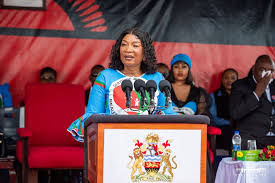
Chivayo’s US$1 million pledge to the Beautify Malawi (BEAM) Trust, chaired by First Lady Gertrude Mutharika, is his most visible gesture in Malawi. It remains unclear whether the pledge has been fulfilled; no verification appears in the cited record.
Founded in 2014, BEAM has grown into a major social development organisation spanning education, health, sanitation, and environmental programmes.
Yet it carries unresolved governance concerns.
A 2014 Global Fund accountability report found that BEAM received funds from the National AIDS Commission, despite the commission’s mandate being limited to HIV and AIDS programmes.
The First Lady acknowledged receiving K5 million but described it as voluntary. Civil society groups called the transfer “a pure sign of misappropriation of funds”, while UNAIDS expressed concern. Some funds were reportedly returned, though the resolution remains unclear.
More recently, BEAM has attracted significant private donations, including K40 million from the Chinese Chambers of Commerce and K50 million from Simuyi Holdings.
While these contributions do not involve public funds, analysts note that the trust operates at a sensitive intersection of presidential access and large-scale fundraising, without a publicly documented independent audit.
Malawi’s institutional weaknesses provide the backdrop to the Chivayo case.
In December 2025, the World Bank noted “significant challenges” in translating legal reforms into effective governance, highlighting the risk that opaque ownership structures allow “well-connected shell companies to covertly benefit from government contracts”.
Although procurement law mandates competitive tendering, the 2024 fuel law amendment created a sweeping ministerial exception in precisely the sector Chivayo is targeting.
Oversight bodies, including MERA and the Anti-Corruption Bureau, have repeatedly intervened after irregularities emerged, but often too late to prevent flawed contracts from proceeding.
No formal decision on any Chivayo-linked fuel contract has been announced. No public response appears in the cited record from the Ministry of Energy, NOCMA, or the presidency regarding his stated interest, his access to both administrations, or discrepancies surrounding his public claims.
This case extends beyond Malawi. It reflects a broader Southern African pattern in which politically connected businessmen navigate weak governance systems, leveraging proximity to power rather than technical capacity to secure state contracts.
South African investigators have already flagged suspicious financial flows linked to Chivayo, suggesting that alleged proceeds of state capture in Zimbabwe may be moving through regional financial systems.
Meanwhile, Malawi’s fuel supply chains, dependent on Mozambican and Tanzanian ports, mean that procurement failures in Lilongwe have regional consequences.
At stake is not just one contract but the credibility of procurement governance across Southern Africa at a time when international financing, including the World Bank’s US$80 million programme, is tied to measurable anti-corruption outcomes.
As Zimbabwean opposition leader Jameson Timba put it, “Zimbabwe’s institutions will remain captured by cartels and political elites” without independent investigation.
The warning, though directed at Harare, applies with equal force to the question now confronting Lilongwe.
