As Western donor support contracts and Malawi’s food crisis deepens, the rapid expansion of a UK-registered Islamic charity is exposing both the value and the governance challenge of non-traditional humanitarian actors in one of the world’s most aid-dependent countries.
By Collins Mtika
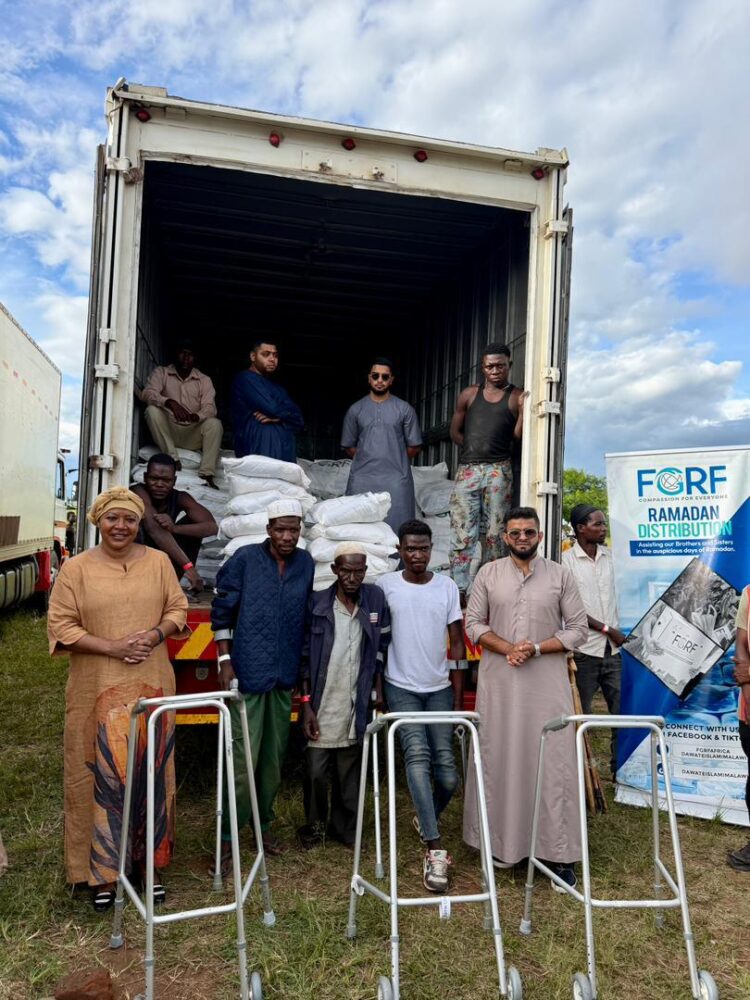
In February 2026, as Malawi’s Department of Disaster Management Affairs (DoDMA) struggled to close a multibillion-kwacha funding gap in its lean season response, the Faizan Global Relief Foundation (FGRF) launched a nationwide Ramadan food distribution drive aimed at 100,000 vulnerable households.
The campaign, stretching from Nsanje in the south to Salima in the centre, was among the most ambitious recent relief operations mounted by a non-traditional humanitarian actor in Malawi.
By early March, FGRF said it had already reached more than 20,000 households across five districts.
Its growing footprint matters not simply because a faith-based charity is delivering aid in a time of hunger.
It matters because it points to a deeper shift: as traditional donor support weakens, new actors are moving into spaces once dominated by Western governments and multilateral agencies.
For policymakers watching governance, aid dependency and sovereign risk in sub-Saharan Africa, Malawi offers a stark case study.
The retreat of established donors is creating room for organisations whose interventions are visible and often effective but whose integration into formal humanitarian coordination systems remains uneven.
There is little dispute about the scale of Malawi’s food emergency.
The Integrated Food Security Phase Classification analysis published in October 2025 found that about four million people, 22% of the assessed population, were facing acute food insecurity at IPC Phase 3 or worse between October 2025 and March 2026.
Of those, about 8,000 were classified in Phase 4, the emergency category that requires immediate life-saving support. National maize production for the 2025/26 season was estimated at 2.9 million metric tonnes, against a requirement of 3.7 million.
President Peter Mutharika, who returned to office in September 2025 with 56.8% of the vote, declared a state of disaster in late October and extended it nationwide the following month.
The government’s Lean Season Food Insecurity Response Programme was costed at K209.4 billion, or about $119 million.
By late February 2026, DoDMA said it had mobilised $85.5 million, leaving a shortfall of roughly $34 million. The World Bank provided the largest single contribution at $45 million.
The United States, Norway, Japan, the United Kingdom, and Ireland together channelled $18.1 million through the World Food Programme and other agencies.
But the immediate crisis sits on top of a more structural vulnerability.
The United States had been providing Malawi with more than $350 million a year, more than 13% of the national budget.
The Trump administration’s freeze on USAID-funded programmes in early 2025 shut down 20 health posts, displaced about 5,000 health workers, and suspended maternal health initiatives.
At the same time, Malawi’s $175 million Extended Credit Facility with the International Monetary Fund, approved in November 2023, lapsed automatically in May 2025 after no programme review was completed within the required 18-month period. Only $35 million had been disbursed.
The IMF cited weak fiscal discipline and unresolved debt restructuring. Together, the aid freeze and the collapse of the IMF programme exposed the fragility of Malawi’s financing model at precisely the moment humanitarian pressures were intensifying.
That is the space into which FGRF has moved.
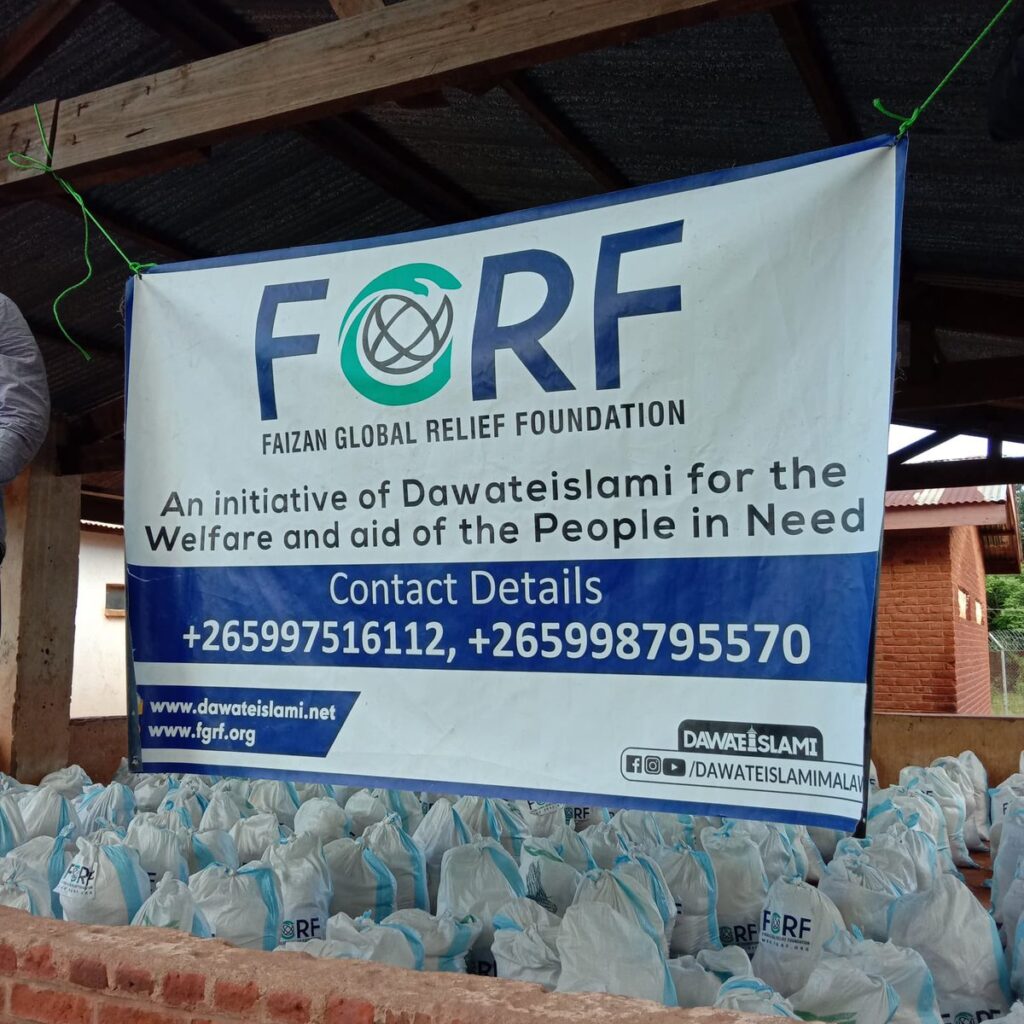
Registered with the UK Charity Commission as Charity 1200869, FGRF is the humanitarian arm of Dawat-e-Islami, a Pakistan-headquartered Sunni Islamic movement founded in 1981.
The movement describes itself as apolitical and focused on welfare and community service. FGRF operates in several countries, including Pakistan, Bangladesh, Kenya, Mozambique, South Africa, and Tanzania.
In 2024, the organisation received the Great British Care Award for global humanitarian services.
Its UK head, Syed Muhammad Faisal Sami, was named UK Volunteer of the Year by Charity Today and later Humanitarian of the Year at the Influencer Magazine Awards 2025.
FGRF is not a newcomer to Malawi. It was among the first responders to Cyclone Ana in January 2022, distributing aid worth $250,000 and receiving a commendation from the Malawian government.
What has changed is scale.
In November 2025, the foundation distributed 1,500 bags of flour worth K20 million in Mangochi. Agriculture Minister Roza Mbilizi described the donation as timely amid worsening food shortages.
In January 2026, the organisation provided food to nearly 2,000 people in Luchenza, in Thyolo district, and donated 15 hospital beds worth K60 million to Chonde Health Centre’s maternity ward.
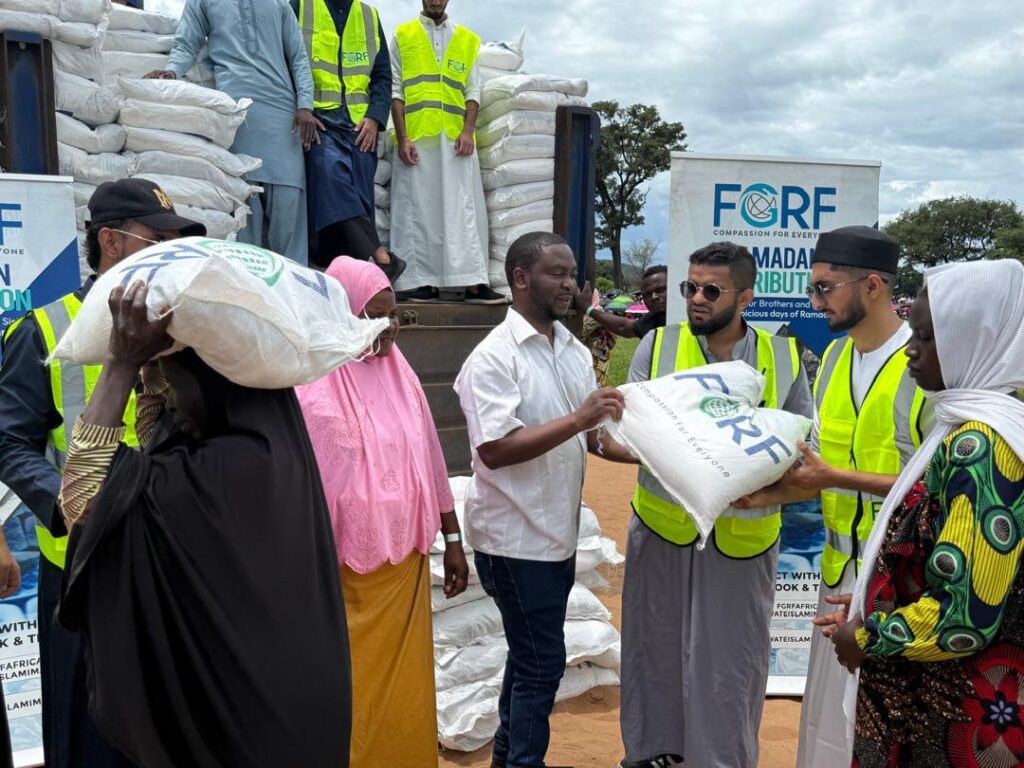
By late February, its Ramadan campaign had reached Nsanje, Thyolo Thava, Salima, and Mangochi, distributing packs containing maize flour, rice, sugar, cooking oil, salt, and soya pieces.
Its plans go beyond emergency relief. Communications officer Ibrahim Mataya told reporters that the organisation intends to distribute hybrid seed during the planting season, provide blankets in winter, and roll out livelihood support programmes in more districts.
Muhammad Osman Madani, the foundation’s head, has framed the work as a dual effort: meeting immediate humanitarian need while reinforcing essential public services.
That message has found local political support.
Mary Navicha, Minister of Gender and MP for Thyolo Thava, said close to 60% of households in her constituency had no reliable food supply and that she had personally approached FGRF for assistance.
In Thyolo, 84-year-old James Makhuwira said he had been struggling and sometimes sleeping without food before receiving a food pack. Chimwemwe Chipungu, minister of lands and MP for the area, urged other organisations to follow the foundation’s example.
There is little question that this kind of intervention matters in districts where hunger is severe. The harder question is what it means for public accountability and aid governance.
When DoDMA published its February 2026 accounting, it noted that its figures excluded donations made directly to communities without formal declaration. It urged aid recipients to publicly account for the resources they had received.
That concern is broader than any one organisation. Malawi’s Non-Governmental Organisations Regulatory Authority, established under the NGO Amendment Act of 2022, requires all NGOs to register before operating.
But coordination is already strained. A 2024 study in Health Policy and Planning found that 166 financing sources and 265 implementing partners were already complicating health-sector coordination in Malawi.
As the humanitarian field becomes more crowded, especially with actors operating outside the traditional OECD-DAC donor system, the burden on already stretched state institutions will only grow.
This is not only a Malawian story.
Across sub-Saharan Africa, the contraction of USAID and other Western assistance is creating openings that a mix of non-Western actors is beginning to fill. Some are Gulf-backed state donors.
Others are transnational faith-based organisations with strong delivery networks but institutional cultures that do not always map neatly onto multilateral accountability frameworks.
Research on faith-based organisations in the region has long pointed to a dual reality: they are often highly effective in reaching remote communities, but they also expose weaknesses in financial reporting, data-sharing and state oversight.
The next 12 to 24 months will be critical. The Mutharika administration must negotiate a successor programme with the IMF, almost certainly under pressure to accept politically painful fiscal reforms.
A better rainfall season may improve the 2026 harvest outlook, but maize prices remain well above the five-year average despite a 16% drop in January 2026.
If conventional donor flows do not recover, the role of non-traditional humanitarian actors will only expand.
The policy challenge is not whether organisations such as FGRF should be active in Malawi. Their capacity for rapid, large-scale delivery makes them difficult to ignore, and in many places impossible to replace.
The challenge is whether Malawi, regional bodies such as SADC and multilateral institutions can build coordination systems that draw these actors in rather than leave them operating at the margins.
That will require more than gratitude for emergency aid. It will require frameworks that preserve transparency, improve reporting, and make room for new forms of humanitarian engagement without fragmenting the response architecture.
