
Treasury’s latest belt-tightening circular rehashes old rules, and spotlights an enforcement deficit at the heart of government, sharpened by the fact that the official who signed it recently had major corruption-related prosecutions discontinued on the attorney general’s instruction.
By Collins Mtika
When Malawi’s Secretary to the Treasury, Cliff K. Chiunda, signed a 28-point austerity circular on February 27, 2026, it landed with the language of urgency, the state, at last, taking a hard line on waste.
Recruitment across the public service was frozen. Foreign travel was restricted to “extremely essential” trips. Fuel entitlements for senior officials were cut by 30%. New vehicles were barred.
Embassies were capped at five staff per mission. Procurement was pushed onto electronic systems with deadlines. Controlling officers were warned to comply or face consequences.
On paper, it read like a clampdown. In practice, much of it read like déjà vu.
Many of the measures in Chiunda’s February 27 order, marked “effective immediately”, had already been announced through earlier Treasury directives, budget adjustment communications and a November 6, 2025 circular from the Office of the President and Cabinet restricting foreign travel.
The fact that government felt compelled to restate them, again, within months points to a problem deeper than “tough economic conditions”: Malawi’s recurring difficulty in enforcing rules it keeps reissuing.
One provision limits publicly funded foreign travel to exceptional cases approved at the centre of government, explicitly referencing the prior order (circular CS/S/001 of November 6, 2025) that imposed substantially similar restrictions.
Repeating the rule four months later is less a policy innovation than a compliance reset, a tacit acknowledgement that the earlier instruction did not hold.
Another provision demands that all procurement be supported by IFMIS-generated local purchase orders, warning that goods and services supplied without a system-generated LPO will not be paid.
Yet procurement outside government financial systems has been a familiar feature of audit findings for years, precisely the kind of irregularity a circular can prohibit, but only enforcement can stop.
The directive also orders mandatory use of the Malawi National Electronic Procurement System (MANePS) by April 1, 2026.
MANePS was introduced to make procurement more transparent and traceable. Years after its rollout, a new deadline underlines uneven adoption across procuring entities, and the state’s reliance on deadlines where compliance has not become routine.
Other measures also return, pointedly, as reminders rather than reforms:
- A ban on “assignment of proceeds” agreements with banks on behalf of suppliers, a financing practice flagged by international lenders as a fiscal risk, reappears in the 2026 austerity order, suggesting it persisted despite earlier warnings.
- Statutory bodies and state-owned enterprises are instructed to remit dividends and surpluses as required by law, with the circular emphasising that using dividends “at source” is illegal, another restatement of a prohibition that has not proved self-enforcing.
In short, the February 27 directive does not establish a new architecture of fiscal control. It reads like government issuing the same rules again because the old ones did not bite.
Malawi’s National Audit Office, across successive annual reports, has repeatedly flagged similar categories of breakdown: unretired imprests running into billions of kwacha, travel expenditures without authorisation, and procurement conducted outside mandated systems.
Parliament’s Public Accounts Committee has examined such findings repeatedly, but oversight is slowed by institutional backlog, audits are produced faster than enforcement and hearings can resolve them.
The result is a recurring gap between what the rules require and what happens in practice, the gap that turns austerity into a paper exercise.
Chiunda’s circular attempts to close that gap through centralisation and threats. It places explicit responsibility on controlling officers and chief executives, echoing accountability provisions in the Public Finance Management Act of 2022.
It also restricts the signing of contracts without prior written approvals from multiple entities, including Treasury and the Ministry of Justice.
But there is a conspicuous omission: no public compliance and reporting mechanism.

There is no requirement to publish approvals, denials, waiver lists or enforcement actions. Without routine disclosure, the public is asked to take compliance on faith, even as previous controls have been restated and recycled.
Civil society groups have long argued that expenditure-control directives often arrive without follow-through. Without published compliance dashboards, named disciplinary outcomes or consistent prosecution of violations, the difference between “strict controls” and “strict language” becomes difficult to measure.
The credibility question is inseparable from the official who signed the order.
Twenty-three days before Chiunda issued the austerity directive, the High Court confirmed that his own corruption-related prosecutions, including a case involving allegations of $350 million in concealed public borrowing, had been discontinued after the Director of Public Prosecutions acted on the attorney general’s instruction.
No substantive public justification has been provided.
The sequence has created a stark contradiction: at the moment Malawi is trying to persuade creditors, donors and citizens that fiscal governance is no longer optional, the country’s top Treasury official is issuing discipline directives after major prosecutions against him were halted by executive instruction.
After the Democratic Progressive Party won the September 2025 election, Chiunda was confirmed as Secretary to the Treasury. Before his confirmation, he was a defendant in two criminal cases prosecutors described as among the largest financial crime proceedings in Malawi’s history.
In Criminal Case No. 19 of 2023, Chiunda, former Reserve Bank governor Dalitso Kabambe, and Deputy Governor Henry Mathanga faced charges linked to allegations that $350 million in public funds from an African Export-Import Bank facility were unlawfully used without parliamentary approval.
Prosecutors alleged the loan was concealed from the central bank’s annual reports and from submissions to the International Monetary Fund. Charges included money laundering and making misleading statements.
In a separate matter, Criminal Case No. 3 of 2025, Kabambe and Mathanga were accused of authorising a 14.79-billion-kwacha payment to FDH Bank, described in a forensic audit as a fraudulent transaction made without Reserve Bank board approval and disguised as income from foreign-exchange swap transactions.
On February 4, 2026, High Court Judge Redson Kapindu confirmed both cases had been discontinued after the DPP issued discontinuance certificates. Court documents show the DPP acted on the direct instruction of the attorney general.
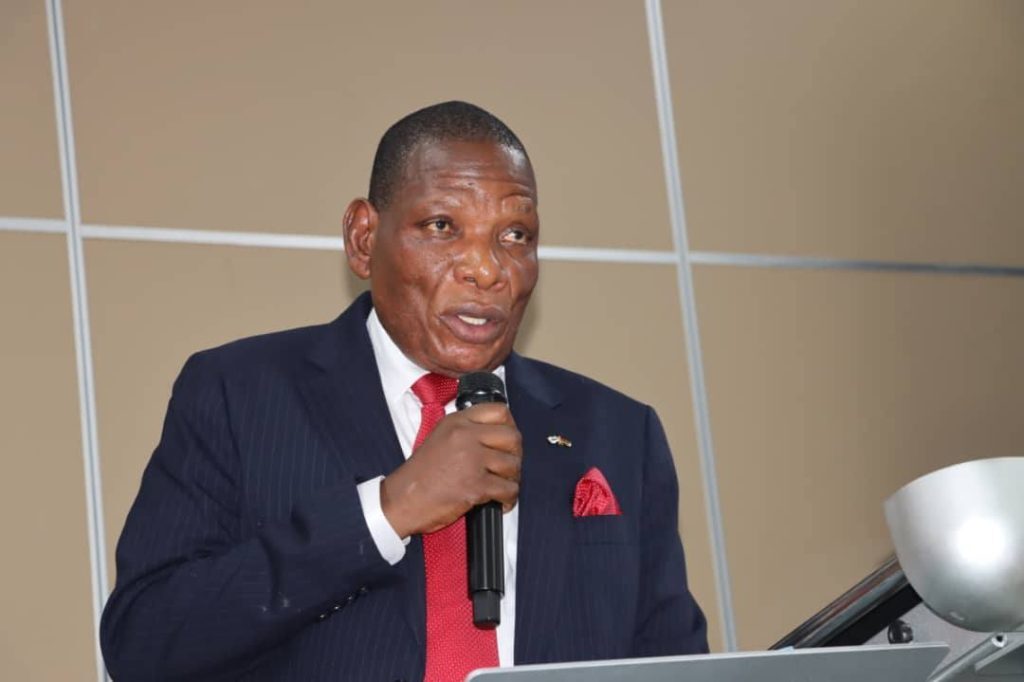
The DPP did not publicly address the substance of the decision and referred queries to the Ministry of Justice’s public relations office. A ministry spokesperson said the DPP would furnish reasons to Parliament’s Legal Affairs Committee.
No substantive public justification has been provided in the record cited for this story.
Neither Chiunda nor the Ministry of Finance, Economic Planning and Decentralisation publicly responded in the cited record to questions raised by the sequence of appointments, discontinuances and the issuance of the austerity circular.
The effect is not merely political optics. It is institutional credibility.
When the state demands compliance from every controlling officer but can terminate a major prosecution of its top fiscal official without a full public explanation, the message to the system below is corrosive: rules are strict for institutions, but flexible for the powerful.
None of this diminishes the reality that Malawi is operating in a fiscal emergency.
By December 2025, Malawi’s public debt had reached 23.9 trillion kwacha, equivalent to 90.9% of GDP. The World Bank and IMF have classified Malawi as being in debt distress, the most severe risk category. Reuters reported in February 2026 that Malawi acknowledged its debt was at “unsustainable levels”.
On the same day Chiunda issued his February 27 circular, Finance Minister Joseph Mwanamvekha presented the 2026-27 national budget totalling 10.978 trillion kwacha to Parliament and said austerity measures would remain in force.
The budget allocates 2.793 trillion kwacha to debt interest, about 43.3% of domestic revenue, exceeding the combined allocations for agriculture and health.
A UNICEF analysis cited in the record states Malawi spends more on debt servicing than on education and health combined.
Malawi’s IMF programme has also faltered. The $175 million Extended Credit Facility, approved in November 2023, terminated automatically in May 2025 after no review was completed; only $35 million was disbursed.
The government has signalled it will seek a new arrangement, though no timeline was provided in the cited record.
A World Bank public finance review has warned that rigid recurrent spending and weak fiscal governance undermine allocative efficiency, with rigid expenditures consuming more than 90% of domestic revenue.
Meanwhile, the country’s social and economic stress is measurable. A World Bank Poverty and Equity Brief cited in the record estimated 76.6% of Malawians live below $3 per day, with 482,000 more people falling into poverty in 2025 alone.
GDP growth of 1.9% lagged population growth of 2.6%, marking a fourth consecutive year of declining per capita income. Inflation averaged 28.4%.
This is the environment in which Malawi is cutting travel, freezing hiring and trying to force procurement through systems designed to prevent leakages.
But austerity that constrains services while leaving impunity untouched risks public anger, and fiscal failure.
One of the circular’s most consequential provisions is the recruitment freeze: it suspends all hiring, including non-established posts, until further notice.
Applied without published exemption criteria, a blanket freeze tightens staffing constraints in sectors already under strain. Health is particularly exposed.
The record cites WHO figures indicating Malawi has fewer than two physicians per 100,000 people, far below levels typically associated with essential service delivery. A hiring freeze in that context turns vacancies into a structural condition.
The circular also arrives amid broader shocks. The record notes that 20 health posts closed after USAID funding cuts in 2025. Social protection allocations fell from 3.7% of the budget to 2.7%. Each year, about 270,000 young Malawians enter the labour market, while roughly 40,000 formal jobs are created.
These are not abstract numbers. They describe a narrowing state: fewer resources, fewer staff, more need.

Economists have warned that austerity without safeguards can hollow out essential services.
Bertha Bangara-Chikadza, president of the Economics Association of Malawi, welcomed expenditure controls as necessary in the cited record, but cautioned that implementation must not damage service delivery in critical sectors such as health and education.
Chiunda’s circular leans heavily on responsibility and sanctions. It cites the Public Finance Management Act. It threatens non-payment of off-system procurement. It reiterates travel and fleet restrictions. It imposes MANePS deadlines. It demands dividend remittances from state enterprises.
What it does not do is confront the central reason these measures keep returning: enforcement has not been consistent, transparent or politically insulated.
There are no routine public compliance reports showing:
- which agencies violated travel rules;
- who authorised exceptions;
- which suppliers were paid without system-generated LPOs;
- which entities ignored MANePS deadlines;
- which SOEs withheld dividends;
- and what sanctions followed.
Nor is there a published mechanism for tracking the multi-agency approvals the circular requires for contracts, approvals that, without transparency, can become either a bottleneck or a loophole.
In the political context of February 2026, there is also no credible way to separate a renewed austerity push from the accountability vacuum created when high-profile cases involving top financial officials were discontinued without a full public explanation.
One commentary cited in the record argued that discontinuing prosecutions involving alleged manipulation of economic data submitted to the IMF, while those implicated move into positions that may negotiate a new programme, creates a credibility problem.
Another, published by Nyasa Times, framed the risk more bluntly: if major cases can disappear without explanation, anti-corruption becomes “theatre”.
Strip away the rhetoric and the point is administrative: a fiscal system cannot be disciplined by circulars alone, and it cannot be trusted when accountability is perceived as selective.
Malawi’s lenders and oversight institutions have long converged on the same reform agenda: stronger expenditure controls, credible procurement systems, tighter oversight of state enterprises and durable anti-corruption enforcement.
Digital tools such as IFMIS and MANePS were introduced precisely because paper directives do not sustain compliance. But systems only work when they are used, and when violations are punished even when politically inconvenient.
