As devastating droughts and floods push Malawi’s farmers to the brink, a high-stakes debate over genetically modified crops is moving from the lab to the land—pitting promise against precaution.
By Collins Mtika
For millions of smallholder farmers in Malawi—the “Warm Heart of Africa”—the land is both a lifeline and a source of constant uncertainty.
In a country where agriculture employs over 80% of the population and contributes significantly to the GDP, farming is more than a livelihood—it is survival.
But in recent years, that survival has become increasingly fragile. Climate change is no longer a distant threat—it is a relentless and destabilising force.
Ranked among the world’s top five countries most affected by extreme weather, Malawi has faced a punishing cycle of prolonged droughts followed by devastating floods.
In 2023, Cyclone Freddy dropped six months’ worth of rain in just six days, destroying more than 440,000 acres of farmland and displacing over half a million people.
This growing climate volatility highlights the vulnerabilities in Malawi’s agricultural system—especially its heavy reliance on maize.
As the national staple, maize is essential, but it’s also highly sensitive to drought, rapidly depletes soil nutrients, and is constantly under attack from pests like the fall armyworm, which thrives in hot, dry conditions.
The result: widespread food insecurity, deepening poverty, and rural communities locked in a cycle of risk.
In response, Malawi is now asking a critical question: Can agricultural biotechnology help build a more sustainable and resilient future?
From Cotton to Maize: The Two Faces of Biotechnology
Malawi’s exploration of biotechnology is already making an impact—especially in cotton farming. For years, farmers battled the African bollworm, often needing up to eight rounds of pesticide per season just to protect their crops.
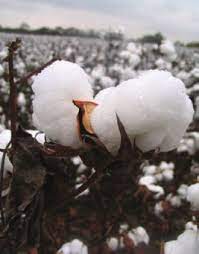
Then came Bt cotton, genetically modified to produce a protein toxic to the bollworm. Since its commercial introduction, it has transformed cotton production in Malawi.
Farmers report dramatic improvements. Amani Kafa, from Salima, says his yield jumped from 50 to over 100 bales on the same two-acre plot after switching to Bt cotton.
“Bt cotton is changing our lives,” he says. The increased income has allowed him to buy more land, build a house, and send his children to school. Adoption rates now exceed 95%—a strong endorsement.
Encouraged by this success, scientists are now focusing on Malawi’s most important crop: maize. While drought-tolerant (DT) maize developed through traditional breeding has gained ground—rising from 2% adoption in 2006 to over 40% by 2015—pest resistance remains a serious challenge.
To tackle this, researchers at the Lilongwe University of Agriculture and Natural Resources (LUANAR) are conducting confined field trials on Bt maize, genetically modified to resist fall armyworm infestations.
“The trials are going well,” said Dr. Kingdom Kwapata, a biotechnology scientist at LUANAR during a 2024 site visit. “Plants with the transgenes have intact leaves, while non-Bt varieties show significant fall armyworm damage.”
Supporters believe Bt maize could significantly increase yields, enhance food security, and raise incomes, especially for smallholder farmers most affected by climate shocks.
A Path fraught with Hurdles: Policy, Perception, and Price
Despite its potential, widespread adoption of biotechnology in Malawi faces significant challenges.
Malawi was an early adopter of biosafety regulations, passing the Biosafety Act in 2002 and establishing a National Biotechnology and Biosafety Policy in 2008. These policies enabled trials on cotton, cowpea, and banana.
Yet, when it comes to genetically modifying the national staple, maize, the government remains cautious.
Public skepticism is a major barrier. Concerns persist about the long-term health and environmental effects of GM crops. Critics also fear the loss of indigenous seed varieties and possible harm to pollinators like bees.
“These new varieties are not good at all,” said one subsistence farmer. “You can’t harvest anything without applying fertilizers. With our local varieties, we can harvest even without fertilizers.”
Beyond public perception, Malawi’s research capacity is limited. Many local labs lack the equipment needed for advanced genetic studies. Seed cost is another challenge.
High prices for Bt cotton seeds have prompted government efforts to improve affordability and access. For Bt maize to succeed, similar support will be crucial.
To combat misinformation, groups like the National Commission for Science and Technology (NCST) and the Open Forum on Agricultural Biotechnology (OFAB) are working to educate the public, policymakers, and media about the science and potential benefits of biotechnology.
Beyond the Silver Bullet: A holistic Vision for resilience
Scientists and development experts agree: biotechnology is not a magic solution. It’s one tool among many.
The future of agriculture in Malawi will depend on a more integrated approach—one that combines genetic innovation with ecological sustainability.
The principles of Climate-Smart Agriculture (CSA) are gaining ground. These include intercropping maize with legumes like beans and cowpeas to boost soil fertility, practicing conservation farming to retain moisture, and improving water management systems.
Conventional crop breeding also remains vital, providing diverse, locally adapted crop options for farmers.
In this broader strategy, Bt crops like cotton and maize are not standalone fixes—but complementary tools. When paired with regenerative farming methods, they can improve yields while supporting long-term environmental health.
A Calculated Leap of Faith
Malawi stands at a critical crossroads. The climate crisis is rapidly reshaping its agricultural landscape, and urgent action is needed.
Bt cotton has made a strong case for embracing biotechnology. It has improved farmer incomes and revived a declining sector.
But maize is a different story, more central to food security, and therefore more politically and culturally sensitive.
The slow, careful rollout of genetically modified food crops reflects a deep sense of responsibility. Malawi must balance innovation with caution, ensuring that any adopted solutions truly serve the needs of its most vulnerable farmers.
What is needed now is a calculated leap of faith, grounded in science, guided by equity, and built on a diverse and resilient agricultural foundation.
In the Warm Heart of Africa, the seeds of a more secure future may already be in the ground. The question is: will they be allowed to grow?
