Threatening to revoke broadcasting licences over poor wages risks punishing an already fragile media industry without addressing the economic conditions that sustain exploitation.
By Collins Mtika
There is a contradiction at the heart of Malawi’s latest attempt to rescue its media industry from exploitation.
The government wants journalists to earn decent wages, yet its proposed instrument of enforcement could leave some of those journalists without jobs.
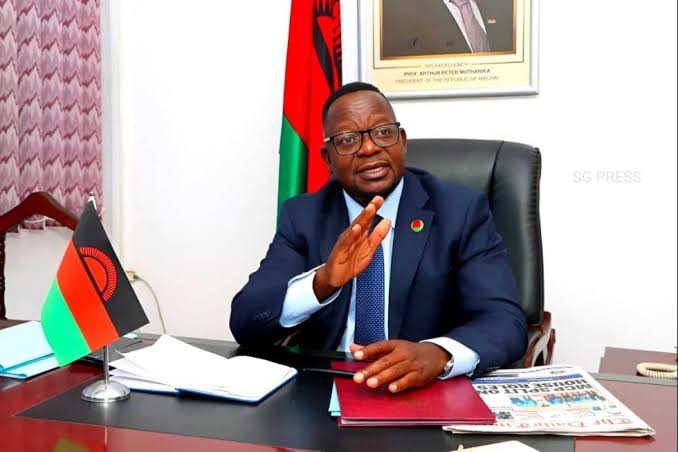
Speaking at the 27th graduation ceremony of the Malawi Institute of Journalism in Blantyre, Information and Communications Technology Minister Shadric Namalomba issued a warning to media proprietors.
“Let us not kill this industry. Let us stop this exploitative behaviour,” he said. “You want journalists to make money for you, but you do not want to pay them. For those doing this, the government will revoke your licences.”
The minister is right to confront the exploitation of journalists. But threatening broadcasting licences without addressing the economic architecture of the media industry risks mistaking an instrument of regulation for a solution to a labour crisis.
Malawi cannot build an independent press on the back of impoverished journalists. Neither can it protect journalism by dismantling the institutions that employ them.
A Malawi Human Rights Commission report released in May 2026 exposes the depth of the problem. Following an investigation prompted by a complaint from media scholar Davie Danford Mchinga, the commission found that journalists in private media commonly earn between K80 000 and K150 000 a month.
Some earn less than the statutory minimum wage of K126 000.16 introduced in June 2025.
Some media houses borrow money to pay salaries. Others delay wages or go six to seven years without salary increases. Correspondents receive as little as K1 000 for a published or broadcast story, while interns spend years in newsrooms without securing permanent employment.
These are not merely unfortunate employment arrangements. They raise fundamental questions about the sustainability of independent journalism and the quality of information on which democracy depends.
The commission recommended targeted labour inspections in sectors vulnerable to exploitation, including private media. The labour ministry conducted more than 2 000 inspections in 2025, uncovering unpaid wages and uncompensated overtime, particularly at community radio stations.
Malawi already has institutions mandated to enforce labour laws. Why, then, should broadcasting licences become the principal instrument for resolving wage disputes?
Under the Communications Act of 2016, broadcasting licences fall under the jurisdiction of the Malawi Communications Regulatory Authority (Macra). The regulator can revoke licences for substantial or continuing breaches of licensing conditions, regulations or the Act, subject to procedural requirements.
But the provisions reviewed do not explicitly identify poor remuneration as grounds for revocation. A ministerial pronouncement does not, in itself, alter licensing conditions.
There is also a political dimension that cannot be ignored. The 2023 State of the Newsroom report questioned whether political considerations influenced the revocation of Rainbow Television’s licence, even after the broadcaster raised funds to offset its debt to Macra.
Expanding the grounds for licence revocation without clear legal safeguards could create another avenue through which governments exercise pressure on independent media.
The economics of exploitation
The exploitation of journalists cannot be divorced from the economic conditions under which media organisations operate.
According to the World Bank, Malawi’s inflation averaged 28.4% in 2025, the highest in the region. High borrowing costs, foreign exchange shortages and weakened consumer demand have placed considerable pressure on businesses, including the advertisers on whom commercial media depend.
International donor support is also under strain. Internews estimated that about $150 million in annual media assistance worldwide would largely disappear following the 2025 United States aid freeze.
Then there is the cost of remaining on air.
According to the Media Institute of Southern Africa (Misa) Malawi, annual content licence fees are denominated in US dollars: $100 for community radio stations, $1 500 for regional broadcasters and $5 000 for national broadcasters.
For media organisations earning revenue in a depreciating local currency, dollar-denominated fees impose an additional financial burden. In 2024, Misa reported that more than 15 broadcasters had closed since 2022 following failures to renew their licences, resulting in the loss of more than 250 journalism jobs.
Against this background, the government’s threat presents a policy dilemma. An economically viable media house that deliberately underpays its employees must be held accountable.
But imposing the same punitive measures on a financially distressed broadcaster could turn underemployment into unemployment.
Financial hardship cannot excuse violations of labour laws. Equally, the government cannot ignore the regulatory and economic conditions that undermine the capacity of media organisations to comply with those laws.
Poverty is a threat to press freedom
The consequences of newsroom poverty extend beyond journalists and their families.
The Al Jazeera Media Institute documented the experience of a junior Malawian reporter earning K1 500 per story, less than $1 at the time, while being expected to finance reporting assignments from personal resources.
The human rights commission also found that poorly remunerated journalists increasingly depend on chipondamthengo, informal payments from news sources or event organisers.
This does not mean that every poorly paid journalist is corrupt. Many continue to uphold professional standards despite extraordinary financial hardship. But an industry that leaves journalists dependent on the financial goodwill of those they are expected to scrutinise creates conditions in which editorial independence becomes increasingly vulnerable.
Press freedom is often discussed in terms of censorship, political intimidation and restrictive legislation. Economic vulnerability deserves equal attention.
What does editorial independence mean when a journalist cannot afford transport to investigate a story? What happens to accountability when the people journalists are expected to hold to account become a source of their financial survival?
The closure of broadcasters also has consequences for citizens. In rural Malawi, where radio remains the most accessible medium, the disappearance of stations risks depriving communities of information in languages they understand.
Every newsroom closure is potentially a loss not only of employment but also of democratic space.
The problem is not unique to Malawi. Research in Zambia and Uganda has documented similarly poor remuneration among journalists, making Malawi’s policy response relevant to a wider African conversation about media sustainability.
Beyond ministerial threats
A sustainable response requires more than regulatory punishment.
The labour ministry must enforce existing wage laws through targeted inspections, transparent reporting and legally prescribed sanctions. MACRA must examine whether its licensing fee structure is compatible with the economic realities confronting broadcasters, particularly community radio stations.
Media proprietors must demonstrate greater accountability for the welfare of their employees, while journalists need stronger collective bargaining mechanisms.
The Human Rights Commission’s findings on the limited formal recognition of the Journalists Union of Malawi, alongside allegations that some media houses discourage union membership, point to another institutional weakness that deserves attention.
Media proprietors’ responses are absent from the material reviewed. Their participation in negotiations over a sustainable remuneration framework will be essential.
The government, media owners, unions and the Media Council of Malawi should establish a framework that distinguishes deliberate exploitation from genuine financial distress without sacrificing workers’ statutory rights.
Any proposal to incorporate labour standards into broadcasting licences must also be subjected to public consultation, legal scrutiny and safeguards against political abuse.
The measure of Namalomba’s intervention should not be how many broadcasters lose their licences but how many journalists secure better wages, dignified working conditions and greater professional independence. Malawi’s democracy needs journalists who can afford to practise journalism and newsrooms that can afford to employ them.
A government that genuinely wants to protect journalism must understand that these two objectives are inseparable. The solution to newsroom poverty cannot be the abolition of the newsroom.
