New regional programmes and a pact with Ethiopia will matter only if they lead to better protection for vulnerable migrants and stronger, evidence-based prosecutions.
By Collins Mtika
An agreement cannot protect a migrant on its own. Nor can an awareness campaign secure a conviction.
Both can help, but the real test of Malawi’s expanding response to human trafficking is what happens after the announcements: when a vulnerable person meets an immigration officer, when police receive a complaint and when a case reaches court.
Malawi has attracted new international support, strengthened cooperation with Ethiopia and begun work on a national strategy against transnational organised crime.
These are potentially important steps. Bet the public record provides too little evidence to judge whether they are making migrants safer.
The challenge is regional as well as national. Malawi lies along a route used by people travelling from the Horn of Africa towards South Africa. Recruitment, transport and exploitation can involve different actors in several countries.
No single police service can investigate every link in that chain.
But regional cooperation will count for little if domestic institutions cannot identify people at risk, refer them for help and gather evidence that can withstand scrutiny.
Follow the money and the protection
In March 2026, the European Union announced that Malawi had joined two existing regional programmes: Better Migration Management and the Regional Operational Centre in support of the Khartoum Process.
They bring together migrant protection, efforts against trafficking and smuggling, and cooperation among law-enforcement agencies.
The EU cited a €28 million budget financed by the bloc and Germany’s Federal Ministry for Economic Cooperation and Development. That figure covers the regional programmes; it is not an allocation to Malawi.
The International Organization for Migration (IOM) and CIVIPOL, the French interior ministry’s technical cooperation operator, are to implement activities in Malawi over 36 months, through 2028.
The distinction matters. A substantial regional budget does not tell Malawians how much will be spent in their country, which agencies will receive support or whether frontline services in vulnerable districts will be equipped to act.
The planned activities include public awareness campaigns, training for journalists and social media influencers, operational guidance and interview tools for officials.
Information can help people recognise deceptive recruitment and understand the risks of irregular journeys. It can also help officials recognise warning signs. But the number of workshops, media stories or campaign impressions is a poor substitute for protection outcomes.
How many people identified as potentially trafficked were referred to appropriate services? How many received safe accommodation, medical care, legal support or help to contact their families? Were referrals followed up? These are the measures by which the intervention should be judged, while protecting survivors’ identities.
The same principle applies to enforcement. Counting interceptions or arrests may show activity, but it does not demonstrate that exploitation has been prevented or that an investigation was properly conducted.
Trafficking is not the same as smuggling
The difference between human trafficking and migrant smuggling is not a technical detail. It shapes who receives protection and what investigators must prove.
As the United Nations Office on Drugs and Crime explains, exploitation is central to trafficking; crossing a border is not required. Smuggling, by contrast, involves facilitating irregular entry into another country for financial or other material gain.
The two offences can overlap, but they should not be treated as interchangeable.
Someone may agree to travel or pay for a journey and later face threats, deception or forced labour. Initial consent does not rule out trafficking when prohibited means are used. For children, the legal test does not require proof of those means.
Equally, crossing a border without documents does not, by itself, establish that a person has been trafficked.
When these distinctions are ignored, migrants who need assistance may be treated only as immigration offenders, while police risk pursuing charges that the evidence cannot support.
Journalists also have a responsibility to distinguish an allegation from a court finding and a suspected victim from a confirmed one.
An investigation is not a conviction
An alleged cross-border network shows both the possibilities and the limits of cooperation.
In October 2026, Malawi’s Nation newspaper reported that Ethiopian Federal Police had completed an investigation into Adnew Bashaw Wudamo and Tamrat Erdado Moloro, who were accused of involvement in a trafficking and smuggling operation moving Ethiopians towards South Africa through countries including Malawi.
According to the newspaper’s account of the police allegations, some migrants were subjected to deception, coercion, physical abuse and demands for money from their families.
Wudamo was reportedly arrested in July and transferred to Ethiopia. These remain allegations; they do not establish a conviction or a court finding of guilt.
The case demonstrates why exchanging suspects’ names is only the beginning. Evidence of recruitment may be in Ethiopia; records of accommodation, payments and movement may be held in Malawi or elsewhere along the route.
Investigators must be able to share usable evidence while respecting due process and protecting potential witnesses.
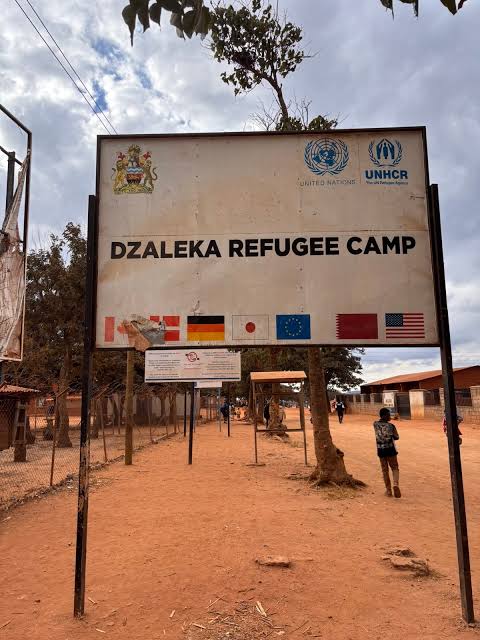
The newspaper also linked part of the alleged operation to Dzaleka Refugee Camp.
That allegation must not become a claim against the camp’s refugee community. Responsibility rests with individuals whose conduct can be established by evidence, not with an entire population.
Malawi and Ethiopia signed a memorandum of understanding on 14 August 2026 to strengthen migration governance and cooperation against trafficking and smuggling. It offers a framework for joint action.
What remains to be demonstrated publicly is whether it produces coordinated investigations, properly documented cases and meaningful assistance for people exposed to exploitation.
A strategy needs a public score card
The next test is at home. From 9 to 13 November 2026, Malawi hosted a workshop in Lilongwe, with support from the Southern African Development Community and partners, to begin developing a national strategy against transnational organised crime.
It produced a draft framework and a roadmap for further work, not an adopted, funded strategy. That difference should not be obscured by celebratory language.
A strategy will have value only when institutions know who is responsible for identification, referrals, investigations and prosecutions; when those responsibilities have budgets; and when progress can be assessed.
The Ministry of Homeland Security should publish clear implementation responsibilities and milestones once the strategy is approved. The IOM and other implementing partners should report anonymised protection outcomes, not merely activities delivered.
And Malawian and Ethiopian authorities should explain, without compromising investigations or survivors’ safety, what their cooperation has achieved.
Malawi does not lack pledges, partners or policy language. What it still needs to show is a reliable chain from the first warning sign to protection for a person at risk and from a credible allegation to evidence tested in court.
Until that chain is visible, the country will be counting commitments. The people exposed to trafficking need it to count results.
