
A correctional system built to punish is being asked to generate revenue just as a 70-year-old legal framework gives way to one centred on rehabilitation.
By Collins Mtika
The Malawi government has signalled plans to transform prison workshops into profit-generating enterprises, positioning inmates as vocational producers whose labour supports reintegration rather than simply occupying time.
The proposal comes as the country’s 27 prisons hold nearly twice the population they were designed to accommodate, a new Prisons Act begins reshaping institutional incentives, and the Southern African Development Community (SADC) urges member states to align correctional systems with rehabilitation-focused regional standards.
Whether the ambition matches the infrastructure remains unresolved.
Malawi’s correctional system entered 2026 burdened by structural constraints that no ministerial announcement alone can resolve.
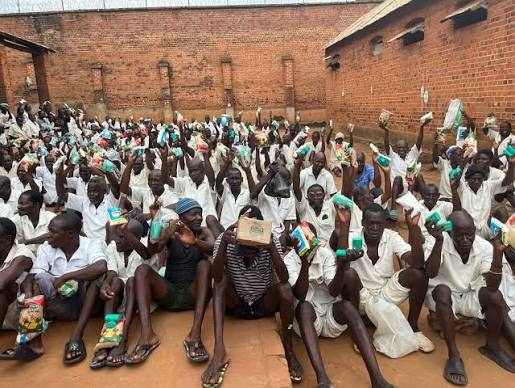
A prison population study conducted between December 2024 and May 2025 found approximately 16,237 people held in facilities designed for 8,694, an occupancy rate of about 187%.
That followed an earlier government count of 16,536 prisoners against a designed capacity of approximately 7,000 in June 2024, which the Southern Africa Litigation Centre (SALC) calculated at 236%.
As of mid-2025, more than 1,000 people accused of murder remained on remand, many in conditions that the Malawi High Court declared inhuman as far back as 2009.
A nutritional assessment commissioned in late 2024 identified 702 prisoners as severely undernourished, found that some prisons were providing only one meal a day, and documented periods during which inmates received little more than salted porridge.
That context is central to understanding the government’s latest proposal.
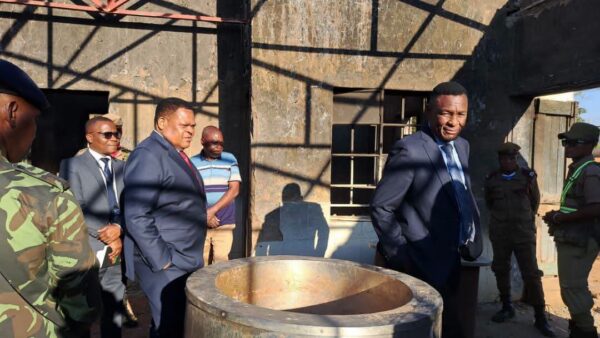
During an unannounced visit to a prison facility in Lilongwe in early July 2026, Homeland Security Minister Peter Mukhito toured prison workshops and announced plans to commercialise prison industries.
Mukhito, who assumed the homeland security portfolio in November 2025 and also serves as secretary-general of the Democratic Progressive Party, said the initiative would convert prison workshops into profit-making enterprises that provide practical vocational skills while reducing the high rates of reoffending that have persisted despite successive reform efforts.
Consultations were scheduled to begin later that month. At the time of the announcement, however, no implementation timetable, costing framework or supporting legislative instrument had been published.
The proposal does not emerge from a legal vacuum.
Parliament passed the Prisons Act, 2025, in April that year, repealing legislation that had remained largely unchanged since 1956. The Act came into force on Aug. 18, 2025.
The previous law, enacted before Malawi gained independence from Britain in 1964, reflected a predominantly punitive philosophy and had never been comprehensively updated to align with the rights protections entrenched in Malawi’s 1994 Constitution, despite reform recommendations dating back to 2003.
The new legislation introduces parole boards, halfway houses, conditional release, healthcare guarantees for pregnant prisoners, a prohibition on corporal punishment, and a statutory Inspectorate Fund.
Most significant for the government’s commercialisation proposal are Sections 84 and 85.
Section 84 authorises prisoners, subject to approval by the Chief Commissioner, to undertake work inside or outside prison for a fee or other consideration. Section 85 establishes a Prisoners’ Labour Fund, intended, among other purposes, to support prisoners’ reintegration upon completion of their sentences.
Before the legislation was enacted, the Southern Africa Litigation Centre noted that the proposed Labour Fund Committee would comprise only prison officials, with no prisoner representative or independent external member to provide oversight.
That governance gap is significant.
The institution responsible for administering commercial prison labour would also control the fund generated by that labour, without an independent oversight mechanism embedded in the legislation.
Mukhito’s remarks point towards a model in which prison workshops, now producing goods largely for internal use, would evolve into income-generating enterprises supplying external markets.
The Malawi Prisons Service has already taken tentative steps in a similar direction through its agricultural programme.
The service has aligned prison farming with Pillar 1 of the Malawi 2063 national development strategy, which prioritises agricultural productivity and commercialisation, shifting from subsistence cultivation towards mechanised production supported by newly recruited irrigation engineers and agribusiness specialists.
But prison agriculture has long been constrained by inadequate funding and inconsistent production.
In early 2025, Malawi Prisons Service Commissioner General Masauko Wiscott acknowledged that the service was purchasing maize from the state grain trader because its own harvests were insufficient to feed approximately 17,000 inmates.
At the same time, the service faced a staff housing shortfall of more than 2,500 units and an estimated recurrent budget deficit of MWK 1.5 billion.
A prison system unable to feed its own population is now expected to generate market revenue from the same infrastructure.
Like a hospital expected to run a profitable catering business while its wards overflow, the model assumes commercial returns before the institution has secured the resources needed to operate effectively.
The implications are not merely institutional.
A 27-year-old prisoner serving a second sentence at Zomba Central Prison told a regional adult education publication that he returned to prison after failing to find a source of income following his first release.
His experience is consistent with the broader argument that unsuccessful reintegration increases the risk of reoffending.
By contrast, the Malawi Prisons Service said in March 2026 that recidivism was declining as rehabilitation programmes expanded.
The service, however, did not publish supporting statistical data or explain the methodology underlying that assessment, leaving the claim independently unverified.
Prison Fellowship Malawi’s halfway-house programme in Balaka District, implemented in partnership with the Malawi Prisons Service, graduated 53 former prisoners in electrical installation, welding, tailoring and carpentry in early 2024, providing each participant with a starter toolkit.
At the graduation ceremony, a Prisons Service commissioner said roughly 15,000 inmates were in custody while fewer than 60 had benefited from the programme.
The disparity illustrates the distance between existing rehabilitation capacity and the scale required to support meaningful commercialisation.
The Prisons Act, 2025, provides the legal framework for expansion. It does not, by itself, provide the capital investment, skilled instructors, production capacity or market linkages needed to make prison industries commercially viable.
Malawi’s reform trajectory broadly reflects developments elsewhere in the Southern African Development Community.
In May 2026, SADC member states meeting in Lilongwe at a public security conference opened by Mukhito called for greater investment in correctional infrastructure, psychosocial services, restorative justice and institutional capacity as part of a regional rehabilitation agenda.
The communiqué reflects a growing regional consensus that correctional systems inherited from the colonial era are poorly aligned with modern rehabilitation objectives and broader economic development goals.
Comparative experience also illustrates the governance risks associated with prison commercialisation.
South Africa’s move during the 1990s towards applying business principles to prison labour generated documented concerns over labour allocation, disproportionately affected Black prisoners and attracted criticism from international trading partners under the General Agreement on Tariffs and Trade (GATT) framework before aspects of the model were abandoned.
The structural risk for Malawi is comparable.
Introducing commercial incentives into a closed institution with limited independent oversight, and where prisoners cannot freely withdraw their labour, risks subordinating rehabilitation objectives to commercial ones.
The governance risks associated with prison commercialisation are not merely theoretical.
The Prisons Act, 2025, does not require that prisoners receive a market wage.
Combined with the governance gap identified by the Southern Africa Litigation Centre, the legislation would allow financial flows from any commercial prison enterprise to be administered by the same institution responsible for managing the workforce that generates them.
These omissions do not necessarily indicate an intention to exploit prisoners. Governments undertaking resource-constrained institutional reforms often prioritise operational provisions before developing more comprehensive oversight arrangements, particularly when replacing outdated legislation.
The critical test will lie in the regulations and implementation guidelines that follow.
Mukhito also announced plans for a formal reintegration agreement for prisoners released through presidential amnesties.
The proposed agreement would set out behavioural expectations for beneficiaries returning to their communities. The initiative addresses a separate weakness in Malawi’s correctional system.
Presidential pardons and amnesties have periodically been used to ease prison overcrowding, but structured post-release supervision has remained limited, increasing the risk that former prisoners return to custody.
The Prisons Act, 2025, establishes supervision under conditional release and parole through a statutory Parole Board chaired by a retired Chief Commissioner and including both a community representative and a professional member.
Whether that board will receive sufficient financial and operational support to supervise offenders across Malawi’s 28 districts, including remote areas with limited transport infrastructure, remains unanswered.
The wider fiscal environment shapes every aspect of the proposed reforms.
A prison system operating at 187% of designed capacity, struggling to provide adequate nutrition, facing a staff housing shortage and carrying a recurrent budget deficit of approximately MWK 1.5 billion faces strong institutional pressure to generate internal revenue, not simply to improve rehabilitation outcomes but also to sustain basic operations.
If commercialisation proceeds without regulations that ring-fence prisoner welfare and reintegration funding, the Prisoners Labour Fund risks evolving into a substitute for budgetary support rather than the reintegration mechanism envisioned by the legislation.
The Prisons Act, 2025, represents Malawi’s most significant correctional reform since independence.
It replaces the punitive framework established under the 1956 Act, creates statutory authority for remunerated prisoner labour and a reintegration fund, establishes a Parole Board, and empowers the Chief Commissioner to seek prison decongestion, including through recommendations for presidential pardons.
If fully implemented and adequately resourced, the legislation provides the legal foundation for the vocational commercialisation model outlined by Mukhito. Whether that potential is realised remains unresolved.
