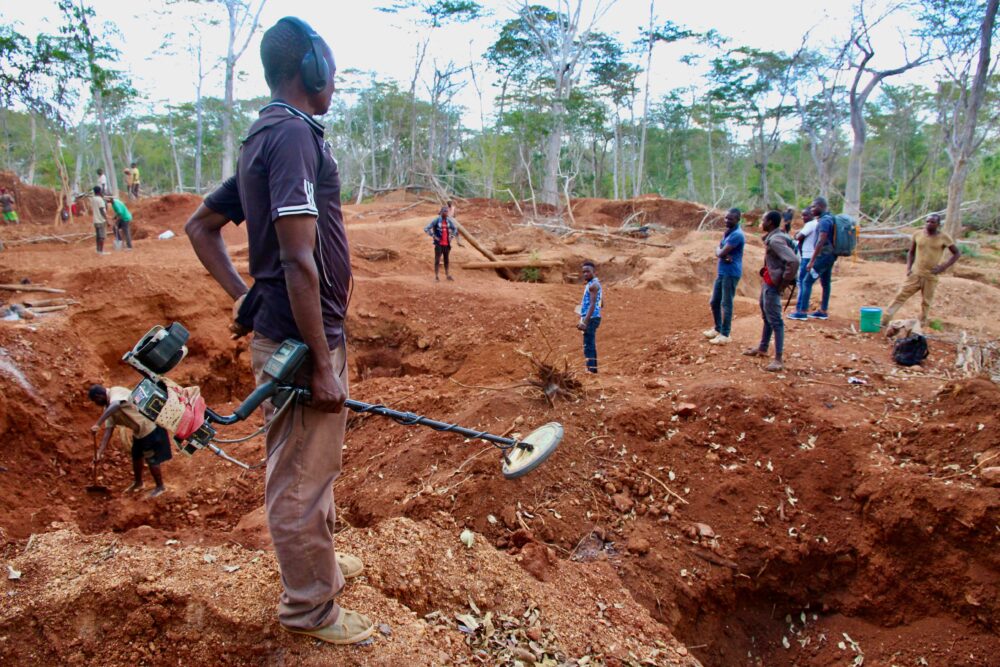
A programme intended to build national reserves and curb gold smuggling became a source of emergency liquidity as Malawi confronted mounting economic challenges.
By Collins Mtika
Malawi’s central bank sold approximately 590 kilograms of artisanal gold in 2026, despite earlier assurances from senior officials that the metal would be refined and retained as part of a long-term reserve-building strategy.
The sale, disclosed during a period of severe fuel shortages and foreign exchange constraints, provided urgently needed funds for fuel imports.
However, questions remain about the structure of the transaction, its valuation, and the level of public disclosure, including the identity of the buyer and conflicting statements regarding the proceeds generated.
The issue is not whether the Reserve Bank of Malawi (RBM) had the legal authority to sell the gold. Under the Reserve Bank of Malawi Act, the central bank is empowered to buy and sell gold.
Instead, the debate centres on transparency, accountability, and the apparent shift from earlier public commitments to retain the gold as a strategic reserve asset.
The episode also highlights broader economic challenges facing Malawi, including persistent foreign exchange shortages, low reserve levels, and efforts to formalise a gold sector long affected by smuggling and informal trade.
The RBM launched its domestic gold purchasing programme in May 2021 through its subsidiary, the Export Development Fund (EDF).
The initiative aimed to create a formal market for artisanal gold while building a reserve asset that could strengthen Malawi’s external financial position.
By early 2024, records cited in parliamentary discussions indicated that the programme had accumulated about 187 kilograms of gold, valued at approximately K22.1 billion at prevailing market prices.
The programme attracted parliamentary attention in February 2024 when lawmakers sought clarification on the government’s plans for the asset.
According to parliamentary records, former President Lazarus Chakwera said the gold would be refined to 99.99% purity and held by the central bank as bullion.
He reportedly stated that the gold would not be sold until Malawi had accumulated significantly larger holdings and international gold prices had improved.
At the time, the programme was presented as a long-term reserve-building strategy rather than a source of short-term liquidity.
By November 2025, the central bank reportedly held around 540 kilograms of gold valued at approximately US$70 million, while continuing to explore refining arrangements that could convert the metal into internationally recognised monetary gold.
The programme’s refining arrangements appear to have remained unresolved.
Parliamentary records indicate that some gold was processed by Inosselia Group, a private company operating a refinery near Kamuzu International Airport.
Media reports cited EDF manager Elyvin Chawinga as saying in a recorded interview that no formal contract existed between EDF and the company.
She reportedly described the arrangement as a one-off engagement and said EDF remained free to use other refiners.
If accurate, the absence of a formal agreement may raise questions about governance practices, quality assurance procedures, security protocols, and chain-of-custody arrangements for a state-owned mineral asset.
At the same time, available records do not provide evidence that any specific irregularity resulted from the arrangement. The circumstances surrounding the sale are central to understanding the decision.
Malawi entered 2026 under significant external financing pressure. The country’s import bill continued to far exceed export earnings, while policymakers struggled with chronic foreign currency shortages.
According to figures cited in parliamentary records, Malawi imported goods worth approximately US$3.6 billion in 2025, compared with exports of about US$936 million. By February 2026, export earnings covered only a fraction of import requirements.
The situation worsened during a fuel supply crisis that disrupted economic activity across the country.
Rising global oil prices, driven in part by international geopolitical tensions, increased the need for upfront payments for fuel shipments arriving at regional ports.
Delayed payments contributed to fuel shortages, long queues at filling stations, and wider disruptions affecting transport, commerce, and household expenses.
Against this backdrop, the government turned to its gold holdings as a source of liquidity. Public confirmation of the transaction emerged in April 2026.
On 22 April, Information Minister Shadric Namalomba told local media that the government had sold part of the gold accumulated by the central bank and used the proceeds to secure approximately US$30 million needed for fuel imports.
Several days later, RBM spokesperson Boston Maliketi Banda reportedly told Reuters that the bank had sold 590 kilograms of artisanal gold and expected to raise about US$78 million from the transaction.
The documents reviewed for this article do not explain the apparent discrepancy between the minister’s reference to US$30 million and the central bank’s estimate of US$78 million.
It remains unclear whether the figures relate to different stages of the transaction, separate payments, or differing accounting treatments.
The central bank did not publicly identify the buyer or disclose the pricing methodology used in the sale.
RBM reportedly stated that the transaction involved artisanal gold holdings and stressed that other gold reserves held internationally were unaffected.
According to media reports, the bank maintained that refined reserve gold held in custody at the Federal Reserve Bank of New York was not being sold.
The limited public disclosure surrounding the transaction has become a key area of scrutiny.
Based on prevailing gold prices at the time, the market value of 590 kilograms could vary significantly depending on factors such as purity, refining status, transaction structure, and timing.
No independent valuation was publicly released.
Reports also indicated that neither the purchaser’s identity nor the final sale price had been disclosed as of publication.
These omissions do not necessarily suggest wrongdoing. Governments and central banks may have legitimate commercial or market-sensitive reasons for limiting disclosure during active transactions.
Nevertheless, transparency advocates and governance specialists often regard valuation disclosure and post-transaction reporting as important accountability measures when public assets are involved.
The issue carries additional significance because Malawi’s commitments under the Open Government Partnership reportedly identify overreliance on non-competitive procurement and related transparency concerns as governance risks requiring attention.
The sale may also have implications for Malawi’s broader reserve management strategy.
Foreign exchange reserves stood at approximately US$526.8 million in early 2026, equivalent to about 2.1 months of import cover. This remained below commonly cited international adequacy benchmarks.
International financial institutions, including the International Monetary Fund, have consistently emphasised reserve accumulation as an important element of macroeconomic stabilisation in countries facing external financing pressures.
Viewed from that perspective, the sale illustrates a policy dilemma faced by many developing economies: whether scarce reserve assets should be preserved to strengthen long-term resilience or deployed to address immediate economic emergencies.
Economists reportedly described the transaction as a temporary liquidity measure rather than a long-term solution to Malawi’s foreign exchange challenges.
Several questions remain unanswered.
As of publication, the Reserve Bank of Malawi had not publicly identified the buyer of the 590 kilograms of gold, disclosed the final transaction price, or confirmed the gold’s purity at the point of sale.
The apparent inconsistency between public statements regarding the proceeds from the transaction also remains unresolved.
More broadly, the episode raises questions about how governments communicate reserve-management policies to Parliament and the public, particularly when economic conditions force a departure from earlier commitments.
Whether lawmakers, oversight bodies, development partners, or international financial institutions seek further disclosure may ultimately determine how fully the circumstances surrounding the sale are understood.
