Malawi has signed a landmark mining deal with no law yet to protect its revenues.
By Collins Mtika
Malawi has entered a binding, decade-long agreement with an internationally supported mining company whose subsidiary is now seeking a listing on the United States Nasdaq Stock Market.
The country has no enacted law to ring-fence or protect the hundreds of millions of dollars in mineral revenues that agreement is expected to generate.
Records confirm that the Malawian government signed a Mining Development Agreement with Lancaster Exploration Limited, the Malawi-based subsidiary of Canadian-registered Mkango Resources, in July 2024, locking in the fiscal terms for the Songwe Hill Rare Earths Project.
That deposit, located in Phalombe District in southern Malawi, is projected to generate US$1.55 billion in post-tax cash flows over an 18-year mine life.
The Sovereign Wealth Fund the government has publicly pledged to establish remains, as of May 2026, a proposal under stakeholder validation. No parliamentary bill has been drafted or tabled.
In February 2026, Lancaster Exploration Limited, operating under the expected new name Mkango Rare Earths Limited, confidentially submitted a draft registration statement on Form F-4 to the United States Securities and Exchange Commission.
The filing was formally submitted in May 2026 as part of a business combination agreement between Lancaster and Crown PropTech Acquisitions, a Cayman Islands special purpose acquisition company, with the express purpose of securing a Nasdaq listing for Mkango’s Malawi and Poland operations.
The financial scale is considerable. The pro forma value assigned to Mkango’s shareholding in the Nasdaq-bound entity was placed at US$400 million prior to transaction expenses.
The project is already supported by the US International Development Finance Corporation, which in September 2025 provided US$4.6 million in project development funding as a precursor to a potential US$100 million construction loan.
The European Union has separately designated Songwe Hill a strategic project under its Critical Raw Materials Act.
Taken together, these designations establish that Songwe Hill is no longer a matter of domestic policy discussion alone. It is a matter of active and consequential interest to Western governments and international capital markets.
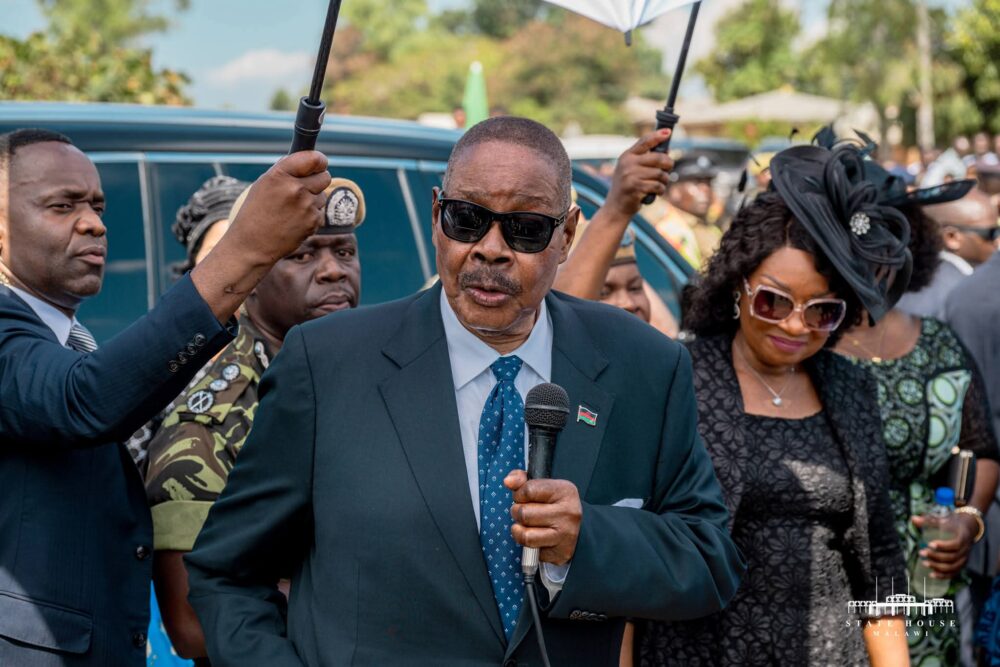
President Peter Mutharika, in his 2026/27 State of the Nation Address, announced plans to establish a Sovereign Wealth Fund as part of broader mining sector reforms.
The same address announced the suspension of all new mining licences and a ban on raw mineral exports pending a legal review. These announcements signal political intent. They do not constitute legal protection.

A government-commissioned feasibility study was validated by stakeholders at a high-level meeting in Lilongwe in early 2026, according to Nation Online. The proposed fund structure combines an earmarking fund, a stabilisation component, and a strategic investment fund.
The SWF (Sovereign Wealth Fund) Technical Taskforce chairperson Adwell Zembele confirmed that the government still intends only to “set up the fund and its minerals sub-fund” before drafting a legal and regulatory governance framework. The board of governors has not been appointed. No parliamentary bill has been tabled.
Mining policy expert Paul Mvula warned publicly that the fund’s success depends entirely on a strong legal framework, transparency, public reporting, and insulation from political interference.
“We need clear laws defining the purpose of the fund, withdrawal rules and strict parliamentary oversight,” Mvula said. “Without transparency and protection from short-term political pressure, the fund risks suffering the same fate as other politically managed funds.”
The Mining Development Agreement, signed in July 2024 and publicly announced by both Mkango and the Malawi Ministry of Mining, sets out the fiscal terms governing Songwe Hill.
Those terms include a 5 per cent royalty on gross revenue, a 30 per cent corporate tax rate, a 10-year stability period protecting those terms from unilateral change, and a 10 per cent non-diluting equity interest for the Malawi government in the project.
The agreement was signed at the Office of the President and Cabinet in Lilongwe.
The 10-year stability clause carries particular weight. It legally constrains Malawi’s ability to alter tax or royalty terms for a decade from the agreement’s signing. Should Malawi subsequently wish to fund a sovereign wealth fund by adjusting mineral revenue allocations, the MDA’s stability provisions may limit the government’s room to manoeuvre within that period.
The Definitive Feasibility Study, updated in March 2026, projects Songwe’s post-tax net present value at approximately US$339 million at a 10 percent discount rate, with an internal rate of return of 24 percent and a payback period of 3.4 years from the start of full production.
Total nominal post-tax cashflows over the mine life are projected at US$1.55 billion. Under optimistic rare earth price forecasts, the post-tax net present value rises to approximately US$489 million.
Currently, all revenues from the mining sector flow into Malawi’s Consolidated Fund, which covers general public expenditure. No legal mechanism exists to ring-fence mining revenues or route them toward any dedicated savings or investment instrument.
The mining sector currently contributes 1.1 per cent of government revenues, 0.6 per cent of exports, and 0.9 per cent of GDP, according to data from the Extractive Industries Transparency Initiative (EITI). These figures are expected to shift materially once Songwe Hill and other projects enter production.
The World Bank’s Malawi Economic Monitor, released in January 2025, projected that between 2026 and 2040, Malawi’s mining sector could generate US$30 billion in exports, with annual mineral exports expected to peak and stabilise at US$3 billion by 2034.
In the most optimistic scenario, total revenues could reach US$43 billion over that period. These projections represent a fiscal transformation of sufficient scale to require institutional infrastructure that does not yet exist.
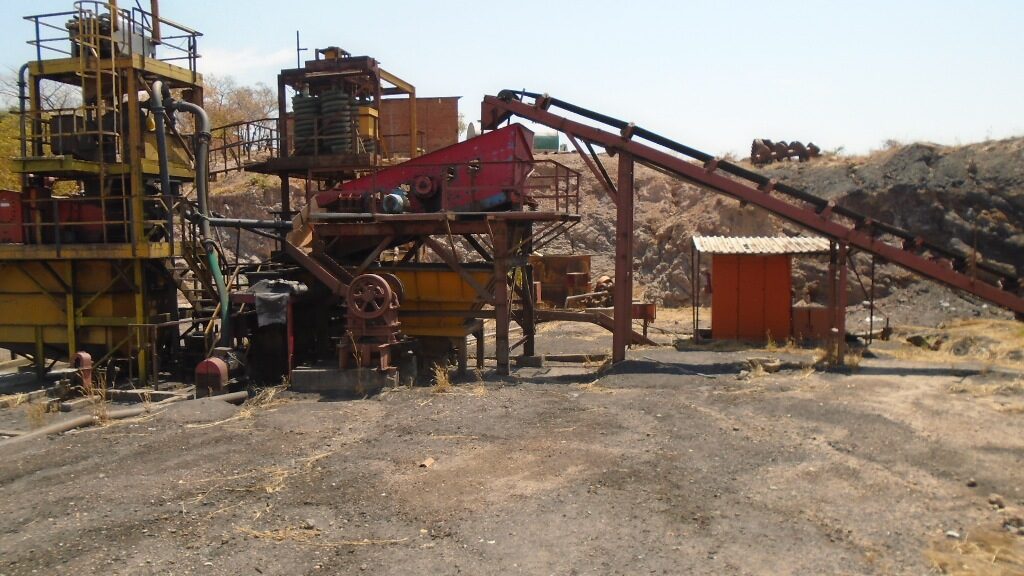
The people most immediately affected by Songwe Hill’s development are those living in Phalombe District.
A 2025 academic study examining mining governance in Malawi found that 72.8 per cent of community members surveyed were not aware of the policies or regulations governing the mining sector.
The same study found that 52.3 percent of respondents perceived decisions within the sector as not transparent, and that 59 percent said they had no representation in decision-making processes.
The project is expected to create over 1,200 jobs during its two-year construction phase and approximately 500 jobs per year during operations. The mechanism by which royalties and tax revenues benefit Phalombe communities or Malawi at large remains undefined beyond general Consolidated Fund allocations.
Major mining revenues, if unmanaged, can distort exchange rates, fuel inflation, and weaken non-mining sectors such as agriculture. Economists identify this structural vulnerability as Dutch Disease.
A GlobalSWF analysis published in November 2025 modelled three scenarios for a Malawi SWF launched in 2026 and found that even under a conservative low-revenue scenario, the fund could accumulate US$440 million by 2036, providing a meaningful macroeconomic buffer. That buffer does not yet exist in any legally constituted form.
The Nasdaq filing alters Malawi’s governance exposure in ways that have received limited public scrutiny.
Once Mkango Rare Earths Limited becomes a publicly traded company on a US exchange, its disclosures to the SEC will include details about the Malawi government’s 10 per cent equity stake, the royalty and tax terms of the MDA, and any material changes to the project’s legal or regulatory environment.
International investors and US regulators will scrutinise the governance of Malawi’s flagship mining project with a formality that Malawi’s own parliamentary oversight has not yet provided.
The US Embassy in Lilongwe, through its Fiscal Transparency Innovation Fund, has already identified beneficial ownership disclosure, mining revenue transparency, and public debt management as priority reform areas, offering a grant of up to US$781,854 in 2025 funding for a programme to strengthen EITI compliance and parliamentary oversight.
That intervention is itself an acknowledgement that current systems fall short.
Open Government Partnership records confirm that Malawi has made a commitment to disclose all mining development agreements and licences as a governance obligation.
EITI data indicates that the Malawi Extractive Industries Transparency Initiative launched beneficial ownership and contract disclosure portals in 2024.
These are meaningful steps. Disclosure portals do not, however, substitute for legal frameworks governing how revenues are saved, invested, or protected from political diversion.
The documentary record is clear. Malawi has signed a binding 10-year agreement with an internationally funded mining company whose subsidiary is now seeking a US stock exchange listing.
The project is expected to generate revenues in the hundreds of millions of dollars. The government has publicly proposed a Sovereign Wealth Fund. No Act of Parliament establishing that fund has been tabled, debated, or enacted.
The feasibility study’s data is public. The SEC filing is public. The MDA’s fiscal terms are public. The SWF proposal, including its governance gaps, is public.
