By Foreign Correspondent
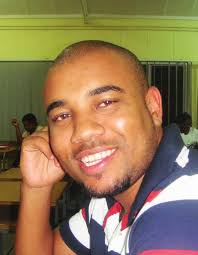
In Lisbon’s most upscale neighbourhoods, Ingilo Dalsuco cuts a figure far removed from the economic devastation his father-in-law helped unleash back home.
Dalsuco, son-in-law to former Mozambican finance minister Manuel Chang, now imprisoned in the United States for fraud, oversees a portfolio that spans real-estate ventures, a fashionable restaurant, and even a coveted VIP box at Benfica’s Estádio da Luz.
The contrast is stark, raising an unavoidable question: did proceeds linked to Mozambique’s notorious “hidden debts” scandal help finance this rise?
The origins of a national crisis
The scandal dates back to 2013–2014, when Chang secretly signed sovereign guarantees worth more than US$2 billion for loans to three state-owned companies, Proindicus, Ematum, and MAM, controlled by Mozambique’s intelligence service, SISE.
Credit Suisse and Russia’s VTB bank provided financing ostensibly for fishing fleets and maritime security vessels.
Subsequent international audits, however, found that the Abu Dhabi–based contractor Privinvest over-invoiced the projects by at least US$700 million, while paying millions in bribes to officials, including Chang.
When the undisclosed debts came to light in 2016, the fallout was immediate and severe. The International Monetary Fund suspended its programme, donor countries froze budget support, and Mozambique’s currency, the metical, lost roughly 45 per cent of its value.
The country defaulted on its debt, triggering austerity measures that cut health spending by an estimated 20 per cent and pushed an additional 1.3 million people into food insecurity, according to World Bank figures.
Chang was arrested in 2018 at Johannesburg airport and extradited to the United States after a protracted legal battle. In 2024, a federal jury in New York convicted him of conspiracy to commit wire fraud and money laundering.
Sentencing the then 70-year-old to eight and a half years in prison, Judge Nicholas Garaufis cited Chang’s health issues but stressed that he had “placed his own country… on the hook for two billion dollars.”
In January 2026, Chang applied for early release on medical grounds, citing kidney disease and diabetes. A ruling is expected by the end of the month.
A family’s quiet ascent
While Chang fought extradition and prosecution, members of his extended family were expanding business interests at home and abroad.
Dalsuco entered the property sector through HD Imobiliária alongside former transport minister Gabriel Muthisse and Luís Brito, a long-time Chang ally.
He later accumulated extensive landholdings in Inhambane province—assets that several sources describe as disproportionate to his known professional background.
His business network includes partnerships with Adil Ashimo, a former bank trader previously linked to opaque financial transactions and now based in Lisbon, and Bachir Iss, a fashion model and co-owner of the Lisbon restaurant Nómada Scusa.
Among the group’s more conspicuous acquisitions is a VIP box at Benfica’s stadium, normally subject to long waiting lists, alongside interests in the Dom João Glamour Hotel, RUR Energia SA, NVEstimentos, the Tofo Hotel Blue Ocean, ventures in the Middle East, and AyaMed, a private clinic in Maputo.
“The speed and scale of these purchases, without a clear track record of prior wealth, raise serious questions,” states an internal dossier reviewed for this report.
State ties and stalled justice
Dalsuco’s influence extends into Mozambique’s public sector. Since 2015, he has been involved in the disposal of state assets valued at roughly 800 million meticais (US$12.5 million), according to official documents.
Legal sources allege that investigations involving associates, including Ashimo, have stalled due to political interference. “If the Attorney General’s Office is compromised, there is no institutional backstop,” a Maputo-based legal analyst told our Correspondent.
“Justice negotiated behind closed doors is one reason Mozambique remains on the FATF grey list.”
A New York court ordered Chang in May 2025 to pay US$42.2 million to VTB.
In London, High Court rulings largely favoured Mozambique, awarding damages and indemnities totalling more than US$825 million against Privinvest, while formally identifying Chang as a recipient of bribes.
No charges have been filed against his relatives.
Dalsuco declined to comment through associates. Mozambique’s Attorney General’s Office did not respond to repeated requests for comment.
Regional echoes
The network’s influence appears to stretch beyond Mozambique. In Zimbabwe, businessman Wicknell Chivayo, a convicted fraudster turned high-profile donor, has been linked through luxury car gifts to figures associated with the same circle.
Private jets connected to Angolan intermediaries have reportedly ferried deal-makers involved in gas negotiations with multinational firms, including TotalEnergies and ExxonMobil.
Investigators note increasing use of Chinese and Nigerian financial channels that operate beyond Western transparency regimes.
Debt, gas, and the hollow state
By 2025, Mozambique had paid an estimated US$11 billion in debt servicing linked to the hidden loans, according to Debt Justice. Although the IMF resumed lending in 2022 following governance reforms, continued grey-listing has deterred foreign investment.
Vast offshore gas reserves in the Rovuma Basin, estimated at 100 trillion cubic feet, promise future revenues. Butgovernance experts warn that without accountability, resource wealth risks repeating past failures.
“We are witnessing a hollowing out of the state,” said one regional governance specialist. “When ministers take orders from brokers, the social contract collapses.”
In the coastal slums of Inhambane, the consequences remain tangible. João Tembe, a 52-year-old fisherman, recalls the failed Ematum project. “The boats rusted unused,” he said. “We got debt, but no fish.”
If Chang’s early-release bid succeeds, he would be deported back to Mozambique, where further prosecution remains uncertain.
For now, scrutiny continues to mount around his family’s expanding empire, an emblem, critics say, of institutions bent by power while ordinary citizens bear the cost.
