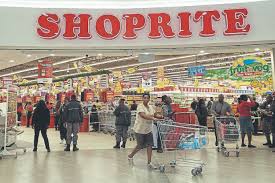
Shoprite’s withdrawal from Malawi is the latest in a string of exits across Africa, exposing the risks of currency volatility and fragile economies. As a shadowy local firm steps in, questions loom over Malawi’s investment climate and the continent’s ability to hold on to global capital.
The boardroom doors at the Competition and Fair-Trading Commission headquarters in Lilongwe closed with quiet finality, ending 25 years of retail history.
On September 12, 2025, commissioners approved what looked like routine paperwork: the transfer of five Shoprite stores to Karson Investment Trust.
But beneath that administrative stamp lies a story that cuts to the heart of Malawi’s economic fragility, and Africa’s dwindling appeal to foreign investors.
Shoprite’s exit is more than a corporate shuffle; it is the collapse of a dream once sold as Africa’s retail revolution.
The South African giant has now pulled out of seven African markets since 2020, leaving behind shuttered stores and unemployed workers from Nigeria to Madagascar.
Malawi has become the latest casualty in what economists call the largest retail retreat in modern African history.
“This is another setback,” said Charles Kumchenga, president of the Malawi Congress of Trade Unions, his voice heavy with resignation. Hundreds of Malawian workers now face uncertain futures as Karson Investment Trust takes control of stores in Lilongwe, Blantyre, and Limbe.
The timing could hardly be worse. Inflation hit 28.2 percent in August 2025. Foreign reserves cover less than a month of imports, far below the recommended three.
The World Bank paints the picture starkly: “Malawi’s economy is in a deep and protracted crisis marked by elevated inflation, declining living standards, and high rates of food insecurity.”
And who exactly is Karson Investment Trust? That question lingers in every business circle in the country. Officially, it is “a property holding company registered in Malawi involved in property holding and property management.”
Beyond that, little is known. Public records shed almost no light on its financial muscle, leadership, or retail experience. This opacity unsettles industry watchers. Unlike Malawi’s few established retailers, Karson is virtually invisible.

It plans to rebrand the stores under Shopwise Trading Limited, but doubts persist: can an unknown property firm manage the complexities of low-margin retail while keeping prices stable and jobs intact?
The Competition and Fair-Trading Commission seems to share those doubts.
Its approval came with unusually strict conditions: Karson must retain all workers who want to stay, pay full benefits to those who leave, maintain product variety and shopping standards, and file compliance reports every 90 days for two years.
In effect, the regulator has put the newcomer on probation.
Shoprite’s retreat is part of a wider pattern. Since 2020, the chain has abandoned Nigeria, Kenya, Uganda, the Democratic Republic of Congo, Madagascar, Ghana, and now Malawi, each time citing familiar barriers: volatile currencies, fragile infrastructure, and unstable economies.
The trend extends beyond Shoprite. Spar exited Malawi in 2022, its stores rebadged as Peoples Trading Centre (PTC) after franchise deals collapsed. But PTC itself, once 85 stores strong, had shrunk to just 21 by 2022 before being sold again.
Such precedents make Karson’s entry feel like another gamble.
Meanwhile, Malawi’s wholesale and retail sector, the nation’s second-largest economic contributor, has been in steady decline for five years. Its share of GDP has slipped from 12.4 percent in 2021 to an expected 11 percent this year.
The sector still employs thousands, but foreign exchange shortages and import dependency continue to choke its future.
For ordinary Malawians, the fallout is lived daily. “Prices have gone up everywhere, especially for basic household items,” said Esther Jere, a shopper in Blantyre’s Bangwe Township. “As ordinary Malawians, we are forced to adjust our spending.”
The statistics echo her struggle. In 2024, only 34.8 percent of businesses reported positive performance, down from 42 percent in 2023. More than 80 percent operated at three-quarters capacity or below, squeezed by inflation and currency shortages.
For Shoprite employees, the uncertainty cuts deepest. Karson’s unknown credentials raise fears of mass layoffs or store closures. Unions are bracing for another drawn-out fight.
The Malawi Congress of Trade Unions, a federation of 20 groups representing some 300,000 workers, has pledged to scrutinize every step of the transition.
The CFTC is bracing as well. Chief Executive Officer Lloyds Vincent Nkhoma admitted the deal carried “potential public interest concerns,” particularly over jobs and consumer experience.
The regulator has reserved the right to reverse its approval if Karson misleads or underperforms, a rare warning shot in Malawi’s corporate history.
Behind the uncertainty looms the bigger picture: Malawi’s collapsing investment climate.
Debt has ballooned to 88 percent of GDP. Borrowing costs are climbing. Fuel shortages ripple through transport and trade. Inflation peaked at 32.2 percent in 2024 before easing slightly this year.
Import-dependent businesses are gasping for foreign currency, while consumers watch their purchasing power evaporate.
Karson’s challenge, then, is colossal. It inherits not just five stores, but the gamble of keeping them alive in an economy under siege.
Can a shadowy property trust transform itself into a credible retailer? Can it preserve jobs, rebuild consumer confidence, and prove that local firms can do what multinationals could not?
The answers will unfold not in boardrooms but at checkout counters, in the wages of cashiers, in the baskets of shoppers, in families squeezed by rising costs.
As Shoprite departs, Malawi’s retail sector becomes a mirror of the nation’s vulnerabilities—and Africa’s wider struggle to hold onto global investment.
“We have been advocating for more effective forex policies to ensure that critical industries receive the necessary foreign currency to sustain their operations,” said Daisy Kambalame, chief executive of the Malawi Confederation of Chambers of Commerce and Industry.
Her words echo through half-empty aisles once promised prosperity by international brands. What remains is a gamble: a fragile retail lifeline in the hands of Karson Investment Trust, and with it, the precarious hopes of a nation.
