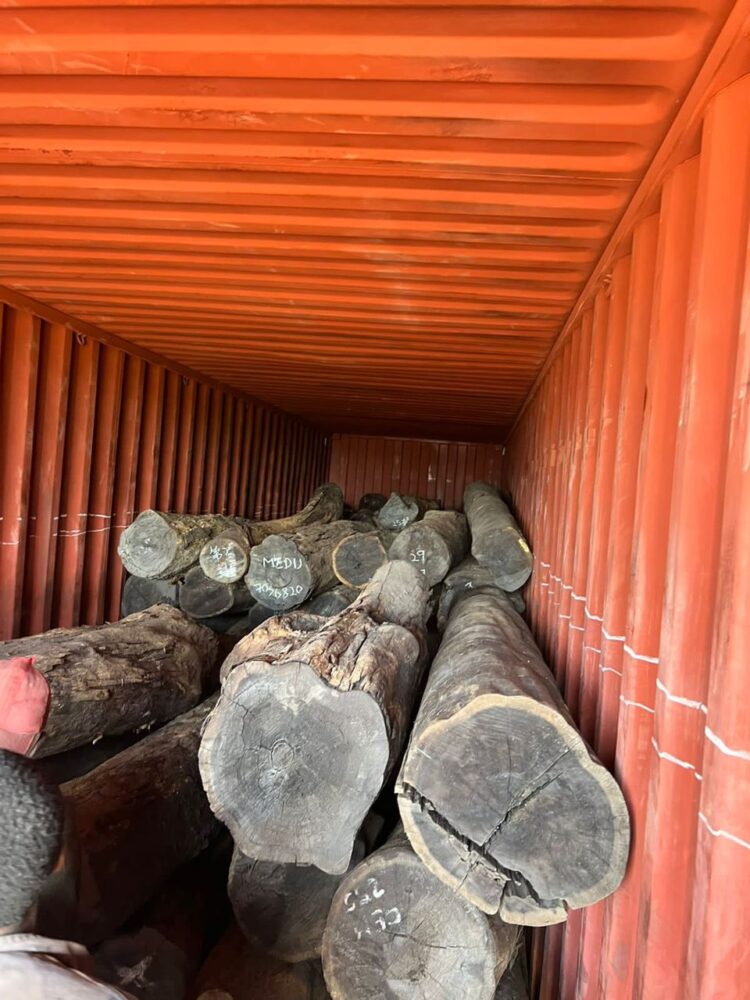
Estácio Valoi faces questioning over his reporting on a disputed export shipment, months after investigators seized his devices, a case that tests press freedom and the protection of confidential sources.
By Collins Mtika
Mozambican investigative journalist Estácio Valoi is due to be questioned by criminal investigators on Monday, 26 October, over a timber exposé that has drawn a defamation complaint from an exporter and raised fresh concerns about press freedom.
Valoi, editor of the independent news website Moz24h, has been ordered to report at 9am to the National Criminal Investigation Service (SERNIC) in Pemba, the capital of Cabo Delgado province, according to a summons cited by Mozambican newspaper Profundus.
The questioning follows a June raid on his home, during which investigators seized a laptop, two mobile phones and a tablet. A court subsequently ordered the devices returned, but the criminal case has continued.
“They had never questioned me before. They only came to conduct a search. Now, for the first time, I will be questioned,” Valoi told Profundus.
His distinction relates to questioning over the allegations in the case. Amnesty International has separately reported that he complied with a prosecutor’s instruction to unlock the seized devices on 26 June.
The dispute has become a test of two competing rights: the right of a company to defend its reputation and the right of journalists to investigate matters of public interest without exposing their sources to unnecessary scrutiny.
The shipment at the centre of the case
The complaint, brought by Safi Timber against Valoi and Moz24h, centres on an August 2025 report about 111 containers of timber detained at the port of Beira. The cargo was destined for China, according to reporting by Portuguese news agency Lusa.
Valoi’s report raised allegations of irregularities in the shipment and the company’s operations. But the evidence about the cargo itself is contested, and an important distinction has emerged: the suspicion that the containers held unprocessed logs was not confirmed by the inspection described at the time.
Mozambican reports quoted forestry official Arsénio Chelengo as saying inspectors found sawn timber, not logs, although checks on the legality of the export process and its paperwork were continuing.
The case took another turn on 31 October 2025, when the Sofala Provincial Customs Court authorised the release of the containers after Safi Timber provided a security guarantee of three million meticais, according to a January 2026 report by O Flagrante.

That report said the court treated the cargo as sawn timber rather than prohibited logs or timber from species protected under the Convention on International Trade in Endangered Species (CITES). The Centre for Investigative Journalism Malawi also reported the release order.
Those accounts do not settle every question raised by Valoi’s reporting. They do, however, mean the shipment cannot responsibly be described as proven contraband without scrutiny of the court record and any later proceedings.
Safi Timber had also challenged the government’s August 2025 suspension of its export licence, arguing that it was denied proper notification and a prior hearing, according to a company statement reported by Canalmoz.
A search, a seizure and an unresolved case
Valoi was designated an arguido, a formal suspect, not a convicted person, on 23 April 2026, his lawyer, Augusto Messariamba, told the Committee to Protect Journalists (CPJ). There is no indication in the available reports that a trial date has been fixed.
Three SERNIC officers searched his Pemba home on 16 June under a warrant issued on 25 May. CPJ, which examined the warrant, said it did not explain why Valoi’s personal and professional electronic equipment needed to be seized.
Valoi told CPJ an officer said the judge wanted the August article taken down. That remains Valoi’s account; it has not been independently established as an instruction from the judge.
On 9 September, a Pemba court ordered the devices returned. Valoi recovered them on 18 September, according to Amnesty International and Reporters Without Borders. Amnesty said the court found that the investigative steps requiring possession of the devices had been completed.
But the return of the equipment did not end the defamation complaint. Nor is it clear from the published court account what information investigators may have accessed or copied while holding the devices.
Messariamba told CPJ in June that a conviction could carry a prison sentence of up to a year. The precise charge and any penalty that might apply still require confirmation from the case file.
Global Climate Legal Defense, which supported the challenge to the seizure, describes the proceedings as a strategic lawsuit against public participation, or SLAPP, intended to silence scrutiny. That is the organisation’s assessment, not a finding by a court.
The bigger stakes
The timber trade is a subject of legitimate public scrutiny in Mozambique.
In a 2024 investigation, the Environmental Investigation Agency estimated that illegal logging and associated trade cost the country about $500-million a year, and identified China as the main destination for exports of unprocessed timber.
That estimate concerns the sector as a whole. It is not evidence that Safi Timber, or the 111-container shipment, was involved in illegal trade.
Valoi also works in Cabo Delgado, where an Islamic State-linked insurgency has raged since 2017 and where journalists have faced detention and disappearance.
A September 2026 humanitarian snapshot published through ReliefWeb recorded about 34,378 people displaced by conflict and insecurity in northern Mozambique from January to September.
Mozambique stands 99th out of 180 countries and territories in Reporters Without Borders’ 2026 World Press Freedom Index.
Globally, UNESCO documented attacks on at least 749 environmental journalists and news outlets across 89 countries between 2009 and 2023, including legal harassment.
The African Commission on Human and Peoples’ Rights’ 2019 declaration recognises the need to protect reputations but calls for criminal defamation laws to be replaced by necessary and proportionate civil remedies.
It states that imprisonment for defamation violates freedom of expression and sets stringent conditions for compelling journalists to reveal confidential sources.
There is no fresh comment from SERNIC, prosecutors or Safi Timber accompanying the latest summons in the material reviewed for this article. CPJ said in June that calls to the company went unanswered and that a prosecution spokesperson did not provide a substantive response by its deadline.
Reporters Without Borders said a Cabo Delgado Provincial Court spokesperson publicly confirmed proceedings against Valoi on 29 June without identifying the offence under investigation.
The latest summons gives an appointment and case number, but does not spell out the questions investigators intend to ask.
For now, Valoi faces questioning while the public remains without a full account of the allegations against him, or of what investigators did with the contents of his seized devices.
